Lax testing practices resulted in vitamin D overdoses in Hill’s and Sunshine Mills pet food

This story by Phyllis Entis first appeared in Food Safety News and is reposted here with permission.

Toxic levels of vitamin D in Hill’s Pet Nutrition (Hill’s) canned pet foods and Sunshine Mills (Sunshine) dry pet foods could have been prevented, had both companies followed their own food safety plans.

According to information obtained by Food Safety News in response to Freedom of Information Act (FOIA) requests, Hill’s identified Vitamin Premix as a ‘high risk’ chemical hazard and required that the ingredient “…be analyzed and be within acceptable limits prior to unloading … into the manufacturing facility.”

The company was unable to provide analytical test results for Vitamin Premixes during a February 2019 inspection.

The inspection was undertaken by the U.S. Food and Drug Administration (FDA) in response to the January 31, 2019 Hill’s recall of canned pet foods due to excess levels of vitamin D.

Tests conducted on a retained sample of the premix revealed a level of vitamin D that was roughly 30 times the target range for this ingredient. As of February 11, 2019, the company acknowledged having received 85 consumer complaints reporting pet deaths.

The number of complaints received by the company has increased substantially since that date, according to information supplied to FDA by Hill’s in response to FDA’s inspection observations.

FDA declined to comment on the number of pet deaths. According to an agency spokesperson, FDA is still in the process of verifying details of the complaints it has received, and considers it would be “…premature to release a number until the cases have been vetted to ensure they are all related to recalled product and are indeed cases of vitamin D toxicity.”

Hill’s cited a manufacturing error on the part of its vitamin premix supplier as the cause for the excessive vitamin D levels in its canned pet foods. The company is reevaluating and strengthening its specifications, including requiring a Certificate of Analysis for each incoming shipment of vitamin and trace mineral premixes.

In December 2018, FDA issued an alert to pet owners regarding a series of dry dog food recalls for excessive vitamin D levels. As reported by Food Safety News, FDA received a total of six dog illness reports associated with the recalled products.

The dry dog foods were manufactured by Sunshine Mills and sold under several brand names.

An ordering error by a Sunshine employee caused the wrong Vitamin D ingredient to be shipped to the company.

According to FDA, Sunshine did not follow its own written procedures for receiving ingredients. The company neither obtained a Certificate of Analysis for the ingredient, nor conducted its own testing to determine whether the Vitamin D it received was the correct concentration for use in dog food.

The error resulted in a level of Vitamin D in the finished dog foods of as much as 70 times the target amount.

Sunshine was notified on October 23, 2018 about a consumer complaint reporting an ill dog that had eaten one of the company’s dry dog foods. Sunshine investigated the complaint and concluded on November 2nd that it was valid.

FDA requires validated complaints to be reported within 24 hours; however, Sunshine did not submit a ‘reportable food report’ to FDA until six days later, on November 8, 2018.

Although the sources of elevated vitamin D were different in these two situations, the course of events was similar.

  • Both Hill’s and Sunshine took delivery of an ingredient that was substantially higher in vitamin D than specified for the purpose.
  • Both Hill’s and Sunshine had written procedures in place for receiving raw materials, and these procedures mandated testing for vitamin D concentration.
  • Neither Hill’s nor Sunshine carried out the lab analysis mandated in their written procedures.
  • Neither Hill’s nor Sunshine required a Certificate of Analysis for their Vitamin D ingredient or premixes.
  • Had Hill’s and Sunshine followed their own written procedures, the incorrect vitamin D ingredient concentration would have been found before the ingredient was used.

FDA’s investigation into Hill’s is ongoing, according to an agency spokesperson.

FDA offers the following information regarding vitamin D toxicity to pet owners and veterinarians.

  • If your pet is having symptoms of vitamin D toxicity, contact a veterinarian immediately. Provide a full diet history to your veterinarian. You may find it helpful to take a picture of the pet food label, including the lot number.
  • Don’t feed the recalled products to your pets or any other animal. Contact the company listed on the package for further instructions or throw the products away in a way that children, pets and wildlife cannot access them.
  • Consumers can report suspected illness to the FDA electronically through the Safety Reporting Portal or by calling your state’s FDA Consumer Complaint Coordinators. It’s most helpful if you can work with your veterinarian to submit your pet’s medical records as part of your report. For an explanation of the information and level of detail that would be helpful to include in a complaint to the FDA, please see How to Report a Pet Food Complaint.
  • The FDA encourages veterinarians treating vitamin D toxicity to ask their clients for a diet history. We also welcome case reports, especially those confirmed through diagnostics. You can submit these reports electronically through the Safety Reporting Portal or by calling your state’s FDA Consumer Complaint Coordinators. For an explanation of the information and level of detail that would be helpful to include in a complaint to the FDA, please see How to Report a Pet Food Complaint.
  •  Veterinarians should also be aware that vitamin D toxicity may present as hypercalcemia, similar to dogs that have consumed rodenticide. In these cases, FDA suggests that veterinarians confirm diet history to verify whether the dog has been eating any of the recalled products.

For a comprehensive list of Hill’s Pet Nutrition canned pet foods recalled due to excessive Vitamin D, please visit Hill’s Pet Nutrition recalls: Country-by-country breakdown on eFoodAlert

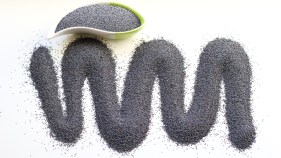
Unwashed poppy seeds under fire on Capitol Hill and around the world

This story by Coral Beach first appeared in Food Safety News and is reposted here with permission

A man who has been seeking changes to U.S. law since his son died from morphine intoxication in 2016 expects to see bills filed in April. His son wasn’t using drugs. It was unwashed poppy seeds, bought on Amazon.com and brewed as tea, that killed him.

The draft legislation expected to be introduced in the U.S. House of Representatives and Senate in early April. It would establish the definition of unwashed poppy seeds as “poppy seeds that have not been processed to adequately remove poppy straw, latex, or other contaminants that may contribute to levels of morphine, codeine, or other compounds that pose a potential risk to health.”   

If approved by Congress and signed into law by the president, the Act will make unwashed poppy seeds an adulterant, meaning it would be illegal to sell them or any foods or beverages that contain them.

Hacala’s father, Steve Hacala, is pleased about the movement on Capitol Hill. He was similarly pleased when Walmart pulled unwashed poppy seeds from it’s shelves after his son’s death. He’s not pleased that online entities such as Amazon continue to sell various brands of unwashed poppy seeds. The seeds’ labels make a variety unfounded claims about health benefits.

Investigators determined those labeling claims were behind the death of Stephen Patrick Hacala Jr.  

“Law enforcement authorities were confounded by the cause of death. There was no evidence of trauma and no evidence of drugs in Stephen’s apartment. The presence, however, of a partially used five-pound bag of poppy seeds and a water bottle containing some of the wet seeds raised suspicion,” according to a letter U.S. Sen. Tom Cotton sent to FDA Commissioner Scott Gottlieb in Aug. 2018.

“Upon further review and research of Stephen’s Amazon.com purchases of poppy seeds, it was later determined that the unwashed poppy seeds killed Stephen. Stephen had purchased the seeds in order to make so-called poppy seed tea, presumably to achieve the calming effect that Amazon.com online reviews explain to online consumers. An autopsy revealed that Stephen in fact died from morphine intoxication.” 

The timing of the action in the U.S. capital coincidently comes as French officials are warning the public there to not consume baguettes and ready-made sandwiches made with poppy seed bread.  

The officials issued the alert after employees at French companies tested positive for opiates. The workers were adamant that they hadn’t taken any drugs, according to news reports. Tests confirmed poppy seeds in bread they had eaten contained particularly high amounts of alkaloids. 

The road to the rule of law

In April 2018 the elder Hacala and his wife Betty traveled to Washington D.C. to meet with FDA officials. The couple urged the officials to crackdown on poppy seed sales. 

In July 2018 Arkansas Attorney General Leslie Rutledge wrote to executives of several online sales operations, including Amazon’s Jeff Bezos, urging them to remove unwashed poppy seeds from their offerings. As of March 15 this year, unwashed poppy seeds continue to be available on Amazon and other websites. 

In August 2018 Rutledge wrote to the commissioner of the Food and Drug Administration asking that the agency adopt regulations requiring poppy seeds to be labeled according to their “potentially harmful contents and to prohibit the sale of poppy seeds that contain controlled substances.”

“Poppy seeds are sometimes used as an ingredient in baking products in the United States. Washed and prepared in the proper way, they are appropriate for consumption,” Rutledge said in the letter to FDA Commissioner Scott Gottlieb.

“If sold ‘unwashed,’ however, the seeds have the potential to cause unexpected intoxication, illness, and death. This is because the opium poppy plant contains a latex at the point where poppy seeds are extracted. This latex also contains morphine, codeine, and thebaine — all deadly controlled substances. When prepared for consumption, poppy seeds are washed and processed in order to remove trace amounts of these substances from the seeds. But in the unwashed, natural, or raw state, the poppy seeds are dangerous.”

The variable toxicity of unwashed poppy seeds combined with the internet have made for a dangerous situation for consumers around the world, Bill Marler said. One pot of tea made from the seeds might not have any negative effect, but the next one could kill you.

“Amazon is still selling this stuff. Essentially a Schedule 1 drug is being sold over the counter,” said Marler, who has specialized in representing victims of food poisoning since the deadly 1993 E. coli outbreak traced to Jack in the Box hamburgers.

Jerky pet treats: Anatomy of an investigation and lingering concerns

This story by Phyllis Entis first appeared in Food Safety News and is reposted here with permission.

More than 10 years after the first reports of pet and people illnesses linked to jerky treats from China, the U.S. Food and Drug Administration is no closer to finding the root cause of the problem.

From August 2007 through Dec. 31, 2015, the number of illness complaints linked to jerky pet treats included more than 6,200 dogs, 26 cats, and three people. More than 1,140 of the dogs died.

In a Grand Rounds webinar in recent days, Dr. Lee Anne Palmer of FDA’s Center for Veterinary Medicine (CVM) summarized the outcome of the agency’s decade-long investigation.

The first hint of trouble appeared in August 2007, when bloggers reported the removal of chicken jerky pet treats from the shelves of a major retailer due to traces of melamine in the treats.

In September 2007, the American Veterinary Medical Association (AVMA) alerted its members to reports of an acquired form of Fanconi syndrome in dogs. Fanconi syndrome is a potentially fatal disorder of the urinary tract.

Later that same month, FDA advised pet owners of a “… potential association between development of illness in dogs and the consumption of chicken jerky products…” The agency reported having received in excess of 70 complaints involving more than 95 dogs. In addition, FDA received information from Banfield, The Pet Hospital suggesting an association between exposure to chicken jerky products and signs of gastrointestinal illness in dogs, including vomiting and diarrhea.

FDA investigated the reports, but was unsuccessful in finding the cause of the illnesses.

In late 2013, FDA issued a comprehensive update on its investigation, including a fact sheet for pet owners and a “Dear Veterinarian” letter requesting specific clinical data. The update triggered an immediate, massive increase in illness reports.

In 2014, FDA enlisted the help of the U.S. Centers for Disease Control and Prevention to design and run a case control study. Scientists from CVM and CDC enrolled 95 affected dogs from 31 states for the study, matching them with 261 controls. 

The case control study, first of its kind for a pet illness investigation, determined that the illnesses were highly associated with consumption of pet jerky treats from China. There was also some association with jerky treats from the United States. 

Ill dogs were more likely to be female, and small breeds were more likely to be affected than larger breeds. No other exposures were associated with the pet illnesses.

Since 2007, FDA has received reports of pet illness related to jerky treats from all 50 U.S. states, most Canadian provinces, and several other countries, including the United Kingdom, Germany, Switzerland, and Singapore, according to Palmer.

In 2007, the only way for consumers or veterinarians to report pet illnesses to FDA was by contacting a Consumer Complaint Coordinator by telephone. There was no system in place to coordinate or collate the reports. Even today, as Palmer observed, there is no CDC for pets.

In May 2010, CVM introduced the Safety Reporting Portal, an on-line form that can be used by consumers and veterinarians to report illnesses linked to pet foods, treats or medications.

In January 2011, CVM combined the two parallel information streams into a single database and initiated a weekly review of the data to identify trends. 

FDA obtained funding in 2010 to establish the Veterinary Laboratory Response Network (Vet-LIRN), a collaborative network of government and university laboratories that form the backbone of FDA’s ability to document, investigate, and diagnose animal feed, pet food, and animal drug-related illnesses. This powerful resource was activated in August 2011 and has now grown to include 43 participating laboratories.

While FDA’s efforts did not establish a single root cause of pet illnesses linked to jerky pet treats, the investigations revealed a number of issues resulting in recalls or import alerts for various problems, including:

  • Salmonella contamination
  • Residues of antibiotic and antiviral agents
  • Mislabelling
  • Melamine traces
  • Excessive levels of glycerin

The cumulative effect of these recalls and import alerts produced, over time, a significant reduction in the number pet illnesses associated with pet jerky treats.

According to a spokesperson for FDA, the number of reported illnesses associated with jerky pet treats has waned in recent years and returned to baseline levels. The agency is dialing back its use of investigative resources on jerky pet treats to focus on other types of pet food product complaints. 

FDA expects to publish a final update on its website summarizing the investigation at a future date.

Although a single root cause of the treat-related illnesses was never found, the analytical and tracking tools developed during the treat investigation have helped CVM to more quickly identify and respond to several other pet food issues in recent years. These include:

  • Pentobarbital contamination in canned dog foods
  • Thiamine deficiency in cat food
  • Vitamin D excess in dog food
  • Thyroid gland contamination of canned dog food and domestic jerky treats
  • Salmonella contamination of dry dog foods
  • Listeria and Salmonella in raw pet foods
  • Dilated cardiomyopathy and grain-free dog foods

Consumers and veterinarians who are concerned about a pet illness that appears to be linked to a pet food or pet treat should report the incident using FDA’s Safety Reporting Portal or by contacting the Consumer Complaint Coordinator for their district.