California finds presumptive Clostridium botulinum in can of powdered infant formula fed to outbreak victim

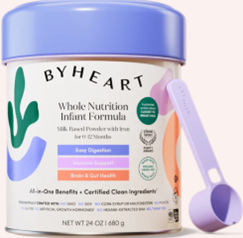
The California Department of Public Health (CDPH) has tested a can of ByHeart powdered infant formula that was fed to an infant who later developed infant botulism. Preliminary results indicate the presence of botulinum toxin-producing bacteria in the sample consisten with the type of toxin reported from confirmed outbreak cases.

As of November 8, 2025, 13 infants with suspected or confirmed infant botulism have been reported from 10 states, according to the CDC: Arizona, California (2), Illinois (2), Minnesota, New Jersey, Oregon, Pennsylvania, Rhode Island, Texas (2), and Washington.

Eight of the 13 cases have been confirmed as Type A botulism; the remaining five cases are still under investigation. Illnesses started on dates ranging from mid-August to November 2025. All 13 infants were hospitalized and treated with BabyBIG® (an antitoxin for infant botulism developed and supplied by the CDPH). No deaths have been reported. Infants ranged in age from 16 to 157 days.

Interviews conducted with caregivers for the 13 outbreak victims revealed that all 13 (100%) infants were fed ByHeart Whole Nutrition infant formula.

In response to the findings, ByHeart Inc. has recalled the following two batches of ByHeart Whole Nutrition Infant Formula (UPC: 5004496800):

  • Batch Code: 251261P2, Use by: 01 Dec 2026
  • Batch Code: 251131P2, Use by: 01 Dec 2026

ByHeart Inc. is the parent company for three manufacturing / packaging facilities:

  • Blendhouse LLC (Reading, PA), a manufacturing site
  • Blendhouse Allerton, LLC (Allerton, IA), a manufacturing site
  • Blendhouse Portland LLC (Portland, OR), a packaging site

Of these, the Reading facility manufactures the infant formula base product, which is then blended and packaged at a different facility.

The Reading location achieved its FDA registration on April 28, 2022 and was subjected to an initial, and successful, FDA inspection in June of 2022.

Then, the Cronobacter sakazakii tsunami hit, and the FDA chose to take an in-depth look at all of the powdered infant formula manufacturing sites, including ByHeart’s Reading facility. What they found was disturbing, resulting in both inspections being classified as “Official Action Indicated.”

The FDA investigation team uncovered numerous problems, which were summarized in a Warning Letter, dated August 30, 2023. These included

  • Lack of process control system, as evidenced by a finding of Cronobacter sakazakii in a batch of ByHeart Whole Nutrition Infant Formula finished product. The infant formula base which was incorporated into that batch had been manufactured in continuous process from July 13, 2022, through August 23, 2022.
  • Discrepancy between company’s root cause analysis of the Cronobacter contamination problem and the conclusion of the third-party lab, in which the company blamed lab error and the lab denied that they had erred.
  • Multiple notifications from third party lab of positive Cronobacter sakazakii findings from July 25, 2022, through August 27, 2022 within the processing environment.
  • Two water events, during which water leaked into the manufacturing areas from outside.

The FDA conducted its next inspection eleven months later. According to information posted on the FDA’s inspection data dashboard, investigators uncovered several serious problems.

  • did not implement a system of production and in-process controls for an infant formula
  • did not maintain a building used in the manufacture, processing, packing or holding of infant formula in a clean and sanitary condition
  • did not minimize the potential for contamination of raw materials through the use of appropriate measures
  • did not ensure that all surfaces that contacted ingredients, in-process materials and infant formula were cleaned and sanitized and maintained to protect infant formula from being contaminated by any source
  • did not monitor the temperature in a thermal processing equipment at a point where temperature control is necessary to prevent adulteration.
  • did not exclude pests from your food plant to protect against contamination of food.

The ByHeart recall notice appears to make light of the probability that the company’s products are the source of the 13 cases of infant botulism, stating, “The FDA has not identified a direct link between any infant formula and these cases and there is no historical precedent of infant formula causing infant botulism.”

However, Clostridium botulinum is a common inhabitant of soil. This spore-forming bacterium also is relatively resistant to heat, and has the ability to endure long exposure to dry conditions. Poor sanitation, inadequate temperature control, and inadequate pest control are all routes by which this microbe can find its way into a powdered product.

Infant botulism, unlike the form of the ailment that attacks the general population, does not require pre-formed toxin to be present in the product. An infant’s digestive system can become infected by spores that are ingested or inhaled and set up an infection in the intestine.

In 2005, researchers in the United Kingdom described a case of infant botulism that appeared to be linked to consumption of contaminated powdered infant formula, even recovering a strain of Clostridium botulinum from a sample of the formula. However, in that case, genetic profiling suggested that the strain recovered from the formula was not the same as the one responsible for the illness.

Most prior cases of infant botulism have been traced to ingestion of soil or honey products. Nevertheless, caregivers and medical professionals must be on the alert. Untreated, infant botulism can be deadly. It should never be taken lightly.

  • Do not use recalled infant formula. Throw it away or return it to where you bought it.
    • If possible, record the lot number.
  • Wash items and surfaces that may have touched the recalled formula using hot soapy water or a dishwasher.
  • Seek immediate medical care if your infant has consumed ByHeart Whole Nutrition Infant Formula and has any of these symptoms:
    • Poor feeding
    • Loss of head control
    • Difficulty swallowing
    • Decreased facial expression
  • Symptoms of infant botulism can take as long as several weeks to develop, so parents should remain vigilant if they used the recalled lots of infant formula.
  • Initial diagnosis of infant botulism is based on clinical symptoms.
  • Consultation with the Infant Botulism Treatment and Prevention Program is available for suspected cases. If you suspect your infant patient has botulism, immediately call 510-231-7600 for case consultation. Consultation is available 24/7.
  • If clinical consultation supports infant botulism, begin treatment as soon as possible. Do not wait for laboratory confirmation.
  • Infant botulism is a notifiable disease. All suspected cases must be reported to the state public health department.
  • Most infants with infant botulism will initially develop constipation, poor feeding, loss of head control, and difficulty swallowing.
  • If untreated, infants with infant botulism experience a progressive, flaccid paralysis that can lead to breathing difficulties and require weeks of hospitalization.
  • Treatment with BabyBIG® is recommended for all suspected cases of infant botulism.

TAINTED formats 3
“Reads like a true crime novel” – Food Safety News

Interested in learning more about food safety and the history of foodborne disease outbreaks and investigations?

Click on the link to listen to a short excerpt, then follow the buy links to add a digital, print or audio copy to your personal library.

Chapter 6. Birth of a Pathogen

Powdered Infant Formula linked to infant botulism outbreak

The FDA, CDC, California Department of Public Health and state and local partners are investigating a ten-state outbreak of infant botulism that has sickened 13 infants so far.

Caregivers for all thirteen infants reported feeding ByHeart Whole Nutrition infant formula.

Illnesses have been reported in Arizona (1), California (2), Illinois (2), Minnesota (1), New Jersey (1), Oregon (1), Pennsylvania (1), Rhode Island (1), Texas (2), and Washington (1). These totals include both suspected and confirmed cases.

The thirteen victims range in age from 16 to 157 days. All thirteen have been hospitalized and treated with BabyBIG®, an antidote to infant botulism.

Several states have collected leftover samples of infant formula for testing; work is in progress, but the results are not yet available.

The FDA has recommended that the manufacturer, ByHeart Inc., initate a recall. The company has complied and is recalling the following two lots, which were reported to have been consumed by the infants:

  • ByHeart Whole Nutrition Infant formula:- Lot no. 206VABP/251261P2 and Lot no. 206VABP/251131P2)

Infant botulism happens when swallowed spores from a type of bacteria called Clostridium botulinum infects a baby’s large intestine and make toxin in it. 

Infant botulism often starts with constipation but is usually first noticed as difficulty feeding (sucking and swallowing), a weak and altered cry, and loss of muscle tone. Symptoms can progress to difficulty breathing and respiratory arrest.

Symptoms of infant botulism, which is diagnosed clinically, can take as long as several weeks to develop following formula ingestion.

  • Parents and Caregivers should not use certain lots of ByHeart Whole Nutrition Infant Formula and should throw this product away immediately. If your child is experiencing symptoms (see below) after consuming ByHeart Whole Nutrition Infant Formula and you still have the formula in your home, please record the information on the bottom of the package before throwing it away.
  • Botulism can be fatal, and you should take action right away. If your child has consumed ByHeart Whole Nutrition Infant Formula and is experiencing signs and symptoms of botulism such as poor feeding, loss of head control, difficulty swallowing, or decreased facial expression, seek immediate health care. 
  • If you are a Physician and suspect your infant patient has botulism, immediately call 510-231-7600 for case consultation. Consultation is available 24/7.

TAINTED formats 3
“Reads like a true crime novel” – Food Safety News

Interested in learning more about food safety and the history of foodborne disease outbreaks and investigations?

Click on the link to listen to a short excerpt, then follow the buy links to add a digital, print or audio copy to your personal library.

Chapter 6. Birth of a Pathogen

Cronobacter in infant formula: getting to the “root” of the problem

On August 30, 2023, the US Food and Drug Administration (FDA) issued formal Warning Letters to three manufacturers of powdered infant formulas: ByHeart, Inc., Reckitt/Mead Johnson Nutrition, and Perrigo Wisconsin, LLC.

That same day, the FDA released the redacted content of those Warning Letters to the public.

The letters reflected the agency’s concern that the companies had not established “ …a system of process controls covering all stages of processing that was designed to ensure that infant formula does not become adulterated due to the presence of microorganisms in the formula or in the processing environment…”

According to the information contained in the Warning Letters, all three companies had a history of Cronobacter sakazakii contamination in the production environment, with occasional positive finished product samples. And all three companies failed, in the FDA’s estimation, to conduct a thorough “root cause analysis” to determine and correct the source of their contamination issues.

Although the general conclusions reached by FDA investigators were similar for all three companies, each situation presented its own challenges. 

The FDA conducted its inspection of ByHeart’s Pennsylvania manufacturing subsidiary from December 21, 2022, through February 17, 2023. The operation, located at 61 Vanguard Drive, Reading, PA, manufactured an infant formula base product that was subsequently blended and packaged at a third-party contract manufacturing facility.

In October 2022, the company learned that a powdered infant formula product manufactured during a continuous production campaign at the facility from July 13, 2022, through August 23, 2022 and blended and packaged from September 15, 2022 through October 7, 2022, had tested positive for Cronobacter sakazakii.

The company’s “root cause analysis” blamed the positive result on lab error on the part of a third-party laboratory. A detailed review of the laboratory’s protocols and records found no basis to support such a conclusion.

A separate infant formula base mix that was manufactured on August 24, 2022, also tested positive for the pathogen.

This contamination event was blamed on a failure to follow specified cleaning and sanitation procedures following maintenance work and valve repair. 

Cronobacter sakazakii also was found in multiple locations in the production environment from July 25, 2022 through August 27, 2022, all of which were attributed to “…isolated events such as facility repairs, using an ineffective sanitizer, or ineffective cleaning frequency.”

In it’s Warning Letter, the FDA emphasized that the company’s root cause analyses were inadequate and did not get to the root of the problems. For example, ByHeart could have—should have, in the agency’s opinion—carried out whole genome sequencing (WGS) on the various Cronobacter sakazakii cultures in order to determine whether or not the same strain was consistently present in the production plant.

The FDA’s inspection of Perrigo’s Eau Claire, Wisconsin, manufacturing facility took place from March 6 through April 26, 2023.

On four separate occasions prior to and during the FDA inspection, the company found Cronobacter sakazakii in samples of its spray-dried infant formula manufactured during the period from October 2022 through April 2023.

The company blamed the contamination variously on probable cross-contamination betwen the dryer environment and the product contact equipment, packaging line downtime due to multiple scoop jams during production, and potential contamination introduced into the packaging line during increased dry cleaning interventions.

The FDA took exception to Perrigo’s root cause analysis in each case, pointing out that the company had not thoroughly investigated the source of the contamination. In addition, the agency expressed its disapproval of the company’s sanitation protocols and practices, stating:

“The detection of C. sakazakii in your facility across multiple independent inspections is significant in that it demonstrates your sanitation procedures have been inadequate to significantly minimize or prevent the presence of C. sakazakii in your facility.”

The FDA Warning Letter detailed outstanding issues at two separate manufacturing plants: Zeeland, Michigan (inspected from February 7, 2023, through February 23, 2023) and Wanamingo, Minnesota (inspected from November 28, 2022 through January 9, 2023).

As was the case for Perrigo and ByHeart, FDA investigators found evidence of multiple reports of Cronobacter sakazakii in both finished products and environmental swab samples at both manufacturing plants

The FDA was once again unhappy with the manufacturer’s response to the Cronobacter-positive findings, stating, “Upon receiving notification of this result, you failed to conduct an independent root cause analysis or investigation and you did not evaluate whether other products may have been impacted by this contamination event.”

Cronobacter sakazakii is a common presence in the environment, and can be found in soil, surface water, mud, grains, rotting wood, bird droppings, and food. 

The microbe is relatively harmless to most people, but can cause severe illness, often leading to death in susceptible individuals, especially in preterm, low-birthweight, immunocompromised, and/or infants under than 28 days of age.

It is, therefore, incumbent upon manufacturers of powdered infant formulas to take every possible step to ensure that their products are not contaminated with this potentially dangerous microbe.

In principle, any finding of Cronobacter sakazakii in the production environment or finished infant formula should trigger what is known as a “root cause analysis”—a systematic and intensive effort to find the source of the contamination and to make the necessary corrections before proceeding with additional production.

In practice, what ByHeart, Mead Johnson, and Perrigo did was to treat the symptoms rather than diagnose and correct the problem.

For example, in some instances, the companies responded to the finding of Cronobacter by performing an intensive cleaning and sanitizing without first carrying out environmental sampling to determine where in the production or packaging environment the microbe was lurking.

The sanitation effort provided a temporary solution, but did not prevent a recurrence of the contamination. Effectively, this approach treated the symptoms, rather than eliminating the source(s) of the contamination.

In its trilogy of Warning Letters, the FDA emphasized that a proper root cause analysis must be comprehensive and complete in order to be of value in determining the source of a contaminant. 

Only once the source has been identified correctly can a long-term, effective solution to the problem be put into effect.

In its August 30, 2023, news release announcing the Warning Letters, the FDA pledged its commitment to ensuring the safety of powdered infant formula, stating,

“The FDA will continue its regulatory oversight and engagement with industry to enhance infant formula safety, including continuing to conduct annual inspections of infant formula facilities, maintaining a dialogue with infant formula manufacturers on these issues, and furthering prevention-based research and activities.”

It behooves all manufacturers of powdered infant formula to do their part to maintain safe and sanitary production environments and to take all precautions necessary for the production of pathogen-free products, especially as these products are destined for the nourishment of a highly susceptible population.


TAINTED formats 3
“Reads like a true crime novel” – Food Safety News

Interested in learning more about food safety and the history of foodborne disease outbreaks and investigations?

Click on the link to listen to a short excerpt, then follow the buy links to add a digital, print or audio copy to your personal library.

Chapter 6. Birth of a Pathogen

TAINTED is available in digital format from all major on-line retailers. Press the button to go directly to your preferred digital bookstore.

Advertisements