

The Raw Milk Debate: Is There A Third Option?

Raw versus pasteurized versus . . . . .

We were reminded again last Friday of the risks that consumers face when they opt to drink raw milk.

The Michigan Department of Community Health issued a public health alert on March 19th, after eight confirmed cases of Campylobacter infections were reported among residents of three counties in the state. The victims of this outbreak had consumed raw milk obtained from the Family Farms Cooperative in Vandalia, Michigan. through a cow-share program.

Cow share programs are used in many US states and Canadian provinces as a means to sidestep prohibitions against the retail sale of raw milk for human consumption. Instead of purchasing raw milk directly, consumers “buy” part ownership in a cow’s – or a dairy herd’s – output.

Although some states – California, for example – have legalized and regulated the retail sale of raw milk, FDA does not permit interstate shipment for human consumption of unpasteurized milk for retail sale. As far as FDA is concerned, consuming raw milk is a risky business. These risks include Salmonella, E. coli O157:H7 and Campylobacter.

Why do some individuals insist on drinking raw milk – and serving it to their children – in spite of the microbiological risk? Mainly because of a concern that pasteurization, which requires heating the milk, destroys key nutrients present in raw milk and degrades the flavor of the fresh product.

What if there was a way to make raw milk microbiologically safe without heating it?

I’m not talking about irradiation. I’m not talking about adding chemicals. I’m not talking about adding “good” bacteria or bacteriophages to the milk.

I am referring to a process known as High Pressure Pasteurization (HPP). This technology is already in use in several sectors of the food industry. It has been applied to deli meats, fruit juices, deli salads, and produce. Recently, Nature’s Variety – a manufacturer of “raw” pet foods – announced that it had decided to incorporate HPP treatment into its manufacturing process in order to ensure the microbiological safety of its pet foods.

As far as I am aware, no dairies have adopted HPP as an alternative to conventional heat pasteurization for fluid milk. But a literature search turned up a smattering of tantalizing research studies. I would be surprised if the manufacturers of HPP equipment were not funding research into this application of their technology.

Perhaps, some day the raw milk versus pasteurized milk debate will become history – made obsolete by a new technology that doesn’t rely on either heat or irradiation.

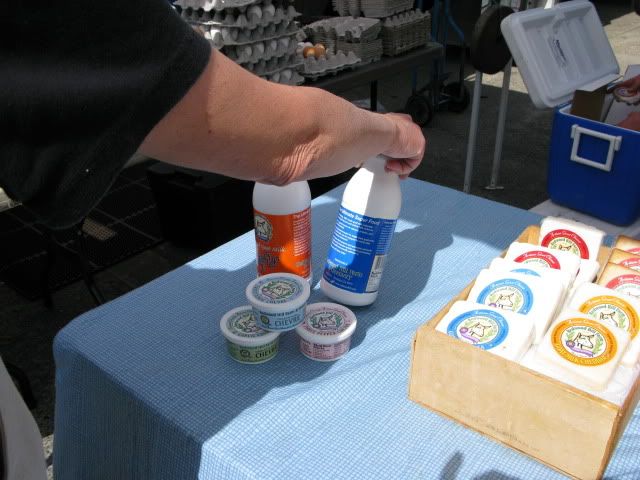
Ron Paul Is Right!

FDA Should Lift Its Ban On Interstate Sale of Raw Milk For Human Consumption

I never thought that I would agree with Representative Ron Paul. But after long reflection, I think that FDA should change its raw milk policy.

Consumers who wish to purchase and drink raw milk must navigate a labyrinth of regulations that govern its sale. Some states ban the retail sale of raw milk outright. Some permit it on store shelves. Still others allow its consumption through the back door of a “cow-share” program. Cow-share programs allow consumers to purchase a part of a dairy cow, and circumvent state laws that only permit consumption of raw milk by the cow’s owner.

This hodgepodge of state policies results in little or no oversight of raw milk producers and bottlers. And, in consequence, everybody suffers.

Earlier this week, representatives of the US dairy industry urged the Senate Committee on Health, Education, Labor and Pensions (HELP) to subject raw milk producers to the same regulatory and reporting requirements that are faced by producers of pasteurized milk. But how can FDA regulate raw milk producers while simultaneously banning the retail sale of their products?

The consumption of raw milk, and of dairy products made from unpasteurized milk, has been behind numerous outbreaks of food-borne disease. Many of these outbreaks have been linked to raw milk obtained through cow-share programs or purchased directly from dairy farmers.

In lifting the outright ban on interstate shipment of raw milk for retail sale, FDA would be able to bring raw milk under its regulatory umbrella. National standards could be set in cooperation with all 50 states, in much the same way that uniform standards have been agreed to for pasteurized milk. FDA and state regulators could insist on stringent safety and sanitation standards that would apply equally to all raw or pasteurized milk producers.

I have never been a supporter of the raw milk lobby. I know too well that raw milk, as it is produced and marketed today, is microbiologically risky. But prohibition isn’t working – just as it didn’t work for alcoholic beverages in the 1930s.

I have come to the conclusion that the only way to protect the US consumer from the health risks associated with drinking raw milk is to legalize it – and to hold raw milk to the same demanding safety standards that pasteurized milk must meet.

It’s time to recognize – and to regulate – raw milk.

Guest Blog: The Raw Milk Debate

The following Guest Blog first appeared on the ePerspective, a feature of the IFT newsletter, the weekly, and is reproduced here with the kind permission of its author, Dr. Catherine Donnelly.

The Raw Milk Debate: Economic Opportunity or Legal Liability?

Despite claims of health benefits associated with raw milk consumption, raw milk is a well documented source of bacterial pathogens which can cause human illness, and in some instances, death. Consumers who choose to purchase and consume raw milk should understand that raw milk may contain dangerous bacterial pathogens. Consumers should also understand whether they are in a risk group, which increases their chances of adverse health impacts from exposure to bacterial pathogens.

The dangers posed to public health by bacterial pathogens associated with raw milk consumption are numerous. Listeria monocytogenes, Salmonella Typhimurium, Escherichia coli O157:H7, and Campylobacter are just four of the pathogens of concern in raw milk. The bacterial pathogens posing a risk to consumer health have become more dangerous in the past two decades.

During this same period, the percentage of our population at risk for foodborne illness has increased significantly. It is critically important to understand risks posed by raw milk consumption, why the pathogens have become so dangerous, who is at greatest risk for severe illness and death, and why we need public health policies that limit exposure and warn susceptible consumers about dangers posed by raw milk consumption.

Of all of the food commodity sectors in the U.S., no sector is more committed to public health than the dairy industry. The reason for the absolute commitment to public health stems from early in the 1900s when raw milk was a major source of human disease, including tuberculosis and scarlet fever. Numerous deaths were linked to raw milk consumption. The public health response to this crisis was the crafting in 1924 of the Pasteurized Milk Ordinance (PMO), a comprehensive document which governs all aspects of production, processing, and marketing of milk and dairy products. Pasteurized milk is not a safe product simply due to the heat treatment which milk receives; milk safety is achieved because the PMO outlines a comprehensive system to assure milk safety.

The PMO is constantly updated, guided by scientific experts, farmers, and dairy industry personnel working through the National Conference on Interstate Milk Shipments (NCIMS) which works to “assure the safest possible milk supply for all the people” through enforcement of Grade A milk sanitation laws. The PMO has made pasteurized milk one of the safest food products available to consumers, and this ordinance has had a profound positive impact on public health. The PMO is the accepted operating guideline for the handling and production of milk and dairy products in most states. Adherence to the PMO importantly protects the U.S. milk market by enhancing consumer confidence in dairy product safety and reducing liability costs of this economically significant sector of the U.S. agricultural economy.

Many states have recently passed legislation to expand the sale of unpasteurized milk, allowing farmers to sell larger quantities of unpasteurized milk and thereby enhance economic opportunities in these times of severe economic challenges for so many dairy farmers. However, should economic opportunity be met at the expense of public health? Does pursuit of economic opportunity for some create the right to jeopardize the image of an entire industry that has built its reputation on the safety and wholesomeness of its products? Has this legislation created two standards for milk production in the U.S. and if so, what does this pose for the future of the U.S. dairy industry? There are important liability issues faced by individuals producing products causing harm to consumers, so the key question remains: Has raw milk legislation created economic opportunity or legal liability for farmers engaged in the sale of unpasteurized milk?

About Cathy Donnelly: Dr. Catherine Donnelly is Professor, Dept. of Nutrition and Food Science, University of Vermont and Co-director, Vermont Institute for Artisan Cheese.