
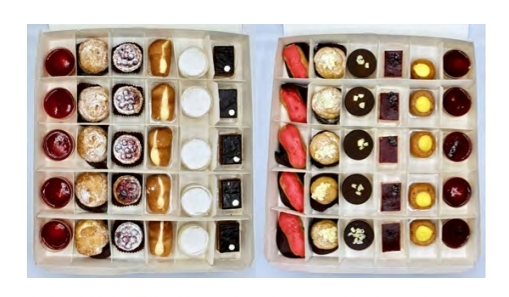
The US Food and Drug Administration (FDA) has traced a US outbreak of Salmonella Enteritidis to consumption of frozen mini-pastries imported from Italy.
Eighteen (18) people in California, Illinois, Massachusetts, North Carolina, New Jersey, New York, and Pennsylvania have been infected with the outbreak strain, which is identical to the strain that has infected 69 individuals in Canada.
One person in the US and 22 in Canada required hospitalization.
The US Centers for Disease Control and Prevention (CDC) has not posted any notice of this outbreak on its website.
The CDC website is currently undergoing modification, according to a notice featured prominently on each page of the agency website.

The Public Health Agency of Canada (PHAC) first reported on this illness outbreak on January 19, 2025, and updated its report on January 29th.
Outbreak cases in Canada have been reported in British Columbia (4), Alberta (3), Ontario (24), Québec (37), and New Brunswick (1).
The Canadian Food Inspection Agency (CFIA) linked the Canadian illnesses to consumption of Sweet Cream brand mini pastries, imported from Italy.
The Sweet Cream brand mini pastries were recalled in Canada on January 18, 2025. On January 29, 2025, a separate recall of certain D. Effe T. brand pastries (also from Italy) was announced after one of the outbreak illnesses was believed to be associated with consumption of this brand.
According to the FDA, these same pastries were imported into the US by two distributors, both of whom were contacted by the agency. One of the distributors had no remaining product on hand; the other quarantined all remaining product on hand and informed all of their downstream customers of the recall.
In the US, the mini pastries were distributed in Florida, New Jersey, New York, and Pennsylvania to food service locations such as hotel cafes, bakeries, institutions, and restaurants. The mini pastries were also served at catered events.
According to the FDA, the recalled products should no longer be available for sale.
Recommendations from the FDA
- Food service customers who received the recalled product should follow FDA’s safe handling and cleaning recommendations and use extra care in cleaning and sanitizing any surfaces and containers that may have come in contact with recalled products to reduce the risk of cross-contamination.
- Contact your healthcare provider if you think you may have developed symptoms of a Salmonella infection.
Recommendations from the PHAC
The following advice applies to individuals, as well as retailers, distributors and food service establishments such as grocery stores, bakeries, hotels, restaurants, cafeterias as well as facilities such as hospitals and retirement residences across Canada:
- Check to see if you have the recalled products in your home or establishment by looking for the specific product name and size, UPC and codes in the recall alert.
- Do not consume, serve, use, sell or distribute recalled products.
- Throw out or return recalled products to the location where they were purchased. Consumers or establishments who are unsure if they have purchased the recalled products are advised to contact their retailer or supplier where the products were purchased.
- Do not cook food for other people if you’ve been diagnosed with a Salmonella infection or any other gastrointestinal illness.
- Contact your health care provider if you think you’re experiencing symptoms of Salmonella infection.

Interested in learning more about food safety and the history of foodborne disease outbreaks and investigations?
Click on the link to listen to a short excerpt, then follow the buy links to add a digital, print or audio copy to your personal library.

 eFoodAlert