Donald Trump and his acolyte, RFK, Jr., vowed to “Make America Healthy Again.”
They lied.
Watch what they do, not what they say.
Rachel Maddow, MSNBC host
Trump, aided by RFK, Jr., is dismantling the US food safety network
RFK, Jr. fired every single member of FDA’s media communications team, including its director.
The proposed 2026 budget for the FDA outlines plans to shift the responsibility for routine food safety inspections to the states.
The 2026 FDA budget also proposes an overall reduction in full-time equivalent staffing for the Human Foods Program of 7.6%, with the Office of Investigations and Inspections reduced by 2.0%, and the Field Laboratory Operations by 54.4%.
Staff cuts at the FDA have already put the brakes on the agency’s ability to trace the source of foodborne disease outbreaks. In 2024, the agency investigated a total of 26 outbreaks and identified the source of 20 (77%). In 2025, the FDA has closed its investigation of 11 outbreaks after identifying the source of only 4 (36%); an additional 11 investigations remain under investigation, with a food source having been identified in four (36%).
The USDA withdrew its proposed rule that, for the first time, would have placed (very lenient) limits on the presence of certain Salmonella strains in raw poultry.
The US Justice Department unit that used to handle drug and food safety cases on behalf of the FDA has been disbanded.
The EPA has rolled back clean air standards and eased limits on pesticide use.
What can US consumers expect as a result of these roll-backs?
More foodborne disease, including more hospitalizations and deaths
More outbreaks going unreported and unsolved
Inconsistent food safety inspection standards from state to state
I have been a food safety microbiologist for more than fifty years. I have worked both in government and in the private sector.
During my entire career, I have advocated for a single agency to oversee food safety—an agency with Cabinet-level representation that would replace the current fragmented regulatory system in the United States.
But desperate times require desperate measures. The federal government is not doing its job. Nor does it plan to in the future.
States can—and must—act
The various states that have the resources to do so must take action to protect their population from the failures of the federal government.
Democrat-led states on both coasts have already acted to counter the CDC vaccine panel’s new recommendations that would restrict access to respiratory (Covid-19, influenza, and RSV), MMRV, and Hepatitis B vaccines.
The West Coast Alliance is comprised of California, Oregon, Washington, and Hawaii. The Northeast Public Health Collaborative includes New York, Pennsylvania, New Jersey, Connecticut, Massachusetts, Maine and Rhode Island, as well as New York City’s Department of Health.
If a state government can override federal recommendations on vaccine access, the state also can superimpose its own food safety regulations on those handed down by the FDA and USDA in order to protect its population from disease.
I propose that the West Coast Alliance be extended to encompass food safety, including the following actions:
Develop and implement a common set of inspection standards for produce and processed foods originating in California, Oregon, Washington, and Hawaii.
Embargo all shipments of produce and processed foods originating from outside the borders of its member states unless each individual shipment is accompanied by a Certificate of Analysis issued by an accredited laboratory.
Regulate discharge emanating from concentrated animal feeding operations (CAFOs) in the member states—discharge that pollutes the soil in which crops are grown and the water used to irrigate those crops.
I am not suggesting these actions will be easy or inexpensive. But, as the federal government no longer appears to be interested in protecting the public from unsafe food, the states that are able to do so must take over.
“Reads like a true crime novel” – Food Safety News
Interested in learning more about food safety and the history of foodborne disease outbreaks and investigations?
Click on the link to listen to a short excerpt, then follow the buy links to add a digital, print or audio copy to your personal library.
cat food, isolated on white backgroundNatural dried treats for dogs. Treats for rewarding and training dogs. Dried meat products for dogs. Animal care.Selective focus. Advertisement for dog treats. Assorted snacks and treats for dogs.a group of natural dog teeth cleaning bully sticks on white background
The PHAC has received reports of 27 laboratory-confirmed cases spread across four provinces and territories: Alberta (13), British Columbia (12), Ontario (1), and Northwest Territories (1).
Six people have been hospitalized.
Outbreak victims range from 0 to 87 years of age, and became sick between mid-February and mid-August 2025. There have been no deaths.
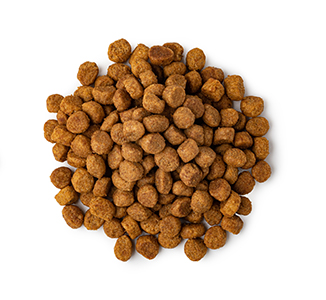
Although many of the victims reported handling dog food and treats prior to becoming ill, including kibble and dehydrated and freeze-dried treats, a common source or supplier has not been identified as yet.
Pet food / pet treat regulation in Canada
Unlike the United States, the United Kingdom, and member countries of the European Union, Canada does not regulate or monitor the microbiological safety of pet foods or pet treats made in Canada for domestic consumption.
Only those Canadian-made pet foods/treats manufactured for export are subject to regulation.
The PHAC has investigated a number of outbreaks of human illness linked to pets, pet foods and pet treats in the past, including illnesses linked to raw pet foods, kibble, pet treats, and feeder rodents for snakes.
What the public should do
This outbreak investigation is ongoing.
To reduce your risk of becoming ill from contact with a dog, their food or treats, the PHAC recommends the following actions:
Always wash your hands thoroughly with soap and water immediately after handling any type of dog food or treat.
Teach children to wash their hands thoroughly, with soap and water, every time after touching dogs, their food or treats.
Wash and sanitize any containers, utensils and surfaces that have come into contact with dog food or treats before using them again. This includes food and water bowls, countertops, microwaves and refrigerators.
Use dedicated dishes and utensils to serve your dog and wash them separately from other dishes and utensils.
Store all dog food and treats away from where human food is stored or prepared and away from reach of young children. Pick up food and treats containers when your pet is done with them.
Follow storage instructions found on the packaging of dog food and treats, including proper refrigeration and freezing if needed, to prevent them from becoming spoiled.
Read the labels on dog food and treats to learn about the ingredients, the product’s expiry date, and if the food is cooked or raw. Raw pet food and treats may be fresh, frozen, dehydrated or freeze-dried.
Wash your hands after contact with a dog and after handling their waste.
“A complete and compelling account of the hidden and not-so-hidden ways the food we give our beloved pets can be contaminated.” – JoNel Aleccia, Health Reporter, Food & Nutrition, The Associated Press.
“An invaluable resource for busy pet owners” – Food Safety News
The CDC and public health officials in several states are investigating an outbreak of Salmonella Enteritidis illnesses linked to home delivery meals supplied by Metabolic Meals.
Metabolic Meals, LLC (dba Healthspan Foods, LLC) is a limited liability company based in St. Louis, Missouri, and falls under the jurisdiction of the USDA Food Safety and Inspection Service (FSIS). According to the FSIS, the company engages in meat processing and poultry processing (FSIS Establishment No. M2974+P2974).
Sixteen outbreak-related illnesses have been reported from ten states. Seven of the victims have been hospitalized. Victims range in age from zero to 96 years, with half of them being 56 years of age or older. Illnesses started on dates ranging from July 24, 2025 to August 15, 2025.
Ten of the 12 victims who were interviewed reported having consumed a Metabolic Meals prepared menu item prior to becoming ill.
Outbreak cases have been reported in Arkansas (1), California (3), Connecticut (1), Georgia (2), Illinois (1), Minnesota (2), Missouri (3), Texas (1), Washington (1), and Wisconsin (1).
The CDC warns that outbreak illnesses may also have occurred in other states, and that the total number of outbreak victims is likely to be far higher than the number reported so far.
Metabolic Meals menu items flagged in the CDC outbreak notice include the following items, delivered to customers during the week of July 28, 2025 (note that the first illnesses to be reported began PRIOR TO this date):
Four Cheese Tortellini with Pesto Sauce and Grilled Chicken:- Lot Code 25199; Best By 08/07/2025
Low Carb Chicken Teriyaki and Vegetables:- Lot Code 25202; Best By 08/05/2025
Black Garlic & Ranch Chicken Tenders with Roasted Vegetables:- Lot Code 25205; Best By 08/08/2025
Sliced Top Sirloin with Roasted Peanut Sauce and Summer Vegetables:– Lot Code 25203; Best By 08/06/2025
Additional meal lot codes include: 25199, 25202, 25203, 25204, 25205
What consumers need to know (per CDC)
Do not eat affected Metabolic Meals products. Check your refrigerators and freezers if you ordered these meals and throw them out or contact the company.
Wash items and surfaces that may have touched the affected ready-to-eat meals using hot soapy water or a dishwasher.
Call your healthcare provider if you have any of these severe Salmonella symptoms:
Diarrhea and a fever higher than 102°F
Diarrhea for more than 3 days that is not improving
Bloody diarrhea
So much vomiting that you cannot keep liquids down
Signs of dehydration, such as not peeing much, dry mouth and throat, and feeling dizzy when standing up
“Reads like a true crime novel” – Food Safety News
Interested in learning more about food safety and the history of foodborne disease outbreaks and investigations?
Click on the link to listen to a short excerpt, then follow the buy links to add a digital, print or audio copy to your personal library.





 eFoodAlert