
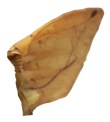
Pig ear pet treat recall list grows as FDA updates investigation status

Hollywood Feed LLC is recalling 9 lots of “Made in South America Pig Ear Dog Treats” due to potential Salmonella contamination.

The following recalled treats – identified by UPC 819895022444 – were manufactured by Dog Goods USA LLC and sold from bulk bins in Hollywood Feed stores in the United States.

  • LOT 3188 428590-D, Distributed after 7/9/2019
  • LOT 3188 428590-C, Distributed after 7/9/2019
  • LOT 3188 428590-B, Distributed after 7/9/2019
  • LOT 3248 206228-A, Distributed after 1/14/2019
  • LOT 3248 206228-B, Distributed after 1/14/2019
  • LOT 3248 1079789-A, Distributed after 1/14/2019
  • LOT 3248 221911-C, Distributed after 1/14/2019
  • LOT 3248 419486-B Distributed after 1/14/2019
  • LOT 3248 419486-A Distributed after 1/14/2019

Lot codes can be found on bulk displays or on the barcode sticker of bulk shipping bags.

Hollywood Feeds initiated the recall as a result of a self-initiated audit that identified three Salmonella-positive samples, including one sample containing Salmonella Enteritidis.

As each lot is subjected to a ‘kill-step’ before distribution, the company believes contamination occurred “…on-site at the individual store locations after coming into contact with people or animals who interacted with the bulk displays.”

In August 2019, Dog Goods USA (manufacturer of the Hollywood Feed treats) recalled certain non-irradiated bulk and packaged pig ear dog treats after FDA detected Salmonella in a sample.

The recall was expanded to include additional product in September, in response to a report of another Salmonella-positive sample identified by the Rhode Island Department of Health.

Dog Goods USA sourced its pig ear dog treats from a supplier based in Brazil.

FDA’s investigation into Salmonella-contaminated pig ear dog treats began as a result of an outbreak of human Salmonella illnesses first reported by the CDC on July 3rd, 2019.

As of the agency’s latest update, released on September 5th, CDC has confirmed 143 outbreak cases in 35 states across the USA.

Thirty-three of the outbreak victims were admitted to hospital.

Multiple serotypes of Salmonella have been identified as being part of the outbreak, including, Salmonella enterica serotypes I 4,[5],12:i:-, Cerro, Derby, Infantis, London, Newport, and Rissen. Some of the strains are antibiotic-resistant.

FDA, CDC and state investigations linked products from three companies to the outbreak: Dog Goods USA, Pet Supplies Inc., and Lennox Intl. Inc. All three companies responded by initiating recalls of Salmonella-contaminated products.

Two other companies – Brutus & Barnaby and TDBBS, LLC – also recalled pig ear dog treats that were found to be Salmonella-contaminated. The strains recovered from these products have not been linked to the ongoing outbreak, according to FDA.

FDA has enhanced its surveillance of pig ear pet treats in response to the outbreak and has added the following three companies to Import Alert 72-03 (Detention Without Physical Examination and Intensified Coverage of Pig Ears And Other Pet Treats Due To The Presence Of Salmonella): Custom Pet S.A.S. (Colombia), Suarko, SRL (Argentina) and Anabe Industria e Comercio de Proteinas (Brazil).

WHAT CONSUMERS NEED TO KNOW
  • Based on information gathered from cases and the traceback data gathered from the FDA, the FDA and CDC continue to recommend that people avoid purchasing or feeding any pig ear pet treats at this time.
  • If you have pig ear pet treats, safely discard them and thoroughly clean the areas where the treats have been.
  • Salmonella can affect both human and animal health. People with symptoms of Salmonella infection should consult their healthcare providers. Consult a veterinarian if your pet has symptoms of Salmonella infection.
  • People who think their pets have become ill after consuming contaminated pet food should first contact their veterinarians. Veterinarians who wish to have pets tested for Salmonella may do so through the Veterinary Laboratory Investigation and Response Network (Vet-LIRN Network), if the pet is from a household with a person infected with Salmonella.



In my opinion: Tularemia and pet food

There are many problems within the pet food industry: Salmonella, pentobarbital, substandard ingredients, unsanitary production environments, to name a few.

Pet food blogger Susan Thixton would like you to believe that tularemia should be added to the list.

In her post titled The Deadly Pet Food Bacteria Cover-up dated September 6, 2019, Thixton alleges that the US Food and Drug Administration (FDA) and the US Centers for Disease Control and Prevention (CDC) are covering up a deadly outbreak of tularemia linked to a defunct Mars PetCare production facility in Joplin, Missouri.

According to Thixton, the most recent diagnosis was in August 2019.

The facility was closed down in 2013.

The article alleges that “multiple individuals have been diagnosed (confirmed through blood testing) with tularemia that either worked for, delivered to, or is a family member (of someone who worked for or delivered to) the closed Mars Petcare pet food plant located in Joplin, MO.” (emphasis hers)

According to Thixton, “the Centers for Disease Control (CDC) and the Kansas Health Department confirmed to multiple individuals they were exposed to the deadly bacteria at the pet food plant(emphasis hers)

She has published these allegations without providing any data or other substantiating information to support her claims.

Thixton claims that the exposure to Francisella tularensis, the bacterium that causes tularemia, was through “…exposure to rendered pet food ingredients”. She also states that  the microbe “…can survive for decades in soil and water.”

Let me shine the light of science on these allegations.

A few facts about tularemia and Francisella tularensis

  1. The incubation period (the time between exposure and onset of illness) for this disease is typically 3-5 days in most cases, although infections can take up to 14 days to develop.
  2. Francisella tularensis is endemic in the rabbit and small rodent population in parts of the United States and elsewhere around the world. The most common source of transmission is via bites from ticks and deer flies.
  3. Francisella tularensis also can be transmitted in food and water, by contact with infected sick or dead animals, and by exposure to aerosols (notably during grass cutting and haying operations)
  4. Francisella tularensis can survive for weeks (not decades) in water and soil.

How common is tularemia in the United States?

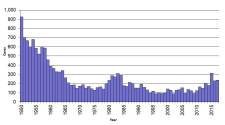
  • There were 198 diagnosed cases of tularemia in the United States in 2018. There have been 144 cases so far this year.
  • The incidence of tularemia in the US has been dropping since 1950 (the first year for which data are readily available), during which 927 cases were reported to CDC.
  • The five states with the highest incidence of tularemia (reported as cases per 100,000 population) during the period 2000-2017 are: South Dakota (1.49), Oklahoma (1.04), Arkansas (1.03), Kansas (1.00), and Montana (0.57).

Is tularemia likely to be transmitted by rendered pet ingredients?

  1. Francisella tularensis can be killed by heating to 50ºC (122ºF) for 15 minutes.
  2. Temperatures used in the rendering process typically reach 115-145ºC (245-290ºF) for 40-90 minutes.

THE BOTTOM LINE

  1. Francisella tularensis does not survive rendering.
  2. Francisella tularensis survives weeks – not decades – in soil and water.
  3. Francisella tularensis has an incubation period of 1-14 days.
  4. Francisella tularensis is a rare disease that has been relatively stable in its incidence for several decades.

Thixton’s allegations do not hold water on several fronts.

  • She claims the problem to be ongoing, yet states that the exposure was at the Mars PetCare plant that closed down in 2013. Anyone exposed to Francisella tularensis in 2013 would have developed symptoms within two weeks of exposure – not six years later.
  • She claims – without supporting data – that the source of the exposure was rendered pet food ingredients. Yet, Francisella tularensis cannot survive temperatures far milder than those used in rendering.
  • She claims the bacteria survive in soil and water for decades, whereas the scientific literature reports survival in terms of weeks.

Don’t take my word for this. Go to the sources

I have spent four decades working in and writing about food safety, including pet food safety.

I am always prepared to call out misbehavior on the part of companies large and small. I did so in the pentobarbital scandals.

I am not prepared to stand by while the credibility of food safety advocates such as myself is damaged by the publication of allegations not supported by documentation or scientific research.


FDA finds pathogens in Aunt Jeni’s dog foods. Warns pet owners

FDA is warning consumers to avoid feeding certain lots of two Aunt Jeni’s raw, frozen dog foods to their pets, due to possible contamination with Salmonella and/or Listeria monocytogenes.

The warning comes after the agency detected the pathogens in samples of the dog food analyzed as part of a routine inspection of the company’s production facility.

The recalled products
  • Aunt Jeni’s Home Made, Turkey Dinner Dog Food (5 lb / 2.3kg; lot 175199 JUL2020)
  • Aunt Jeni’s Home Made, Chicken Dinner Dog Food (5 lb / 2.3kg; lot 1152013 JUL2020)

The Turkey Dinner sample tested positive for Salmonella Infantis. The Chicken Dinner sample tested positive for both Salmonella Infantis and Listeria monocytogenes.

The Maryland Department of Agriculture issued a stop sale for these products on August 20, 2019, preventing their further distribution.

Aunt Jeni’s Home Made products are sold frozen, and are available on-line and through retail locations. The company is based in Temple Mount, Maryland.

The health implications

Salmonella can cause gastrointestinal illness in both people and their pets. In many cases, dogs may become infected and may shed Salmonella in their feces without showing any outward symptoms.

Common symptoms of Salmonella in people include diarrhea, low-grade fever, and abdominal cramps lasting several days. Dogs may experience vomiting, diarrhea (sometimes bloody), loss of appetite, and/or decreased activity.

Although many Salmonella infections are relatively mild and self-limiting, children and the elderly are especially susceptible to the effects of dehydration resulting from diarrhea.

Listeria monocytogenes does not often cause illness in dogs, but occasionally can do so. Typical symptoms may include mild to severe diarrhea; anorexia; fever; nervous, muscular and respiratory signs; abortion; depression; shock; and death.

Dogs that are infected but asymptomatic are still able to pass their infection along to human handlers.

Children, the elderly, pregnant woman, and individuals with weakened immune systems are especially susceptible to severe symptoms as a result of a Listeria monocytogenes infection.

What consumers should do
  • If you have any of the affected product, stop feeding it to your pets and throw it away in a secure container where other animals, including wildlife, cannot access it. If you  have had this product in your home, you should clean refrigerators/freezers where the product was stored and clean and disinfect all bowls, utensils, food prep surfaces, pet bedding, toys, floors, and any other surfaces that the food or pet may have had contact with.
  • If you think you have symptoms of Salmonella or L. monocytogenes infection, consult your health care provider.
  • People who think their pets have become ill after consuming contaminated pet food should first contact their veterinarians. Veterinarians who wish to have pets tested for Salmonella may do so through the Veterinary Laboratory Investigation and Response Network (Vet-LIRN) if the pet is from a household with a person infected with Salmonella.
  • FDA encourages consumers to report complaints about pet food products electronically through the Safety Reporting Portal. This information helps FDA further protect human and animal health.