Contaminated corn behind Canadian Salmonella outbreak

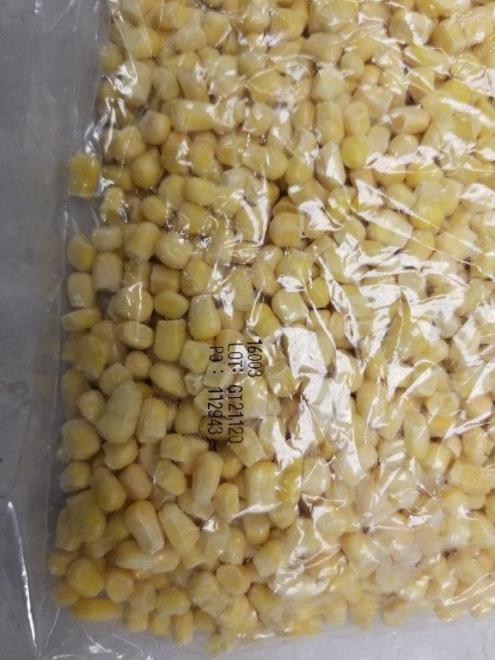
Alasko brand IQF whole kernel corn 2 KG - lot code_0Frozen whole kernel corn is the source of an outbreak of Salmonella Enteritidis that has sickened at least 84 Canadians in five provinces, according to the Public Health Agency of Canada (PHAC).

Four of the outbreak victims have been hospitalized.

Confirmed outbreak cases have been reported by British Columbia (36), Alberta (30), Saskatchewan (4), Manitoba (12) and Ontario (2). The Ontario outbreak victims reported having traveled to British Columbia and Alberta prior to becoming ill.

The outbreak, which began in early September, appears to be ongoing.

The Canadian Food Inspection Agency (CFIA) identified the source of the outbreak after analyzing multiple food samples obtained from restaurants where outbreak victims had eaten.

The CFIA recoverd the outbreak strain from an unopened package of Alasko brand frozen whole kernel corn.

The investigation has spawned three recalls to date, and it is possible that further traceback investigation may result in additional recalls.

The recalls

  • New Alasko Limited Partnership recalls Alasko brand IQF whole kernel corn (12 kg (6×2 kg); Lot #GT21120; P.O. 112943; UPC 1 069505 816003 4), distributed to Hotels, restaurants and institutions and manufacturers in British Columbia, Alberta and Manitoba and possibly elsewhere in Canada.
  • New Alasko Limited Partnership recalls Alasko brand IQF whole kernel corn (12 kg (6×2 kg); Lot #GT21117, GT21123 & GT21143; P.O. 112954, 112944 & 112955, respectively; UPC 1 069505 816003 4) distributed to hotels, restaurants and institutions, manufacturers and retailers in British Columbia, Alberta, Manitoba, Saskatchewan, and Quebec and possibly elsewhere in Canada.
  • Fraser Valley Meats recalls Fraser Valley Meats brand Whole Kernel Corn (frozen) (~2 kg; Sold between December 3 and December 15, 2021; UPC 2 000921 000002), sold to the general public in British Columbia.

What consumers need to know

  • Do not eat, use, sell, or serve any recalled Alasko brand or Fraser Valley Meats brand frozen whole kernel corn. This advice applies to individuals, as well as retailers, distributors, manufacturers and food service establishments such as hotels, restaurants, cafeterias, hospitals and long-term care homes, across Canada.
  • Symptoms of a Salmonella infection can include: fever, chills, diarrhea, stomach cramps, headache, nausea, and/or vomiting.
  • If you believe you have consumed the recalled product and are experiencing one or more of these symptoms, contact your health care professional.
  • Discard any recalled product or return it to the supplier.
  • Clean and sanitize any surfaces that may have come in contact with the recalled product.
  • For more information, members of the public can contact the PHAC toll-free at: 1-866-225-0709
Click on the image to start reading now.

Recalled salad mix blamed for Listeria monocytogenes outbreak

TAINTED
Click on the image to start reading now.

The US Food and Drug Administration (FDA), together with state and local partners and the CDC, is investigating an outbreak of ten Listeria monocytogenes illnesses in eight states.

The onset dates for illnesses linked to the outbreak strain range from July 26, 2016 to October 19, 2021.

The outbreak strain is a genetic match for the Listeria monocytogenes recovered from Fresh Express Sweet Hearts salad mix by the Michigan Department of Agriculture and Rural Development (MDARM) during the course of a routine sampling program.

The MDARM issued a Consumer Advisory on December 17, 2021.

In response to the Listeria monocytogenes finding and the outbreak investigation, Fresh Express, Inc. has recalled certain varieties of its branded and private label salad products produced at the company’s Streamwood, Illinois facility.

Fresh Express, Inc. is a division of Chiquita Brands.

Affected brands include: Fresh Express, Giant Eagle, Little Salad Bar, Market District, Marketside, O Organics, Signature Farms, Simply Nature Organic, Weis Fresh From the Field, and Wellsley Farms Organic.

The recall includes all Use-By Dates of fresh salad items with product codes Z324 through Z350. Please refer to the Fresh Express recall notice for a complete list of affected products.

The recalled products were distributed in Connecticut, Iowa, Illinois, Indiana, Kentucky, Massachusetts, Maryland, Maine, Michigan, Minnesota, Missouri, North Dakota, New Hampshire, New Jersey, New York, Ohio, Pennsylvania, Rhode Island, and Wisconsin.

Some of the recalled products were also exported to Canada. Please refer to the CFIA recall notice for a complete list of affected products, which were sold in Manitoba and Ontario and also may have been distributed in other provinces and territories. 

A Repeat Offender

Fresh Express, which has suspended production at its Streamwood facility, has been the source of more than one previous foodborne disease outbreak.

In 2018, more than 500 customers of MacDonald’s in fifteen states were infected with Cyclospora after consuming a packaged romaine lettuce/carrot mix supplied to the restaurant chain by Fresh Express

In December 2019, Fresh Express Sunflower Crisp Chopped Salad Kits were identified as the source of an outbreak of E. coli O157:H7 illnesses in the United States and Canada.

And on October 20, 2020, the FDA issued a Warning Letter to the company as a result of the agency’s investigation into the source of yet another multistate outbreak of cyclosporiasis that was traced back to bagged salad mixes produced at the Streamwood production plant.

On November 10, 2021, the FDA issued a Close-out Letter acknowledging the company’s corrective actions to the violations listed in the October 2020 Warning Letter.

What Retailers Need to Know

  • Stop serving or selling recalled produce, whether it is fresh or frozen. Produce stored at cold temperatures can be contaminated. Listeria monocytogenes can grow even at refrigerated temperatures.
  • Keep recalled produce away from other foods and from any equipment, utensils, and linens, among other things.
  • Determine if cross-contamination with other foods may have happened.
  • Determine the source of the produce, or the supplier if the source of the fresh/frozen produce is unknown.
  • Follow the instructions from the source or supplier on how to return or dispose of the recalled produce.
  • Your employees should wash their hands thoroughly after handling recalled produce.
  • Wash any clothing and linens that have may be contaminated.

What Consumers Need to Know

  • Mild symptoms may include a fever, muscle aches, nausea, vomiting, and diarrhea. If the more severe form of listeriosis develops, symptoms may include headache, stiff neck, confusion, loss of balance, and convulsions. 
  • People infected with L. monocytogenes may start to see symptoms in a few hours or as long as two to three days after eating contaminated food. More severe forms of listeriosis may take anywhere from three days to three months to develop.
  • Consult your health care provider if you suspect that you or a family member has developed symptoms that resemble a L. monocytogenes infection.
  • Discard any of the recalled products or return them to the retailer for a refund.
  • Wash and sanitize any surfaces in your refrigerator or your kitchen that may have come into contact with one of the recalled products.
  • Canadian consumers should be on the alert for any recall notices issued by the Canadian Food Inspection Agency. In the meantime, do not purchase, serve or eat any of the products listed on the US recall notice.

For more information, members of the public can contact the Fresh Express Consumer Response Center toll-free line at: 800-242-5472

Massive onion recall sparked by Salmonella outbreak

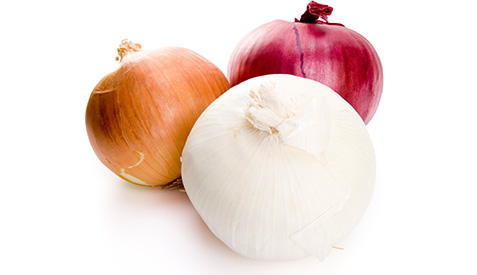
ProSource Produce LLC of Hailey, Idaho is recalling whole raw onions imported from Mexico due to potential Salmonella contamination.

The recall comes after the US Food and Drug Administration (FDA) identified ProSource as a source of onions linked to a large multi-state outbreak of Salmonella Oranienburg illnesses that has sickened 652 people so far, sending 129 of them to hospital.

To date, no onions marketed through ProSource have tested positive for Salmonella, according to the company.

The Recall

The recall encompasses red, yellow, and white whole raw onions shipped to the United States from Chihuahua, Mexico, between July 1, 2021, and August 31, 2021, and includes the following brand names:

  • Big Bull
  • Peak Fresh Produce
  • Sierra Madre
  • Markon First Crop.
  • Markon Essentials
  • Rio Blue
  • ProSource
  • Rio Valley
  • Sysco Imperial

The onions were distributed to wholesalers, broadline foodservice customers, and retail stores in 50 lb., 25 lb., 10 lb., 5 lb., 3 lb., and 2 lb. mesh sacks; and 50 lb., 40 lb., 25 lb., 10 lb., and 5 lb. cartons in:

  • Alabama
  • Arkansas
  • Arizona
  • California
  • Colorado
  • Connecticut
  • Florida
  • Georgia
  • Iowa
  • Idaho
  • Illinois
  • Indiana
  • Kansas
  • Kentucky
  • Louisiana
  • Massachusetts
  • Maryland
  • Michigan
  • Minnisota
  • Missouri
  • Mississippi
  • North Carolina
  • Nebraska
  • New Jersey
  • New Mexico
  • New York
  • Ohio
  • Oklahoma
  • Pennsylvania
  • Rhode Island
  • South Carolina
  • Tennessee
  • Texas
  • Virginia
  • Wisconsin

Some of the recalled product also was shipped to Ontario and Québec, Canada.

The Outbreak

The US Centers for Disease Control and Prevention (CDC) first identified an outbreak of 20 confirmed cases of Salmonella Oranienburg illnesses on September 2, 2021. By September 15th, the date of CDC’s initial outbreak investigation announcement, the number of cases had risen to 127 people from twenty-five states.

On September 24th, the CDC reported having found the outbreak strain in a sample taken from a takeout condiment cup containing cilantro and lime. The outbreak victim who supplied the condiment cup reported that it also had contained onions, but none were left in the cup at the time of sampling.

As of October 18th, the CDC had amassed reports of 652 confirmed outbreak cases from 37 US states. Thirty-one percent (31%) of the outbreak victims required hospitalization.

Salmonella Oranienburg illnesses caused by the outbreak strain have been reported by the following states:

  • Alabama (3)
  • Arkansas (12)
  • California (9)
  • Colorado (1)
  • Connecticut (4)
  • Florida (5)
  • Georgia (2)
  • Illinois (37)
  • Indiana (1)
  • Iowa (3)
  • Kansas (14)
  • Kentucky (9)
  • Louisiana (5)
  • Maryland (48)
  • Massachusetts (12)
  • Michigan (9)
  • Minnesota (23)
  • Mississippi (2)
  • Missouri (21)
  • Nebraska (8)
  • New Jersey (5)
  • New Mexico (8)
  • New York (12)
  • North Carolina (14)
  • North Dakota (4)
  • Ohio (7)
  • Oklahoma (98)
  • Oregon (2)
  • Pennsylvania (7)
  • South Carolina (3)
  • South Dakota (8)
  • Tennessee (10)
  • Texas (158)
  • Utah (3)
  • Virginia (59)
  • West Virginia (1)
  • Wisconsin (25)

Déjà Vu

In the summer of 2020, the CDC and the Public Health Agency of Canada (PHAC) identifed a cross-border outbreak of Salmonella Newport infections that sickened more than 1100 people in 48 US states and 515 in seven Canadian provinces.

The source of the 2020 outbreak was traced to onions supplied by Thomson International Inc. of Bakersfield, California. Although, the outbreak strain was never recovered from Thomson’s onions, the FDA found eleven different Salmonella serotypes from various environmental samples.

What You Need To Know

Illness subclusters investigated in this outbreak are currently associated with restaurants and food service locations.

The investigation is ongoing to determine the source of contamination and if additional products or firms are linked to illness.

The FDA is working to determine if these onions were available to consumers through grocery stores.

Meanwhile, the CDC advises businesses and individuals to take the following precautions:

  • Businesses should not sell or serve fresh whole red, white, or yellow onions that were imported from Chihuahua, Mexico and distributed by ProSource Inc.
  • Do not buy or eat any whole fresh red, white, or yellow onions if they were imported from Chihuahua, Mexico and distributed by ProSource Inc.
  • Throw away any whole red, white, or yellow onions you have at home that do not have a sticker or packaging.
  • Call your healthcare provider right away if you have any of these severe Salmonella symptoms:
    • Diarrhea and a fever higher than 102°F
    • Diarrhea for more than 3 days that is not improving
    • Bloody diarrhea
    • So much vomiting that you cannot keep liquids down
    • Signs of dehydration, such as:
      • Not peeing much
      • Dry mouth and throat
      • Feeling dizzy when standing up
TAINTED
TAINTED. From Farm Gate to Dinner Plate, Fifty Years of Food Safety Failures

Learn more about foodborne illness outbreaks, why they happen, and how to prevent them.

TAINTED. From Farm Gate to Dinner Plate, Fifty Years of Food Safety Failures.

Available in hardcover, paperback and ebook formats.