The Public Health Agency of Canada(PHAC) is alerting Canadians to an outbreak of fourteen cases of E. coli O157:H7 illnesses linked to consumption of Hankook brand kimchi products.
As of today, outbreak cases have been confirmed in Alberta (13) and Saskatchewan (1).
The first case was reported during the week of December 5, 2021, and the most recent case during the week of January 2, 2022.
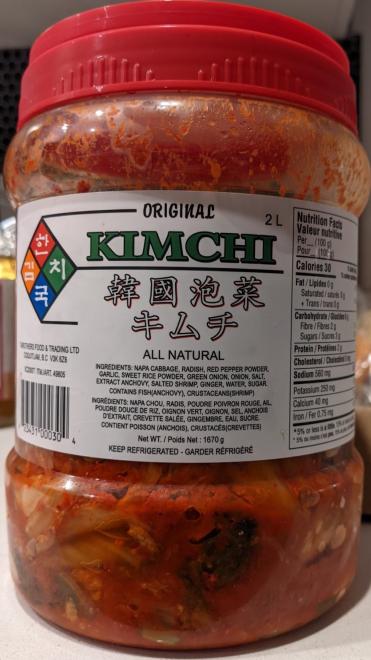
Hankook (Korean characters only) brand Original Kimchi, 1670g. UPC 6 23431 00030 4. Best before 22JA29.
The recalled product was sold in British Columbia, Alberta, Saskatchewan and Manitoba.
The CFIA is conducting a food safety investigation, which may result in the recall of additional products.
People infected with E. coli O157:H7 can develop a wide range of symptoms, which can appear between one day and ten days after consuming a contaminated food. Some do not get sick at all, though they can still spread the infection to others. Others may feel as though they have a bad case of upset stomach. In some cases, individuals become seriously ill and must be hospitalized.
The following advice from the PHAC applies to individuals, as well as retailers, distributors, manufacturers and food service establishments such as hotels, restaurants, cafeterias, hospitals and long-term care homes, across Canada:
Do not eat, use, sell or serve the recalled kimchi or any products made with the kimchi. Check to see if you have recalled food products at home. If you do, throw them out and wash your hands.
Clean and sanitize all surfaces and storage areas that recalled kimchi or any products made with the recalled kimchi may have come in contact with, including countertops, containers, utensils, freezers, and refrigerators.
If you have been diagnosed with an E. coli infection or any other gastrointestinal illness, do not cook food for other people.
Your authoritative and easy-to-digest source for food safety information.
Late yesterday, the US Centers for Disease Control and Prevention (CDC) finally posted Food Safety Alerts for two separate outbreaks of Listeria monocytogenes.
Both outbreaks have been traced to contaminated packaged salads.
Both outbreaks have been simmering for years.
Both outbreaks have caused at least one death.
The Fresh Express Outbreak
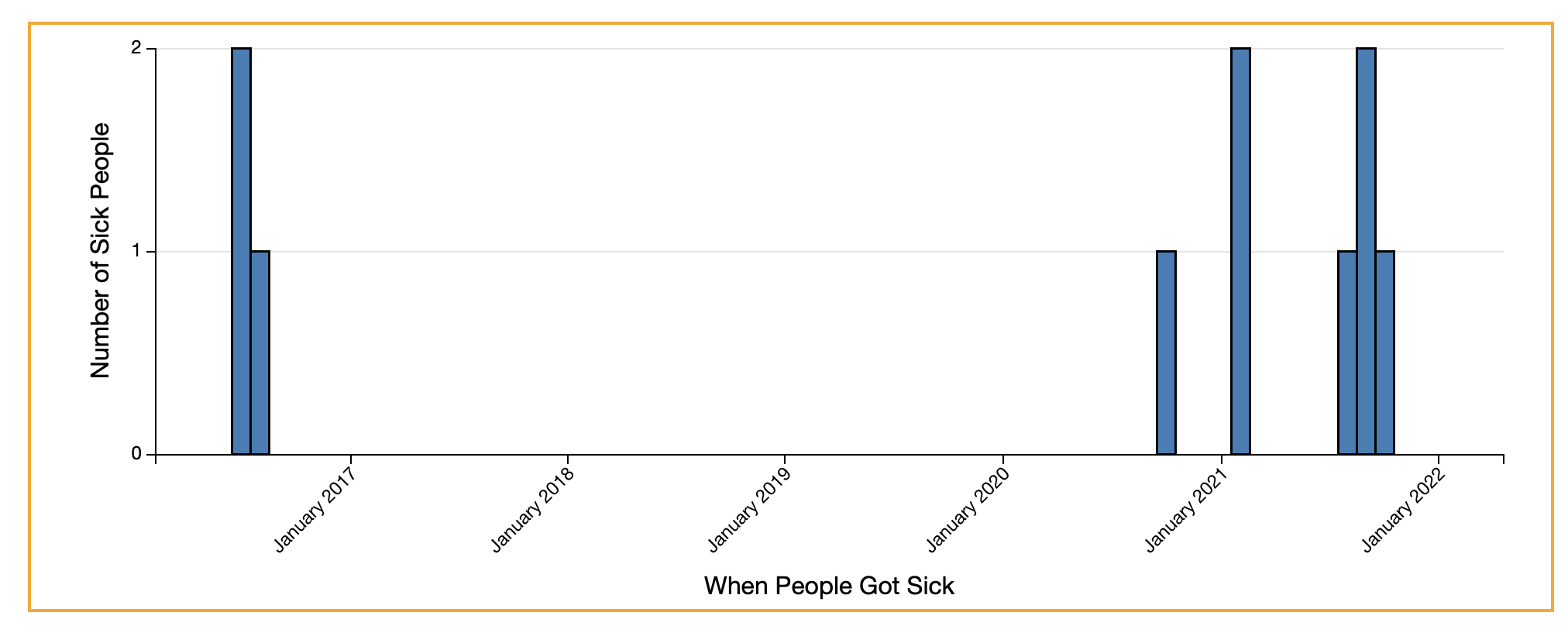
According to the CDC’s Investigation report, this outbreak began on July 26, 2016, with a cluster of three cases in July and August of that year.
The fourth case occurred in October 2020, followed by the remaining six cases in February, August, September and October 2021.
All ten of the victims of this outbreak were hospitalized and there was one death (a Pennsylvania resident).
From CDC’s Food Safety Alert for Fresh Express outbreak
Illnesses associated with this outbreak were reported from eight states: Illinois, Massachusetts, Michigan, New Jersey, New York, Ohio, Pennsylvania, and Virginia.
From CDC’s Food Safety Alert for Fresh Express outbreak
The CDC identified this outbreak after the microbe recovered from the salad sample was genetically typed and matched against genetic profiles contained in the agency’s database.
On December 20, 2021, Fresh Express announced a US recall of branded and private label salad products produced at the company’s Streamwood, Illinois facility.
Brands included in the recall are: Fresh Express, Bowl & Basket, Giant Eagle, Little Salad Bar, Marketside, O Organics, Signature Farms, Simply Nature, Weis Fresh from the Field, and Wellsley Farms Organic.
Please refer to the recall notice for a complete list of affected products.
Some of the Fresh Express salad products were also distributed in Canada. Please refer to the CFIA recall notice for complete details on the twenty-three items recalled in Canada.
As of today, there have been no reported illnesses in Canada that are linked to the Fresh Express products.
The Dole Fresh Vegetables Outbreak
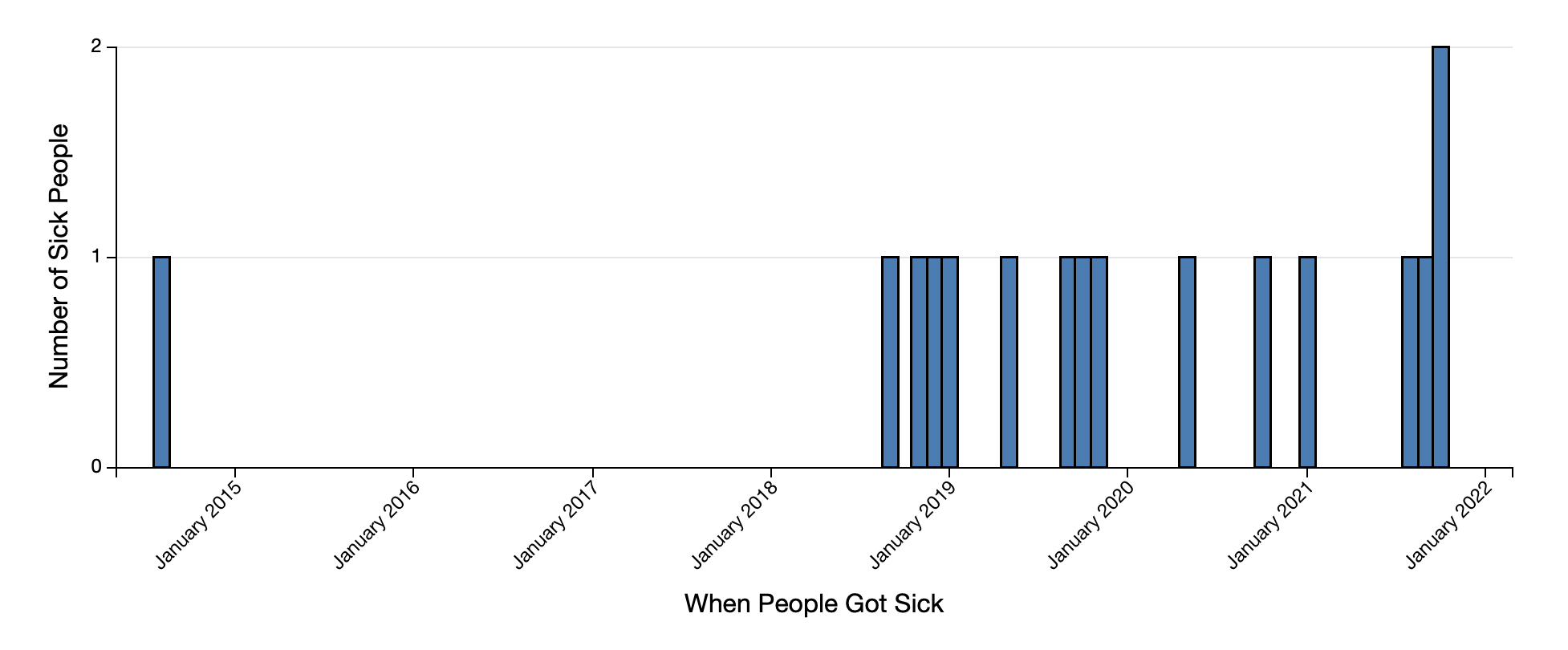
The first illness in this outbreak occurred in August 2014. After a gap of four years, additional cases began to appear, beginning in September 2018 and continuing through October 2021.
From CDC’s Food Safety Alert for Dole outbreak
In all, sixteen people in thirteen states have been infected with the Dole outbreak strain. Twelve people have been hospitalized and two have died.
States reporting infections in this outbreak include: Idaho, Iowa, Maryland, Michigan (one death), Minnesota, Nevada, North Carolina, Ohio, Oregon, Pennsylvania, Texas, Utah, and Wisconsin (one death).
From CDC’s Food Safety Alert for Dole outbreak
The CDC already was aware of this outbreak, having investigated it twice before—in 2019 and again in 2020. But, it had been unable to identify its source. The agency reopened its investigation in November 2021, after receiving reports of four new illnesses caused by the same strain of Listeria monocytogenes.
The link between the illnesses and salad products from Dole Fresh Vegetables was confirmed as a result of testing carried out by the Georgia Department of Agriculture and the Michigan Department of Agriculture and Rural Development.
On December 22, 2021, Dole announced a recall of all Dole-branded and private label packaged salads processed at its Bessemer City, NC and Yuma, AZ processing facilities.
Affected brands include: Ahold, Dole, Kroger, Lidl, Little Salad Bar, Marketside, Naturally Better, Nature’s Promise, and Simply Nature.
Please refer to the recall notice for a complete list of affected products.
There does not appear to have been any Canadian distribution of the recalled products.
What Consumers Need to Know
If you were planning to serve a packaged salad with your Christmas dinner,DON’T.
Do not eat any recalled packaged salads.
Throw them away or return them to where you bought them.
Clean your refrigerator, items, and surfaces that may have touched the recalled products. Listeria can survive in the refrigerator and can easily spread to other foods and surfaces.
Call your healthcare provider right away if you have these symptoms after eating packaged salads.
Pregnant people usually experience only fever, fatigue, and muscle aches. However, Listeria can cause pregnancy loss or premature birth. It can also cause serious illness or death in newborns.
People who are not pregnant may experience headache, stiff neck, confusion, loss of balance, and convulsions, in addition to fever and muscle aches.
Stay up to date on this outbreak by following CDC on Facebook or Twitter, or by following eFoodAlert
Share the latest outbreak information with your friends and family who are at higher risk of getting sick from Listeria(aged 65 and older, are pregnant, or have a weakened immune system).
Four of the outbreak victims have been hospitalized.
Confirmed outbreak cases have been reported by British Columbia (36), Alberta (30), Saskatchewan (4), Manitoba (12) and Ontario (2). The Ontario outbreak victims reported having traveled to British Columbia and Alberta prior to becoming ill.
The outbreak, which began in early September, appears to be ongoing.
The Canadian Food Inspection Agency (CFIA) identified the source of the outbreak after analyzing multiple food samples obtained from restaurants where outbreak victims had eaten.
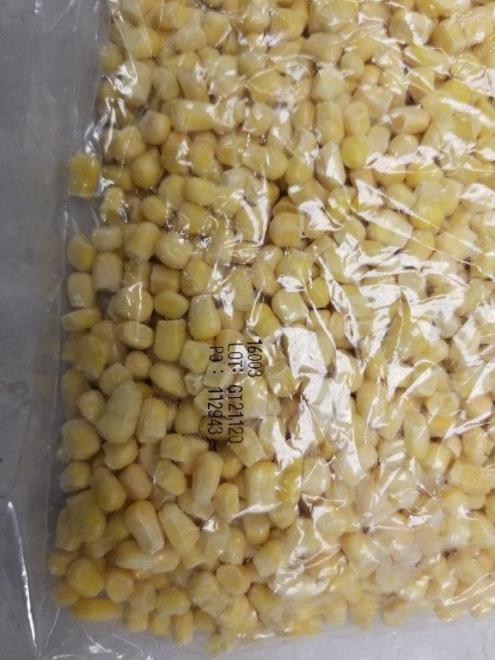
The CFIA recoverd the outbreak strain from an unopened package of Alasko brand frozen whole kernel corn.
The investigation has spawned three recalls to date, and it is possible that further traceback investigation may result in additional recalls.
The recalls
New Alasko Limited Partnership recalls Alasko brand IQF whole kernel corn (12 kg (6×2 kg); Lot #GT21120; P.O. 112943; UPC 1 069505 816003 4), distributed to Hotels, restaurants and institutions and manufacturers in British Columbia, Alberta and Manitoba and possibly elsewhere in Canada.
New Alasko Limited Partnership recalls Alasko brand IQF whole kernel corn (12 kg (6×2 kg); Lot #GT21117, GT21123 & GT21143; P.O. 112954, 112944 & 112955, respectively; UPC 1 069505 816003 4) distributed to hotels, restaurants and institutions, manufacturers and retailers in British Columbia, Alberta, Manitoba, Saskatchewan, and Quebec and possibly elsewhere in Canada.
Fraser Valley Meats recalls Fraser Valley Meats brand Whole Kernel Corn (frozen) (~2 kg; Sold between December 3 and December 15, 2021; UPC 2 000921 000002), sold to the general public in British Columbia.
What consumers need to know
Do not eat, use, sell, or serve any recalled Alasko brand or Fraser Valley Meats brand frozen whole kernel corn. This advice applies to individuals, as well as retailers, distributors, manufacturers and food service establishments such as hotels, restaurants, cafeterias, hospitals and long-term care homes, across Canada.
Symptoms of a Salmonella infection can include: fever, chills, diarrhea, stomach cramps, headache, nausea, and/or vomiting.
If you believe you have consumed the recalled product and are experiencing one or more of these symptoms, contact your health care professional.
Discard any recalled product or return it to the supplier.
Clean and sanitize any surfaces that may have come in contact with the recalled product.
For more information, members of the public can contact the PHAC toll-free at: 1-866-225-0709

 The Canadian Food Inspection Agency (CFIA) issued a recall warning for the following product on January 28, 2022.




 Frozen whole kernel corn is the source of an outbreak of

 eFoodAlert