Abbott Nutrition: The Gathering Storm

Between September 1, 2019 and September 20, 2021, Abbott Nutrition received seventeen consumer complaints regarding multiple Similac powdered formula products.

Fifteen of the complaints related to infants testing positive for Salmonella after consuming a Similac product. One complaint cited an infant who was diagnozed with Cronobacter (Enterobacter) sakazakii, and one was as the result of an infant death from an unspecified cause.

This information is contained in the September 20-24, 2021, Establishment Inspection Report (EIR), obtained by eFoodAlert from the US Food and Drug Administration (FDA) in response to a Freedom of Information Act request.

How the complaints were handled

In response to the Cronobacter complaint, the company reviewed its batch records and its finished product microbiological testing records. The complaint was reviewed by an internal Abbott Nutrition Medical Team.

The firm closed the complaint after determining that all batch records were acceptable, that there were no other consumer complaints, and that microbiological testing was negative for C. sakazakii.

The infant death complaint triggered a batch record review for three lots of Similac Alimentum. After completing the review and determining that no other complaints or medical concerns had been identified for the products, the company closed the complaint.

The fifteen Salmonella complaints involved infants who had been fed one or more batches of Similac Alimentum, Similac ProAdvance, Similac Spit-Up, Similac Total Comfort, Similac Advance, Similac Pro Sensitive or Elecare for Infants.

All fifteen of the infants tested positive for Salmonella.

Once again, the batch record reviews came back acceptable, and finished product testing results were negative for Salmonella.

A finished product sample of one of the implicated batches (Similac Advance lot #472005) was obtained by Abbott Nutrition from the consumer. The sample was subjected to a visual exam, and the container was examined in the packaging lab.

The company did not conduct any microbiological tests on this sample.

Abbott Nutrition’s ‘Standard Operating Procedure for Handling Complaints’ specifies that “…any chemical or microbial testing of an unopened customer sample requires the approval of the AN Vice President Quality or delegate.”

The EIR does not state whether approval was sought to carry out microbiological tests on the sample.

Abbott’s internal test results raise concerns

In addition to the consumer complaints, the EIR also reveals that the company had found Cronobacter in two batches of finished product.

The first of these positive results was recorded for Similac Alimentum (Batch 697464), produced on September 25, 2019, just one day after the completion of the FDA’s September 2019 inspection of Abbott’s production facility.

The root cause of the contamination was determined to be environmental. The company implemented correction actions and destroyed the contaminated batch.

The specific root cause for the second positive result, this time in Similac Spit-Up (Batch 732675), produced on June 22, 2020, was never found, according to the EIR. Several deficiencies were noted during the root cause investigation, corrective actions were implemented, and the batch was destroyed.

In addition to the two instances of Cronobacter in finished products, Abbott also found Cronobacter in five environmental samples between January 2019 and August 2021. There were no Salmonella-positive environmental samples.

All of the Cronobacter-positive results were from non-product contact surfaces.

In its February 17, 2022 recall notice, Abbott acknowledged “…evidence of Cronobacter sakazakii in the plant in non-product contact areas.”

Yet the FDA investigation recovered Cronobacter sakazakii from at least one swab of what appears to be a contact surface, as described in the 1/31/2022-3/18/2022 Inspectional Observations report (FDA Form 483).

The explanation for the absence of Cronobacter-positive findings on product contact surfaces is revealed in the description of Abbott Nutrition’s environmental sampling procedures as reported in the September 2021 EIR.

According to the description of Abbott Nutrition’s environmental sampling program, the company conducts environmental sampling of product contact surfaces and non-product contact surfaces, as well as air, water, steam and compressed air.

Swab samples from product contact surfaces and non-product contact surfaces are tested for Enterobacteriaceae.

Enterobacteriaceae is a family of bacteria that includes both Salmonella and Cronobacter, and a test for total Enterobacteriaceae may be used as an indicator of general sanitary conditions in a production facility.

If a non-product contact surface produced a positive result in an area of the plant that was considered “high care” by the company, the isolates were analyzed for both Salmonella and Cronobacter.

On the other hand, if a product contact surface was positive for Enterobacteriaceae, the company did NOT test the isolates for Salmonella or Cronobacter, rationalizing that the finished product is analyzed for both microbes.

However, except in the event of massive contamination, Salmonella or Cronobacter most likely would be present at very low levels in the finished product, and the chances of detecting these contaminants would be akin to having the same number come up twice in a row on a roulette wheel.

By choosing not to test Enterobacteriaceae-positive product contact surfaces for Cronobacter or Salmonella, the company missed an opportunity to head off a serious problem.

FDA not blameless

There was a two year gap between inspections of Abbott Nutrition’s production plant in Sturgis, Michigan.

During this time, the United States–indeed, the entire world–was reeling from the Covid-19 pandemic.

When the FDA returned to Abbott, the company’s Covid-19 protection program required that the agency give advance notice of their planned inspection–something that had not been the case in the past.

Although the company had four days notice during which they could “tidy up” in anticipation of the FDA visit, the inspection team still found several issues of note, which were detailed in the Inspectional Observations form (FDA Form 483) provided to the company at the end of the inspection.

But one key observation was missing from the list.

There was no mention of the two finished product batches that had tested positive for Cronobacter sakazakii since the previous inspection, nor of the Cronobacter-positive environmental test results.

These observations were included instead on the Form 483 issued at the end of the January-March 2022 inspection.

According to the September 2021 EIR, the two-person FDA inspection team did not carry out any environmental sampling during the course of their visit, even after learning of the Cronobacter-positive results. Two finished product batches were sampled for nutrient analysis and two for microbiological analysis.

Unanswered questions

Seven months after FDA received the first report of an infant infected with Cronobacter and nearly four months after the agency initiated its in-depth inspection of Abbott Nutrition’s production facility, several questions remain:

  • In view of what the FDA learned in September 2021 regarding Cronobacter-positive environmental and finished product samples at the Abbott facility, why did it take more than four months for the agency to initiate another inspection after receiving the first of the illness reports?
  • Why did the FDA inspectors not respond more forcefully to those Cronobacter-positive results when writing up the list of Inspectional Observations at the completion of their September 2021 inspection?
  • Would Abbott have discovered and addressed its contamination problem sooner if it had tested product-contact surfaces for Cronobacter instead of relying upon finished product tests?
  • As Cronobacter (unlike Salmonella) is not a “reportable” disease in most states, how many additional cases of Cronobacter in infants have gone unreported?
  • Why did it take until February 17, 2022, before the public was made aware of the situation?

Learn more about Cronobacter sakazakii and other foodborne disease outbreaks in TAINTED. From Farm Gate to Dinner Plate, Fifty Years of Food Safety Failures, now available in digital, print and audiobook editions.

TAINTED formats 3
“Reads like a true crime novel” – Food Safety News

Abbott Nutrition: What price profits?

In the calendar year 2021, Abbott Laboratories, the parent company of Abbott Nutrition, spent almost $2.3 BILLION to repurchase shares of its stock.

This was in addition to $403 million spent for the same purpose in 2020, $718 million in 2019, and $238 million in 2018.

In 2020, Abbott Laboratories’ net profits were in excess of $7 BILLION, an increase of more than 57% over the net profits of the year before.

Between September 2019 and January 2022, while the corporation’s profits soared and Abbott Laboratories plowed billions of dollars into a stock buy-back program, maintenance and quality control issues at Abbott Nutrition’s Sturgis plant snowballed.

Early warnings

The early warning signals were evident during the FDA’s 2019 annual inspection of the company’s manufacturing facility, as documented in the Establishment Inspection Report, obtained by eFoodAlert in response to a Freedom of Information Act request.

Between September 2018 and September 2019, both the FDA and the company received several complaints of illnesses among babies who had been fed a Similac infant formula product. These included:

  • A report from a Pediatric Nurse Practitioner that five babies under the practitioner’s care had suffered from projectile vomiting after consuming Similac Sensitive Infant Formula (multiple batch codes).
  • An infant diagnosed with Enterobacter (Cronobacter) sakazakii after consuming three different infant formula products, two of which were Similac products. The infant was treated with antibiotics and recovering.
  • A baby was infected with Salmonella after consuming a specific batch code Similac Total Comfort infant formula.
  • An infant consumed Similac Sensitive infant formula and developed high temperature and vomiting. The infant was diagnosed with Salmonella.
  • A male baby tested positive for Salmonella after consuming a batch of Similac Sensitive infant formula.
  • A baby possibly infected with Salmonella after having been fed two different batches of Similac Sensitive.
  • A baby being fed Similac Advance formula died. The cause of death was unknown

The company responded to all of these complaints by conducting reviews of its records for similar complaints (none found), reviewing batch records, and the results of microbiological tests conducted at the time of manufacture.

In some cases, the company conducted microbiological tests of retained samples from the indicated batches, with uniformly negative results.

In response to the Cronobacter complaint, Abbott also carried out microbiological testing on the consumer’s opened product, with negative results.

In addition to the consumer complaints, the company’s own lab found Cronobacter in a sample of Alimentum Advance Powder on August 5, 2019, during the course of routine finished-product testing activities.

In response, Abbott quarantined the Cronobacter-positive batch, in addition to the batches produced immediately before and after the contaminated batch.

After investigating the source of the contamination, the firm identified the root cause as being “…due to a non-routine intervention.”

According to the company’s records, the firm identified and implemented corrective actions, and designated the contaminated batch for destruction.

Environmental monitoring results from after the “non-routine intervention” showed two fails followed by two pass results (ie., Cronobacter-negative) on follow-up.

The 2019 FDA inspection

The FDA’s 2018 inspection resulted in the Sturgis facility receiving a clean bill of health. In fact, all of the prior inspections of this location from 2011 through 2018 were without adverse observations, according to the FDA inspection database.

The 2019 Establishment Inspection Report (EIR) describes the FDA visit as a “comprehensive surveillance inspection” which was conducted as part of the Infant Formula Program and Medical Foods Program.

However, even with the history of complaints, the agency conducted only a superficial lab investigation. FDA inspectors obtained samples of two finished products to conduct nutrient analysis and microbiological tests.

Both finished products yielded negative test results for both Cronobacter and Salmonella.

Despite Abbott’s acknowledgment of having found Cronobacter in a finished product and in the environment, the inspection did not included any raw material, in-process, or environmental sampling.

The visual inspection observations included in the EIR indicate a production plant that appeared to be in good repair, with proper attention given to maintenance and sanitation.

There was no evidence of insect or rodent infestation, and no birds flying through the production or warehouse areas.

The inspectors reviewed the company’s maintenance records, and noted repairs to small cracks and pitted areas along the production lines and on the exterior and inside of dryers.

The only significant negative observation was an error in sampling finished product for microbiological testing. A technician was seen to draw only 30 samples from a production lot instead of the 60 samples required under the sampling plan.

The two-year gap

Whether due to the Covid-19 pandemic or to some other reason, there was no annual inspection of Abbott Nutrition’s Sturgis location in 2020.

When the FDA inspectors returned to Sturgis in September 2021, they found a very different situation. At the completion of their five-day inspection, they issued a formal list of Inspectional Observations (FDA Form 483).

  • Standing water in multiple locations
  • Processing operator not sanitizing or changing gloves after touching non-food contact surfaces, before going on to touch food contact surfaces
  • Lack of calibration of flow meters, pressure sensors and a flow sensor on the product line
  • Inadequate frequency of temperature monitoring for a pasteurizer, even though temperature was identified as a Critical Control Point for the product in question.

The Form 483 leaves multiple questions unanswered:

  • What consumer complaints were lodged with either the FDA or the company during the two years between inspections?
  • Did the FDA conduct environmental, raw material, or finished product testing as part of this inspection?
  • What other observations were noted during the inspection that did not rise to the level of a formal “Inspectional Observation?”
  • Were the inspectors aware at the time they were on location that the FDA had received a Cronobacter sakazakii illness report linked to an Abbott Nutriton product?

Answers to at least some of these questions should be contained in the full Establishment Inspection Report. eFoodAlert has requested, but has not yet received, a copy of the full report.

Even in the absence of the full report of the September 2021 inspection, it is clear from the contents of the Form 483 issued at the completion of the January-March 2022 inspection that conditions in the Sturgis plant had deteriorated significantly since 2019.

  • Environmental samples collected near the start of the FDA inspection revealed the presence of Cronobacter sakazakii in multiple locations. Whole genome sequencing determined that five different strains of the pathogen were present in the plant environment.
  • Between the end of the September 2019 inspection and February 20, 2022, Abbott’s own testing activities documented at least eight instances of Cronobacter contamination in the environment and two instances of Cronobacter in finished products.
  • A review of Work Orders revealed multiple instances of water leaks, including one location that was the source of three separate leaks over the course of a year.
  • A total of 310 “water events” documented by the company between January 1, 2020 and February 1, 2022, including water leaks, moisture and condensation in dry powdered infant formula production areas. These events were not associated with routine clean-in-place equipment cycles.
  • A history of internal deterioration of dryers dating back to September 2018, including multiple instances of pits and cracks inside the main chambers of at least two dryers.
  • Inadequate follow-up of consumer complaints received by FDA beginning in September 2021 regarding Cronobacter sakazakii and Salmonella illnesses potentially associated with three different Similac dry infant formula products.

How was this allowed to happen?

Both Abbott Nutrition and the FDA have a lot to answer for.

Ever since a baby died from a Cronobacter sakazakii infection in Tennessee in 2001, the FDA has repeatedly claimed that ensuring the safety of infant formulas was a high priority for the agency.

Yet, the agency allowed two years to elapse between inspections of Abbott Nutrition’s more than sixty-year-old production facility in Sturgis, Michigan.

This lapse, however, does not excuse Abbott’s lack of care.

Food manufacturers–especially those that serve vulnerable populations such as infants–are legally, morally, and ethically bound to ensure the safety of all of their products.

There is no excuse for Abbott’s having abrogated its responsibilities to its customers. Certainly, the company cannot plead poverty as a reason for having neglected to properly maintain its production equipment and manufacturing environment.


Learn more about Cronobacter sakazakii and other foodborne disease outbreaks in TAINTED. From Farm Gate to Dinner Plate, Fifty Years of Food Safety Failures, now available in digital, print and audiobook editions.

TAINTED formats 3
“Reads like a true crime novel” – Food Safety News

Ferrero suspends chocolate production in Arlon, expands recall

Ferrero has announced a suspension of operations at its Arlon, Belgium, production facility according to a statement released today (April 8, 2022).

The halt in production was initiated as a result of the Belgian food safety authority (AFSCA) having suspended Ferrero’s manufacturing authorization.

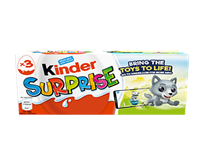
In addition, the company has extended its recall to include “the entire production of Kinder Surprise, Kinder Mini Eggs, Kinder Surprise Maxi 100g and Kinder Schokobons made in Arlon.”

Kinder chocolate products manufactured in the Arlon production plant have been linked to an outbreak of monophasic Salmonella Typhimurium in the United Kingdom (UK) and several member countries of the European Union (EU).

As of April 8, 2022, according to the European Centre for Disease Control (ECDC), outbreak cases have been confirmed in France (25), Germany (6), Ireland (10), Luxembourg (1), Netherlands (2), Norway (1), Sweden (4), and the United Kingdom (65).

Additional probable outbreak cases are under investigation in Belgium (26) and Germany (2), for a total of 142 confirmed and probable cases.

The first outbreak case was recognized in the UK on January 7, 2002, and the first report of cases in EU countries was on February 17th.

The reported illnesses have occured mainly in children under ten years of age.

Recalls

Consumers in the UK were first alerted to the problem on April 2, 2022, when the Food Standards Agency posted a recall notice for certain batches of Ferrero’s Kinder Surprise chocolate novelty products.

Since that date, Kinder chocolate products have been recalled in multiple countries within the EU, as well in Canada, the United States, Australia, Singapore and Hong Kong.

With this most recent expansion of Ferraro’s recall, the number and scope of recall notices can be expected to increase.

Ferrero Confectionery Indonesia issued an April 7th press release advising that the Kinder chocolate products sold in Indonesia were manufactured in India and are not affected by the recalls.

Ferrero’s actions

Ferrero admitted in its April 7th recall update that the company knew about a Salmonella problem as long ago as December 15, 2021.

An internal investigation determined the origin of the contamination to be “…a filter at the outlet of two raw material tanks.”

The affected products and materials were put on hold, the filter was removed, and the company increased what the news release described as its “…already high level of controls on semi-finished and finished products.”

It is unclear from the news release whether the initial finding was in an environmental sample or a finished product. Nor did the company reveal whether or not production was shut down for thorough cleaning and sanitizing after the Salmonella finding.

In its April 8th update, Ferrero acknowledged “… internal inefficiencies, creating delays in retrieving and sharing information in a timely manner.”

The Arlon facility, which accounts for 7% of the total volume of Kinder products, will remain closed pending completion of the investigation. The plant will only re-open once certified by the authorities, according to the company.


You can find additional background information on a prior Salmonella outbreak associated with chocolate novelty products in Chapter 15 of TAINTED. From Farm Gate to Dinner Plate, Fifty Years of Food Safety Failures. Order the digital or audiobook editions from your favorite on-line retailer, or purchase the paperback or hardcover edition from Amazon.

TAINTED formats 3
“Reads like a true crime novel” – Food Safety News