
Honey Smacks manufacturer pleads guilty to food safety violations

Kerry, Inc., manufacturer of the breakfast cereal that was responsible for a 2018 Salmonella outbreak that sent thirty-four victims to hospital, has pled guilty in federal court to a charge that it manufactured the cereal under insanitary conditions.

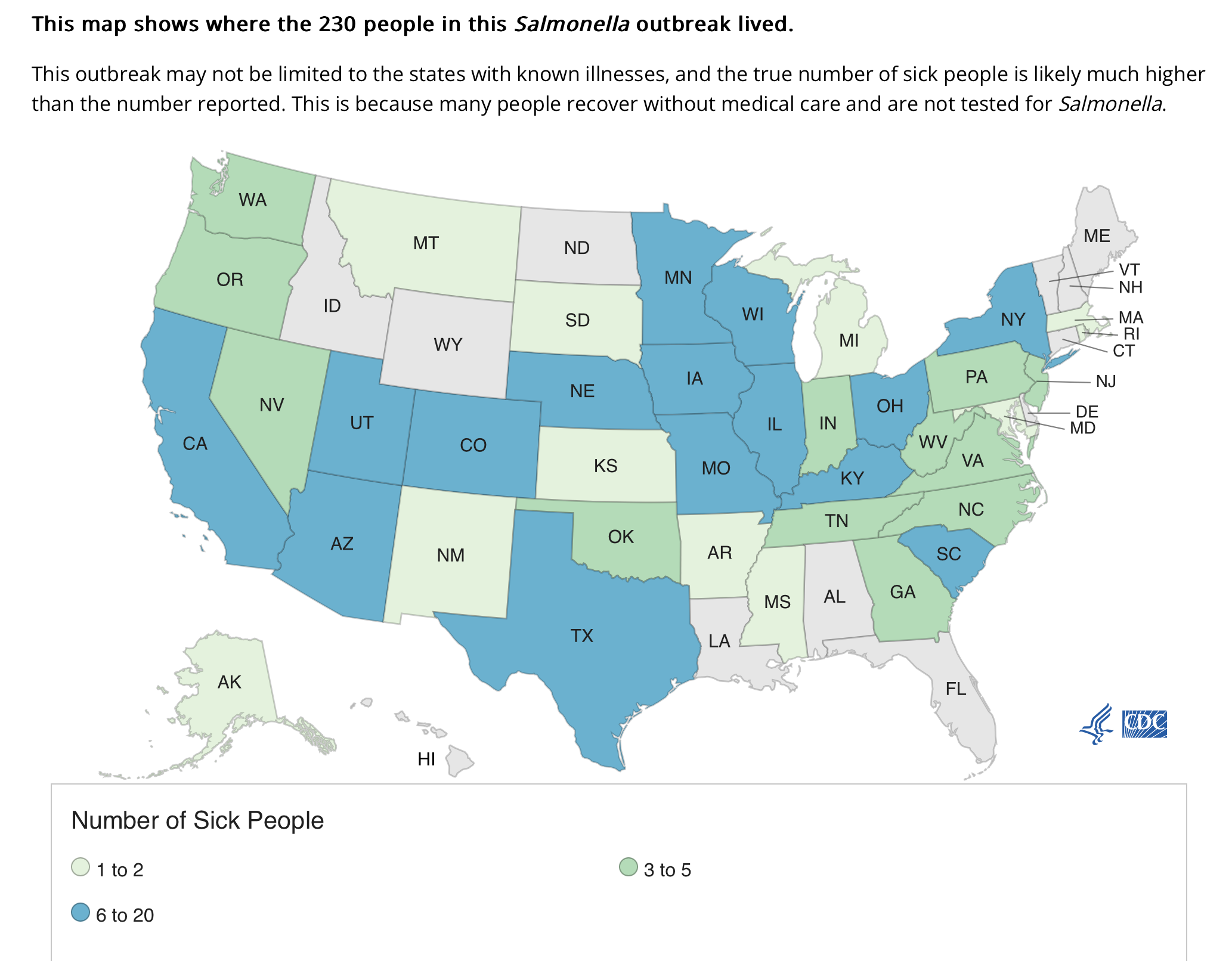
The contaminated Kellogg’s Honey Smacks breakfast cereal caused 135 confirmed illnesses in 36 states.

According to a news release from the US Department of Justice (DOJ), the company has agreed to pay a criminal fine and forfeiture amount totaling $19,228,000.

The plea agreement has not yet been accepted by the court.

According to the DOJ’s news release, if the agreement is accepted, “…the $19.228 million fine and forfeiture will constitute the largest-ever criminal penalty following a criminal conviction in a food safety case.”

The company shut down operations at its Gridley, Illinois, facility in December 2018 due to a drop in demand for the products manufactured at that location.

In October 2022, Ravi Kumar Chermala, Kerry’s former Quality Assurance Director, pled guilty to three misdemeanor counts of introducing adulterated food into Interstate Commerce.

Kerry Inc. released a statement on February 3, 2023, in which the company regretted “…the unacceptable practices and failures that occurred at Gridley.”

Advertisements

On the Q-T

The FDA’s investigation into this Salmonella outbreak–and the subsequent actions taken against the manufacturer–have been surrounded by a veil of silence from the beginning.

Honey Smacks cereal was manufactured by Kerry Inc. under a third-party contract with the Kellogg Company. At the time of the initial investigation, the FDA declined to reveal the name of the manufacturer it believed to be responsible for the Salmonella outbreak.

It was only after the CDC had declared the outbreak to be over that the FDA revealed the name of the manufacturer.

The FDA also declined to identify the Salmonella serotype it had discovered during the inspection of Kerry’s manufacturing facility and declined to reveal whether the strain it found was a genetic match to the strain recovered from outbreak victims.

In July 2018, Kerry initiated a recall of 82 tons of Soy Honey Cluster. Two days later, General Mills recalled six production batches of Cheerios Protein Oats and Honey cereal. In both cases, the potential for Salmonella contamination was given as the reason for the recall. Yet, no public notice was posted on the FDA website in either case.

What next?

The next step in this process will be for the Court to decide whether or not to accept the plea agreement.

The case has been assigned to U.S. District Court Judge James E. Shadid and Magistrate Judge Jonathan E. Hawley in Peoria, Illinois, and a sentencing date of March 14, 2023, has been set.

Information regarding upcoming court hearings or other significant developments in the case will be posted on the DOJ’s Information for Victims in Large Cases website.


TAINTED formats 3
“Reads like a true crime novel” – Food Safety News

Interested in learning more about food safety and the history of foodborne disease outbreaks and investigations?

Click on the link to listen to a short excerpt, then follow the buy links to add a digital, print or audio copy to your personal library.

Chapter 6. Birth of a Pathogen

TAINTED is available in digital format from all major on-line retailers. Press the button to go directly to your preferred digital bookstore.

FDA, CDC investigating Salmonella outbreak linked to sprouts

The US Food and Drug Administration (FDA), the US Centers for Disease Control and Prevention (CDC) and their state and local partners are investigating a three-state outbreak of Salmonella Typhimurium infections.

To date, the outbreak has sickened fifteen people in Nebraska (8), South Dakota (6), and Oklahoma (1), according to information provided by the CDC. Two people have been hospitalized.

The Nebraska Department of Health and Human Services has reported sixteen illnesses among individuals who consumed SunSprouts alfalfa sprouts between December 4–13. Eight of these have been confirmed genetically to be part of this outbreak. Results are pending on seven other cases.

Tracing the source

Epidemiological evidence collected by the CDC and its state partners identified alfalfa sprouts as a likely source of this outbreak.

Two outbreak victims specifically reported having purchased SunSprouts alfalfa sprouts at their local grocery stores. Others reported having consumed alfalfa sprouts at local restaurants.

A traceback investigation carried out by the FDA identified SunSprouts brand alfalfa sprouts grown by CW Sprouts Inc., doing business as (DBA) SunSprout Enterprises of Fremont, NE as the probable source of the outbreak.

The company has recalled four batches of alfalfa sprouts, identified as Lots ##4211, 5211, 3212, and 4212.

The recalled SunSprouts brand alfalfa sprouts were packaged in 4-ounce clamshells and 2.5 lb packages with best sold by dates between 12/10/2022 and 1/7/2023. The sprouts were supplied directly to restaurants and grocery stores in Nebraska, Kansas, and Iowa.

Inspection history

According to the FDA’s Inspection Database, CW Sprouts, Inc. has been inspected on at least seven occasions since 2009. Although some of its earlier inspections were classified “Voluntary Action Indicated,” there are no posted citations listed for the past ten years.

The most recent FDA inspection was completed in August 2021.

What you need to know

Consumers, restaurants, and retailers

  • Do not eat, sell, or serve recalled SunSprouts brand alfalfa sprouts.
  • Check your refrigerators for recalled SunSprouts brand alfalfa sprouts with best by dates between 12/10/2022 and 1/7/2023, and discard these items.
  • If you purchased or used recalled alfalfa sprouts, use extra vigilance in cleaning and sanitizing any surfaces that may have come in contact with these products, to reduce the risk of cross contamination.
  • If you or someone in your household ate SunSprouts alfalfa sprouts and have symptoms of salmonellosis, contact your healthcare provider.

Suppliers and Distributors

  • Do not use, ship or sell recalled alfalfa sprouts grown by SunSprout Enterprises.
  • Do not use any comingled and potentially cross-contaminated product if there has been potential cross-contamination or mixing of recalled alfalfa sprouts with products from other sources, and use extra vigilance in cleaning any surfaces and storage areas that may have come into contact with recalled alfalfa sprouts.

TAINTED formats 3
“Reads like a true crime novel” – Food Safety News

Interested in learning more about food safety and the history of foodborne disease outbreaks and investigations? Click on the link to listen to a short excerpt, then follow the buy links to add a digital, print or audio copy to your personal library.

Chapter 6. Birth of a Pathogen

TAINTED is available in digital format from all major on-line retailers. Press the button to go directly to your preferred digital bookstore.

Publicize inspection scores to reduce foodborne outbreaks – Opinion

Jurisdictions that require restaurants to post their inspection scores experience fewer foodborne disease outbreaks than those that do not.

This conclusion is the result of a pair of recent studies funded by the US Centers Disease Control and Prevention (CDC) and the National Environmental Health Association (NEHA).

Point-of-service vs. online disclosure

A survey of 790 government-run state and local food establishment inspection programs conducted in January-April 2000 found that mandatory display of inspection grades by restaurants and other food establishments was more effective than simple online disclosure.

  • 15% fewer re-inspections
  • 38% fewer illness complaints
  • 55% fewer outbreaks
  • 12% fewer Salmonella cases

Grading systems improved food safety

The survey also compared agencies that used a grading method versus those that did not. Grading the results of inspections, whether by a letter or numerical system, made a significant difference to performance.

  • 37% fewer re-inspections
  • 22% fewer complaints
  • 61% fewer outbreaks
  • 23% fewer cases of Salmonella

    Knowledge is power

    If you were offered the choice between two restaurants, one with a prominently posted “A” inspection grade and the other with an equally visible “B” or “C” grade, which would you choose?

    If those grades were available only online at a local or state/provincial government website, would you bother to check?

    Would you even know to look for the information?

    Making the results of food safety inspections available AND VISIBLE puts power into the hands of consumers.

    This, in turn, gives greater incentive to food establishments to maintain a top food safety rating.

    The numbers don’t lie.

    Applying the lessons

    The US Food and Drug Administration conducts hundreds of inspections each year and has made a searchable inspection database available to the public on its website.

    The CDC inspects all cruise ships that call at US ports and posts the results of those inspections on its website.

    How many consumers even know that this information is available, much less know how to access it?

    If cruise lines were required to post the results of their latest inspections on their websites, consumers could easily choose to avoid ships and/or cruise lines with a poor sanitation history.

    Similarly, if food manufacturers were required to disclose the grade received on their most recent inspection, consumers could use that information when deciding which brand of product to buy.

    Putting this information into the hands of consumers would put pressure on cruise lines and food manufacturers to strive for and maintain a high standard of cleanliness and food safety.

    The bottom line

    I have encountered complaints from individuals in the food industry who claimed that a recall notice posted on the FDA web site affected their company’s reputation and sales.

    Some companies (I can think of two pet food companies in particular) even sued the FDA to prevent the release of a recall notice or a public alert about a contaminated food, claiming that such publicity had a negative affect on their sales in the past.

    People care about the safety of the food they eat and the food they feed their families. But consumers must have easy access to current and accurate information in order to make informed decisions.

    I look forward to the day when all government agencies responsible for overseeing food safety mandate point-of-service and point-of-sale disclosure of inspection results.


    Educate yourself about food safety and the food industry. Order your digital, print or audio edition of TAINTED today.

    “Reads like a true crime novel” – Food Safety News