Publicize inspection scores to reduce foodborne outbreaks – Opinion

Jurisdictions that require restaurants to post their inspection scores experience fewer foodborne disease outbreaks than those that do not.

This conclusion is the result of a pair of recent studies funded by the US Centers Disease Control and Prevention (CDC) and the National Environmental Health Association (NEHA).

Point-of-service vs. online disclosure

A survey of 790 government-run state and local food establishment inspection programs conducted in January-April 2000 found that mandatory display of inspection grades by restaurants and other food establishments was more effective than simple online disclosure.

  • 15% fewer re-inspections
  • 38% fewer illness complaints
  • 55% fewer outbreaks
  • 12% fewer Salmonella cases

Grading systems improved food safety

The survey also compared agencies that used a grading method versus those that did not. Grading the results of inspections, whether by a letter or numerical system, made a significant difference to performance.

  • 37% fewer re-inspections
  • 22% fewer complaints
  • 61% fewer outbreaks
  • 23% fewer cases of Salmonella

    Knowledge is power

    If you were offered the choice between two restaurants, one with a prominently posted “A” inspection grade and the other with an equally visible “B” or “C” grade, which would you choose?

    If those grades were available only online at a local or state/provincial government website, would you bother to check?

    Would you even know to look for the information?

    Making the results of food safety inspections available AND VISIBLE puts power into the hands of consumers.

    This, in turn, gives greater incentive to food establishments to maintain a top food safety rating.

    The numbers don’t lie.

    Applying the lessons

    The US Food and Drug Administration conducts hundreds of inspections each year and has made a searchable inspection database available to the public on its website.

    The CDC inspects all cruise ships that call at US ports and posts the results of those inspections on its website.

    How many consumers even know that this information is available, much less know how to access it?

    If cruise lines were required to post the results of their latest inspections on their websites, consumers could easily choose to avoid ships and/or cruise lines with a poor sanitation history.

    Similarly, if food manufacturers were required to disclose the grade received on their most recent inspection, consumers could use that information when deciding which brand of product to buy.

    Putting this information into the hands of consumers would put pressure on cruise lines and food manufacturers to strive for and maintain a high standard of cleanliness and food safety.

    The bottom line

    I have encountered complaints from individuals in the food industry who claimed that a recall notice posted on the FDA web site affected their company’s reputation and sales.

    Some companies (I can think of two pet food companies in particular) even sued the FDA to prevent the release of a recall notice or a public alert about a contaminated food, claiming that such publicity had a negative affect on their sales in the past.

    People care about the safety of the food they eat and the food they feed their families. But consumers must have easy access to current and accurate information in order to make informed decisions.

    I look forward to the day when all government agencies responsible for overseeing food safety mandate point-of-service and point-of-sale disclosure of inspection results.


    Educate yourself about food safety and the food industry. Order your digital, print or audio edition of TAINTED today.

    “Reads like a true crime novel” – Food Safety News

    FDA: The more things change, the more they stay the same – Opinion

    Fifteen years ago, the Science Board of the US Food and Drug Administration (FDA) released a report in which they concluded that the agency’s scientific base had eroded, its scientific organizational structure was weak, its scientific workforce lacked sufficient capacity and capability, and its information technology (IT) structure was inadequate.

    Today, the Reagan-Udall Foundation for the FDA released an Expert Panel report on the agency’s Human Food Program capabilities, in which they concluded that the program is underfunded and understaffed, IT resources are inadequate, no single individual is in overall charge of the program, and the agency is risk-averse.

    Problems with organizational structure, funding, staffing and information technology. It would appear that not much has changed in fifteen years.

    Expert Panel findings

    In a fifty-one page report, the panel presented a damning list of deficiencies, the most glaring of which is the absence of a Deputy Commissioner of Foods, a position that was eliminated in 2019 during the Trump Administration.

    Without a Deputy Commissioner, responsibility for fulfilling the FDA’s food safety and nutrition mandates is spread among the Center for Food Safety and Nutrition (CFSAN), the Center for Food Policy and Response (CFPR), and the Office of Regulatory Affairs (ORA). The Center for Veterinary Medicine (CVM) is responsible for the Animal Food Program, which includes both animal feed and companion animal food.

    All four of these Centers report directly to the office of the FDA Commissioner, diluting the overall clout of the Food component of the FDA.

    This lack of cohesive leadership and coordination was part of the reason for the FDA’s slow response to the Abbott Nutrition infant formula contamination crisis.

    Many of the panels other findings are an inevitable consequence of the current organizational structure. Among these are:

    • Lack of a clear vision and mission
    • Absence of an ultimate decision-maker
    • A culture of indecisiveness and inaction
    • Overlapping roles and competing priorities among the various Centers
    • Over-reliance on consensus for decision-making
    • Aversion to regulatory risk-taking, resulting in reluctance to take enforcement action, including the use of mandatory recall authority
    • Funding has barely kept pace with inflation, and has fallen behind the increase in the size of the food industry
    • Critical staff have left the agency due to pay disparity with the private sector

    Room at the top

    The Expert Panel report does more than simply list deficiencies. It recommends a number of substantive improvements to the FDA’s organizational structure, hiring and personnel practices, budget and appropriation strategies, and information sharing.

    The panel also recommends that the animal feed and companion animal food portions of the Center for Veterinary Medicine (CVM) be integrated with the Human Food Program.

    But implementing the panel’s recommendations will require a strong leader–one with the courage and the clout to fight the Food Program’s battles within the FDA, with Congress, and with the food industry.

    In January 2019, upon the retirement of Dr. Stephen Ostroff from the FDA, the position of Deputy Commissioner for Food disappeared from the agency’s organizational structure. Instead, the Trump Administration created a Center for Food Policy and Response (CFPR), and named Dr. Frank Yiannas as its first Deputy Commissioner.

    Since then, responsibility for the Human Food Program has been parceled out among the CFPR, the CFSAN and the ORA, leading to “…overlapping roles and competing priorities that result in what is perceived as constant turmoil.”

    I have long been an advocate of a single, independent Human and Animal Food Safety Agency that would take over all federal responsibility for regulating the safety of the US food supply, including most of the activities now carried out by the US Department of Agriculture’s Food Safety and Inspection Service (FSIS).

    The single-agency approach has been adopted by many countries around the developed world, including Canada, the United Kingdom, a number of EU Member countries, Australia, and New Zealand.

    This consolidation would, with a single stroke, eliminate significant overlap and duplication of enforcement activities, simplify the communications between regulators and the regulated (ie., food industry), and free the USDA to focus on its mandate to promote and support the agricultural industry without simultaneously trying to enforce food safety standards.

    But I am, above all, a realist. I know that an independent Food Safety Agency is not even a twinkle in the Biden Administration’s eye.

    In the absence of an independent agency, what the FDA needs desperately is a steady hand at the helm of the Food Program. Someone who has the authority to make tough decisions, advocate for the resources needed to ensure the safety of the food supply, and defend the Food Program against internal erosion and external pressures.

    If FDA Commissioner Califf does nothing else in response to the Expert Panel report, he must act with dispatch to consolidate all of the disparate elements of the Human and Animal Food programs into a single entity headed by a Deputy Commissioner reporting directly to the Office of the Commissioner.

    The gory details

    If you wish to read the full report, you can download the pdf file here.

    Chicken products fingered in international Salmonella outbreak

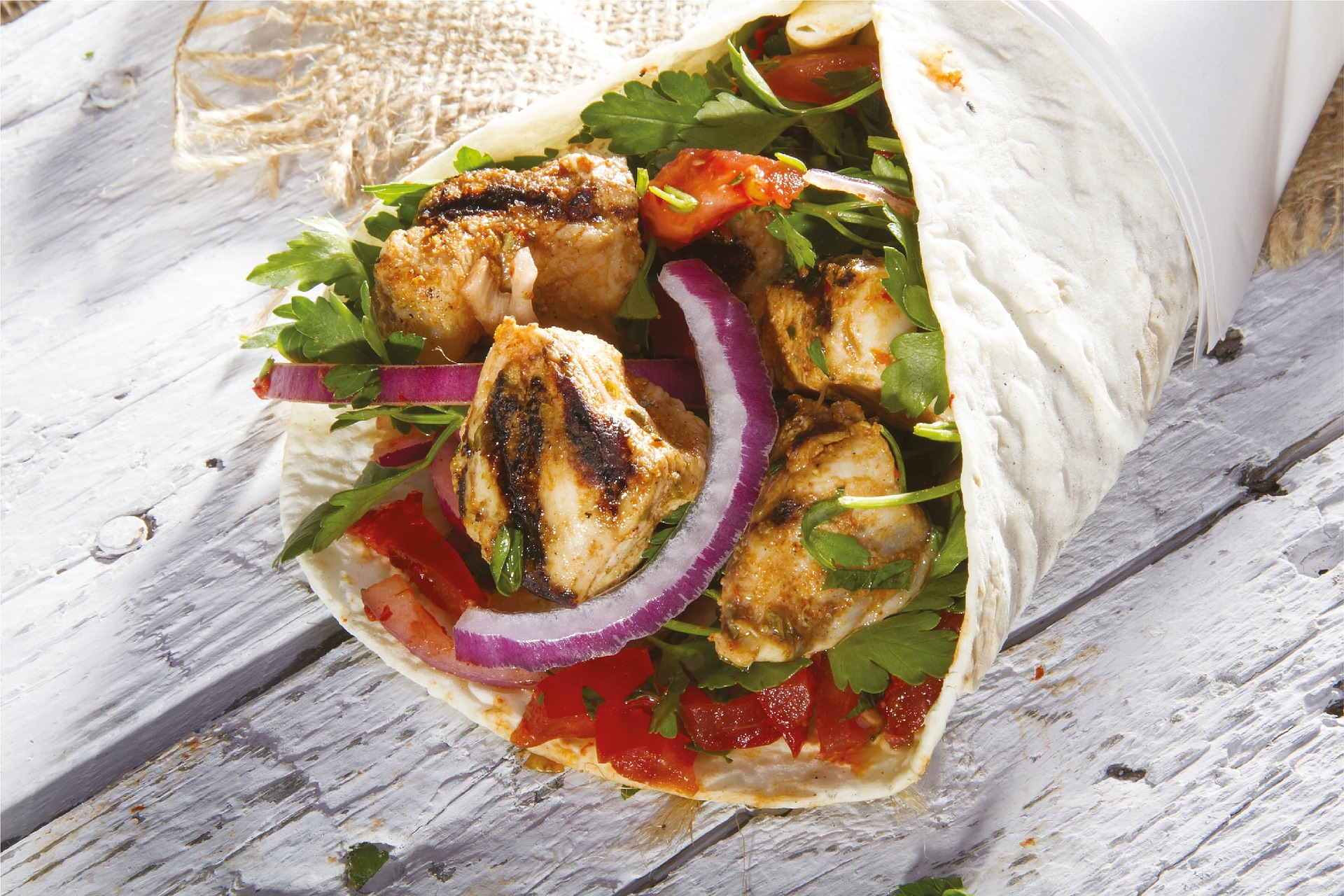
    A deadly nine-nation outbreak of Salmonella Mbandaka ST413 infections is most likely due to consumption of ready-to-eat (RTE) chicken products and/or fresh chicken meat, such as those used in sandwiches and wraps.

    According to the European Centre for Disease Prevention and Control,  196 cases have been reported in nine countries, including seven member states of the European Union (EU), the United Kingdom (UK), and Israel since November 8, 2022.

    Nineteen outbreak victims have been hospitalized, five of them with septicemia.

    One person–a resident of the UK–has died.

    Outbreak cases have been reported by the following countries:

    • Czechia (Czech Republic): 5 (none confirmed as yet)
    • Estonia: 3 (all confirmed)
    • Finland: 89 (42 confirmed and 47 possible)
    • France: 10 (all confirmed)
    • Germany: 2 (all confirmed)
    • Ireland: 1 (all confirmed)
    • Netherlands: 1 (all confirmed)
    • Israel: 4 (none confirmed as yet)
    • United Kingdom: 81 (all confirmed)

    The UK was the first country to detect the outbreak, reporting a cluster of 31 cases from England (25), Scotland (3) and Wales (3) on May 20, 2022. Sample collection dates ranged between September 24, 2021 and April 23, 2022. Four of the patients were hospitalized, and one has died.

    Finland followed on the UK’s heels with a report of nine cases on June 16, 2022.

    The Finnish food safety authority has linked suspect products to an Estonian company, but this link could not be verified by traceback identification or microbiological analysis.

    The European Centre for Disease Control (ECDC) is encouraging its member countries to sequence the genomes of Salmonella Mbandaka isolated from human sources and to interview those patients whose isolates match the outbreak strain.

    Salmonella Mbandaka was first reported in 1948 in the Belgian Congo, where it was recovered from a patient suffering from salmonellosis.

    The ST413 strain entered the Polish feed and poultry sector in the 1990s, and has been circulating in Poland and other EU countries since then.

    The ECDC warns that new cases are likely to occur until the source of the outbreak has been identified and controlled.