The CDC, the FDA, and several state agencies are working together to investigate 18 cases of Salmonella Enteritidis illnesses in 6 states.
Two people have been hospitalized.
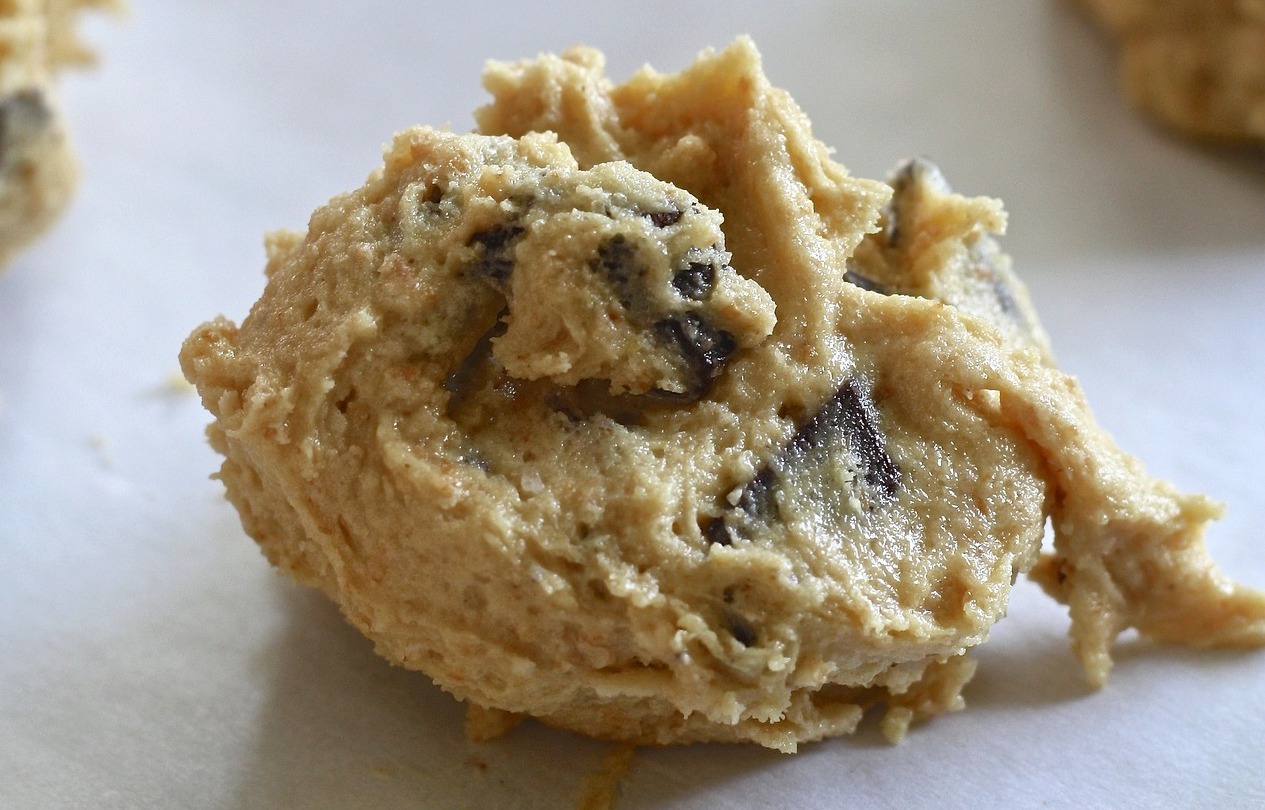
The illnesses are believed to be linked to Papa Murphy’s Take ‘N’ Bake raw Chocolate Chip Cookie and S’mores Bars dough.
The implicated products are sold in Papa Murphy’s stores across the United States.
The company has temporarily stopped sale of their raw cookie dough products.
Outbreak-related cases of Salmonella Enteritidis have been reported by the states of California (1), Idaho (4), Missouri (1), Oregon (4), Utah (2), and Washington (6).
At least two of the victims infected with the outbreak strain did not eat at Papa Murphy’s.
Investigators are working to identify the contaminated ingredient in the raw cookie dough products.
Advice for consumers
Check your refrigerator and freezer for Papa Murphy’s chocolate chip cookie dough or S’mores bars dough. Throw away any remaining raw cookie dough even if it didn’t make you sick, and wash all surfaces and utensils that may have come into contact with the raw dough.
Due to the potential for contamination, never eat any raw cookie or dessert dough that is supposed to be cooked or baked. Papa Murphy’s Chocolate Chip Cookie and S’mores Bars dough are not meant to be eaten raw.
Always wash hands, work surfaces, and utensils thoroughly after contact with raw dough or batter.
Keep raw food or dough separate from other foods while preparing them to prevent any possible contamination from spreading. Carefully clean and sanitize surfaces and utensils that came in contact with raw dough.
Contact your healthcare provider if you think you may have symptoms of Salmonella infection after eating Papa Murphy’s Chocolate Chip Cookie and S’mores Bars dough.
“Reads like a true crime novel” – Food Safety News
Interested in learning more about food safety and the history of foodborne disease outbreaks and investigations?
Click on the link to listen to a short excerpt, then follow the buy links to add a digital, print or audio copy to your personal library.
Marler proposed that Congress split the Food and Drug Administration into two separate agencies—one with responsibility for food safety and human nutrition, and the other for drugs, cosmetics and medical devices.
While I agree with the need for a separate agency to oversee food safety and human nutrition, I believe Marler’s proposal does not go far enough.
It is time to consolidate all food safety activities at the federal level under a single umbrella.
Here’s why.
Split jurisdiction
At present, responsibility for overseeing food safety is split between two main federal agencies: the FDA and the Food Safety and Inspection Service (FSIS) of the US Department of Agriculture (USDA).
The USDA is responsible for the safety of meat and poultry, catfish, and egg products.
The FDA is responsible for the safety of all food products that do not contain meat or poultry, for intact eggs, and for all fish other than catfish.
This division of responsibility by commodity has led to some strange and confusing situations.
canned foods containing meat or poultry come under FSIS jurisdiction, while all other canned foods are FDA-regulated.
pizzas containing more than 2% meat are the responsibility of FSIS; less than 2% meat, and the FDA takes over.
open-faced sandwiches containing meat are overseed by FSIS; closed sandwiches are the responsibility of the FDA, whether or not meat is present.
These arbitrary distinctions mean that many food processing plants must answer to two separate federal agencies.
Conflict of interest
The USDA operates under a double mandate.
On the one hand, it is responsible for certifying that the food products under its jurisdiction are safe for human consumption.
On the other hand, the USDA also is charged with promoting US agricultural products both domestically and to overseas markets.
This is akin to having the quality assurance department of a food company report to the head of the marketing department.
We have seen the consequences of this conflict most recently in the FSIS draft proposal to allow as much as one Salmonella per gram of chicken in raw, breaded stuffed chicken products.
Advertisements
An immodest proposal
It is time to demolish the current ineffective, wasteful, and conflicted system and build a new one, centered on a new Food Safety and Nutrition Agency (FSNA) with a seat at the Cabinet table.
The FSNA would take over all of the food safety and nutrition program activities currently performed by the FDA. In addition, all responsibility for meat, poultry, egg products and catfish would fall under the FSNA umbrella.
The USDA would retain responsiblity for certifying the fitness of livestock for slaughter and certifying the fitness of their meat for human consumption.
At the moment meat or poultry leaves the slaughterhouse, jurisdiction would shift to the FSNA.
This approach would have the benefit of eliminating the conflict of interest inherent in the USDA’s double mandate. It would also unscramble the arbitrary and confusing overlap of jurisdictions between the FDA and the FSIS.
The consolidation of all food safety responsibilities within a single, independent agency is not a new idea.
The Canadian Food Inspection Agency (CFIA) was created in 1997 by consolidating into a single agency the food safety components of the Health Protection Branch (then the Canadian equivalent to the FDA), the Department of Agriculture, and the Department of Fisheries and Oceans.
Other countries, including the United Kingdom, Australia, and New Zealand have followed a similar path.
The bottom line
Congress created the current dysfunctional structure over a span of many decades.
Therefore, it is up to Congress to deconstruct this broken system and build a new one that will work to the benefit of the public it has been elected to represent.
“Reads like a true crime novel” – Food Safety News
Interested in learning more about food safety and the history of foodborne disease outbreaks and investigations?
Click on the link to listen to a short excerpt, then follow the buy links to add a digital, print or audio copy to your personal library.
On April 25, 2023, the Food Safety and Inspection Service (FSIS) of the US Department of Agriculture (USDA) proposed its first ever limit on the level of Salmonella in raw chicken.
Under the new proposal, the chicken ingredient used in the manufacture of breaded, stuffed raw chicken products must not contain more than one live Salmonella per gram of chicken.
The FSIS will consider any breaded, stuffed raw chicken product to be adulterated if it is manufactured using a chicken ingredient that exceeds the one-per-gram limit.
The proposed limit does not apply to other forms of breaded raw chicken products, such as nuggets, patties, or chicken fingers.
The details will be published in the Federal Register, and the public will have a 60-day period in which to provide comments on the new proposal.
Why now?
In 1998-2020, the FSIS carried out 178 Salmonella outbreak investigations associated with raw and cooked chicken products. Fourteen of them involved breaded, stuffed raw chicken products.
According to statistics cited in the draft proposal, breaded stuffed chicken products accounted for less than 0.15% of the total US chicken supply, yet were associated with approximately 5% of all chicken-associated outbreaks in the United States.
In 2006, following a series of outbreaks, the FSIS urged the poultry industry to modify the labeling on packages of breaded, stuffed chicken products to emphasize to consumers that these products are, in fact, raw and that they must be cooked to an internal temperature of 165º.
That same year, the FSIS issued guidance to consumers regarding safe cooking practices for these products.
Nevertheless, additional outbreaks occurred in 2008-2009, 2013, 2014, 2015-2016, and 2021, leading the FSIS to propose this new policy approach.
Conversely, the National Chicken Council has voiced its opposition to the proposed policy change.
According to reporting by Food Safety News, the Council raised concerns regarding economic impacts, job losses, and an “abrupt shift” in longstanding policy—a shift that the industry group claimed was not science-based.
Impact on food safety
The USDA argues, based on anticipated portion size and the expectation that at least some of the Salmonella will be killed when the raw chicken products are cooked, that their proposed limit “…should significantly mitigate the risk of illness…” associated with the raw, breaded stuffed chicken products.
But other countries have chosen a different path.
In the past, Canada also struggled with repeated outbreaks of Salmonella associated with raw, breaded chicken products.
On April 1, 2019, the Canadian Food Inspection Agency (CFIA) implemented a new policy designed to reduce the risk of Salmonella illnesses associated with these products.
That policy included a “zero tolerance” for Salmonella in a 125g sample of the raw chicken mix used to manufacture the targeted products.
This specification is 125 times as stringent as the proposed USDA limit.
There have been no reported outbreaks of Salmonella in Canada linked to consumption of raw, breaded chicken products manufactured since the new policy took effect.
In the United Kingdom and member countries of the European Union, the detection of Salmonella in any raw poultry product—intact, ground, and/or breaded—is grounds for initiating a product recall.
When viewed against the backdrop of European and Canadian policies, the proposed USDA approach is barely a first baby step in the direction of mitigating the risk of Salmonella outbreaks linked to raw, breaded stuffed chicken products.
And this new policy will have no effect at all on the risk of Salmonella infections from other raw poultry, whether due to undercooking or cross-contamination.
By the numbers
In its draft proposal, the USDA acknowledges that infective doses as low as from 1 to 420 Salmonellaorganisms per person have caused illnesses in previous outbreaks, with a median dose of 36 Salmonella per person.
At a permitted level of one Salmonella per gram, a 3-ounce (85g) portion of breaded stuffed chicken would contain, in theory, 85 Salmonella cells before cooking.
If the product is allowed to thaw and remain at or above room temperature before cooking, either in the car or in the home, these numbers will increase.
The best way to ensure that temperature abuse does not lead to a dangerous level of Salmonella is to start with as clean a slate as possible.
In this context, a limit of one Salmonella per gram is a recipe for disaster.
Faulty focus
The USDA has limited its proposal to breaded, stuffed raw chicken products, arbitrarily exempting all other breaded raw chicken products—indeed, all other raw poultry—from any limitation on the presence of Salmonella in the product.
This is a mistake. There is absolutely no scientific or epidemiological basis for this decision.
Canada, too, has made a similar error. While the Canadian “zero-tolerance” policy is far more stringent than the proposed USDA approach, the CFIA has limited that policy to breaded raw chicken products that are NOT stuffed, exempting all other raw poultry from this Salmonella control measure.
Neither country has adopted Salmonella-control measures that would reduce the risk of cross-contamination due to raw poultry in the kitchen.
It is time for both countries to face the reality that the presence of Salmonella in any raw poultry meat represents a significant health hazard to the general public and must be addressed at the source.
The time for baby steps is over.
“Reads like a true crime novel” – Food Safety News
Interested in learning more about food safety and the history of foodborne disease outbreaks and investigations?
Click on the link to listen to a short excerpt, then follow the buy links to add a digital, print or audio copy to your personal library.



 eFoodAlert