
USDA locks barn door after Listeria escapes

Five months after the CDC posted the initial notice of a Listeria monocytogenes outbreak ultimately traced to Boar’s Head deli meats, the USDA’s Food Safety and Inspection Service (FSIS) has announced a series of “…stronger measures to protect the public from Listeria monocytogenes.”

The announced measures fall into three categories, described in the FSIS announcement as:

  • enhancing its science-based approach to mitigate foodborne pathogens, with a key focus on Listeria monocytogenes;
  • improving training and tools for its inspection workforce;
  • evolving its oversight of regulated facilities, with an emphasis on data review and state inspection agreements.

Specific measures will include:

  • expanding testing to include species of Listeria other than Listeria monocytogenes
  • asking the National Advisory Committee on Microbiological Criteria for Foods to review the agency’s regulatory approach
  • updating training for the agency’s food safety inspectors
  • conducting Food Safety Assessments at ready-to-eat meat and poultry facilities that rely exclusively on sanitation measures to control for Listeria
  • FSIS field supervisors to conduct in-person, follow-up visits when problems are identified during Food Safety Assessments
  • weekly verification of “risk factors” at ready-to-eat facilities
  • updating cooperative agreements with participating state agencies
  • revising criteria that are used to trigger establishment-review alerts

The FSIS announcement comes on the heels of two separate and deadly outbreaks of Listeria monocytogenes, both of which were traced to products that fall under FSIS regulatory authority.

On July 19, 2024, the CDC announced that it was investigating an outbreak of Listeria monocytogenes illnesses that had begun in late May 2024.

By the time the outbreak had ended, the agency documented 61 cases in 19 states. Sixty of the victims were hospitalized.

Ten people died.

Epidemiological, traceback, and laboratory investigations confirmed Boar’s Head liverwurst and other Boar’s Head deli meats as the source of the outbreak.

Information released by the FSIS in response to multiple Freedom of Information Requests revealed that the agency had been aware of major deficiencies at the Boar’s Head production facility since October 2022, but had taken no action to suspend production or order a clean-up. These deficiences were described as posing an “imminent threat to product” in a Food Safety Assessment conducted in September/October 2022.

On November 22, 2024, the CDC announced a second Listeria monocytogenes outbreak linked to ready-to-eat meat and poultry products.

This outbreak, which is still on-going, comprises 19 cases in 8 states. Seventeen of the outbreak victims have been hospitalized.

Two people have died—both of them infants.

Epidemiology, traceback, and lab investigations pointed to ready-to-eat meat and poultry products from Yu Shang Foods as the source of the outbreak.

In October 2024, BrucePac recalled 11,765,285 pounds (5,882 tons) of ready-to-eat meat and poultry products manufactured from May 31, 2024, to October 8, 2024, due to potential adulteration with Listeria monocytogenes.

The products were shipped to other establishments and distributors nationwide then distributed to restaurants, schools and institutions.

Fortunately, no outbreak was associated with this massive recall.

Unlike facilities that fall under FDA jurisdiction, FSIS-inspected plants are not permitted to operate “without benefit of inspection.” In theory, this should ensure that food produced under FSIS jurisdiction are safe to eat.

In practice, the level of scrutiny will undoubtedly vary, depending on the competence of the federal or state inspector assigned to a production plant and the willingness of the agency to take action based on the violations identified by the embedded inspectors.

In the case of Boar’s Head, the FSIS allowed a bad situation to become progressively worse, only taking enforcement action once the company had been identified unequivocally as the source of a deadly Listeria monocytogenes outbreak.

Had the FSIS acted in October 2022 on the report of its Food Safety Assessment, the outbreak would not have occurred, and ten people would not have lost their lives to a liverwurst sandwich.

On the face of it, the measures contained in the FSIS announcement appear reasonable and should improve the agency’s oversight of the industry it is tasked with supervising.

The effectiveness of these proposed measures will depend on the willingness of FSIS supervisory and management personnel to take prompt and significant action when presented with evidence of violations.


TAINTED formats 3
“Reads like a true crime novel” – Food Safety News

Interested in learning more about food safety and the history of foodborne disease outbreaks and investigations?

Click on the link to listen to a short excerpt, then follow the buy links to add a digital, print or audio copy to your personal library.

Chapter 6. Birth of a Pathogen

TAINTED is available in digital format from all major on-line retailers. Press the button to go directly to your preferred digital bookstore.

Mexican cucumbers likely source of new Salmonella outbreak

Cucumbers imported from Mexico are the probable source of a 68-case outbreak of Salmonella Typhimurium according to information released today by the CDC.

The cucumbers were grown by Agrotato, S.A. de C.V. in Sonora, Mexico, and sold between October 12, 2024 and November 26, 2024.

Eighteen people have been hospitalized. There have been no deaths reported so far.

Outbreak victims range in age from <1 to 98 years of age. Approximately two-thirds of the victims are female.

Outbreak cases have been reported in 19 states, including: Alaska, California, Colorado, Iowa, Illinois, Massachusetts, Montana, Nebraska, New Jersey, New York, Ohio, Oregon, Pennsylvania, South Dakota, Texas, Utah, Washington, Wisconsin, and Wyoming.

Six illness sub-clusters were identified at two assisted living facilities, three school districts, and one restaurant. An illness sub-cluster is a group of unrelated people who all ate at the same location or event, such as a restaurant, long-term care facility, or school.

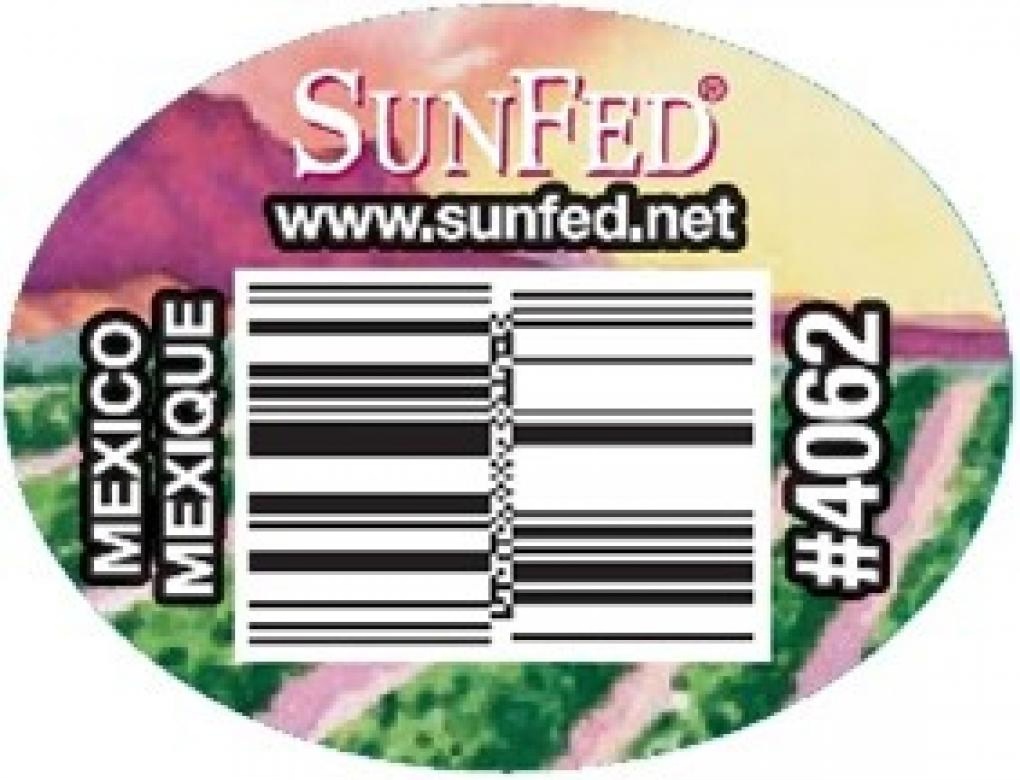
On November 27, 2024, Sunfed Produce, LLC recalled all sizes of whole fresh American cucumbers packaged in bulk cardboard containers labeled with the “SunFed” label or in a generic white box or black plastic crate with a sticker that provides the implicated grower’s name.

The whole fresh American cucumbers were sold by SunFed and other importers and shipped to customers in Alaska, Arizona, Arkansas, California, Colorado, Connecticut, Florida, Idaho, Illinois, Indiana, Kansas, Maryland, Massachusetts, Minnesota, Missouri, New Jersey, New York, North Carolina, Oklahoma, Pennsylvania, Tennessee, Texas, Utah, Virginia, Washington, and Wisconsin and the Canadian provinces of Alberta, British Columbia, Calgary, Saskatchewan, and Ontario.

The cucumbers were supplied to both retailers and food service operators.

On November 28, 2024, the Canadian Food Inspection Agency issued a statement alerting Canadians to the SunFed cucumber recall.

This is the second time in less than a year that cucumbers have been the source of a Salmonella outbreak.

Earlier this year, Florida-grown cucumbers were blamed for more than 550 Salmonella infections between March 11, 2024, and July 26, 2024, in an outbreak that spread over 34 states and the District of Columbia and sent 155 people to hospital.

Do not eat any recalled cucumbers.

  • Throw them away or return them to where you bought them.
  • Look for a sticker that shows “SunFed Mexico” as the place where cucumbers were grown.
  • If you bought whole fresh American cucumbers during October 12 and November 26 and can’t tell where they are from throw them away.

Wash items and surfaces that may have touched the recalled cucumbers.

  • Use hot soapy water or a dishwasher.

Call your healthcare provider if you have any of these severe Salmonella symptoms:

  • Diarrhea and a fever higher than 102°F
  • Diarrhea for more than 3 days that is not improving
  • Bloody diarrhea
  • So much vomiting that you cannot keep liquids down
  • Signs of dehydration, such as:
  • Not peeing much
  • Dry mouth and throat
  • Feeling dizzy when standing up
  • Do not sell or serve recalled cucumbers grown by Agrotato, S.A. de C.V. in Sonora, Mexico, including recalled cucumbers from SunFed Produce, LLC.
  • Wash and sanitize items and surfaces that may have come in contact with recalled cucumbers.
  • When possible, notify customers who purchased recalled cucumbers.

TAINTED formats 3
“Reads like a true crime novel” – Food Safety News

Interested in learning more about food safety and the history of foodborne disease outbreaks and investigations?

Click on the link to listen to a short excerpt, then follow the buy links to add a digital, print or audio copy to your personal library.
Chapter 6. Birth of a Pathogen

TAINTED is available in digital format from all major on-line retailers. Press the button to go directly to your preferred digital bookstore.

Organic carrots linked to deadly E. coli O121:H19 outbreak

Organic whole carrots and organic baby carrots have been linked to a 39-case outbreak of E. coli O121:H19 in the United States.

Cases have been reported in 18 states; fifteen people have been hospitalized.

One person has died in California.

Outbreak victims range in age from 1 to 75 years old.

Grimmway Farms has recalled the following carrots, which were shipped directly to retail distribution centers nationwide in the United States, Puerto Rico, and Canada.

  • Organic whole carrots, which do not have a best-if-used-by date printed on the bag, but were available for purchase at retail stores from August 14 through October 23, 2024,
  • Organic baby carrots with best-if-used-by-dates ranging from September 11 through November 12, 2024. The recalled carrots should not be available for purchase in stores but may be in consumers’ refrigerators or freezers.

According to the FDA, the recalled carrots should no longer be in grocery stores but may be in consumers’ refrigerators or freezers.

Organic whole carrots were sold in bags of various sizes under multiple brand names, including: 365, Bunny Luv, Cal-Organic, Compliments, Full Circle, Good & Gather, Greenwise, Marketside, Nature’s Promise, O-Organics, President’s Choice, Simple Truth, Trader Joe’s, Wegmans, and Wholesome Pantry.

Organic baby carrots were sold in multiple bag sizes under the brand names: 365, Bunny Luv, Cal-Organic, Compliments, Full Circle, Good & Gather, Greenwise, Grimmway Farms, Kroger, LIDL, Marketside, Nature’s Promise, O-Organics, President’s Choice, Raley’s, Simple Truth, Sprouts, Trader Joe’s, Wegmans, and Wholesome Pantry.

Grimmway initiated the recall after being advised by the CDC that these carrots may be “associated” with the E. coli O121:H19 outbreak.

None of the recalled carrots have tested positive for E. coli O121:H19, according to Grimmway.

The first news of the outbreak was contained in the FDA’s weekly Investigation of Foodborne Illness Outbreaks report, posted on November 6, 2024, and updated on November 14, 2024.

According to the CDC, outbreak cases have been reported in Arkansas (1), California (3), Colorado (1), Massachusetts (1), Michigan (1), Minnesota (5), Missouri (1), North Carolina (1), New Jersey (2), New York (5), Ohio (1), Oregon (3), Pennsylvania (1), South Carolina (2), Texas (1), Virginia (1), Washington (8), and Wyoming (1).

No information has been released as to the distribution of outbreak cases across the United States.

Although the implicated carrots are no longer available for purchase, they may be in consumers’ refrigerators or freezers. Consumers who purchased any of the carrots listed in the recall notice should check their refrigerators and freezers, discard any remaining product, and clean and sanitize any surfaces with which they may have come into contact.

Consumers with questions or products in their possession may contact our customer services desk at 1-800-301-3101, M-F, 8 am – 8 pm ET, and November 16-17, 8 am – 8 pm ET, or visit www.grimmway.com.


TAINTED formats 3
“Reads like a true crime novel” – Food Safety News

Interested in learning more about food safety and the history of foodborne disease outbreaks and investigations?

Click on the link to listen to a short excerpt, then follow the buy links to add a digital, print or audio copy to your personal library.

Chapter 6. Birth of a Pathogen

TAINTED is available in digital format from all major on-line retailers. Press the button to go directly to your preferred digital bookstore.