Pet owners warned to avoid certain Evanger’s and Against the Grain dog food
Against the Grain
FDA is advising pet owners and pet caretakers not to feed their pets with certain lots of Evanger’s and Against the Grain dog food after confirming the presence of the euthanasia agent pentobarbital in both products.
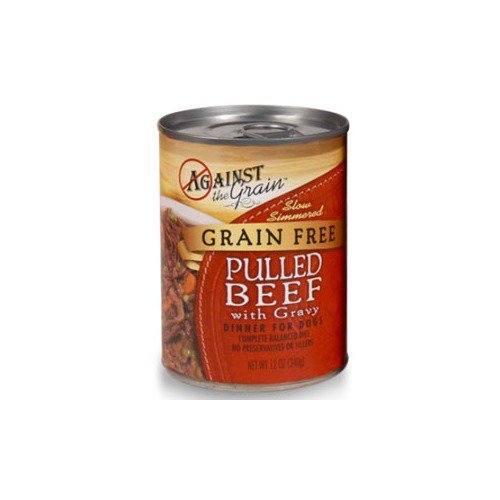
Following discussions with FDA, Evanger’s announced a voluntary recall on February 3, 2017 of five lots of its 12-ounce Hunk of Beef canned dog food, all with an expiration date of June 2020: 1816E03HB, 1816E04HB, 1816E06HB, 1816E07HB, and 1816E13HB. On February 9th, Against the Grain voluntarily recalled lot #2415E01ATB12 BEST DEC 2019 of its Grain Free Pulled Beef with Gravy dog food after the agency detected pentobarbital that product. The Pulled Beef with Gravy was manufactured in the same facilities as Evanger’s products and using beef from the same supplier.
In addition to the presence of pentobarbital, FDA reports a bill of lading from Evanger’s supplier of ‘Inedible Hand Deboned Beef – For Pet Food Use Only. Not Fit for Human Consumption’. This is despite Evanger’s claim that the beef in its Hunk of Beef product came from a ‘USDA approved’ supplier. FDA also has determined that the supplier’s facility does NOT have a grant of inspection from USDA’s Food Safety and Inspection Service. The meat from the supplier does not bear a USDA inspection mark and would not be considered human grade. Lab testing by USDA-FSIS of Evanger’s Hunk of Beef confirmed that the meat in the product was beef.
Other issues cited in a preliminary investigation report (FDA Form 483) released today by FDA include evidence of unsanitary conditions, inadequate refrigeration, improper storage, and inadequate control of ambient temperature during hand-packing operations at Evanger’s Wheeling, IL facility and unsanitary conditions and ‘avian activity’ at its Markham, IL manufacturing location.
FDA’s investigation is ongoing and will include examination of the suppliers of beef to Evanger’s and Against the Grain to determine the source of the pentobarbital. The agency is also coordinating with USDA to address possible areas of shared jurisdiction.
Consumers with cans of the recalled product should refer to the Evanger’s and Against the Grain recall notices for information on returning the product.
This article first appeared on Food Safety News and is reposted here with permission.
Late this afternoon, Against the Grain Pet Food voluntarily recalled one lot of Against the Grain Pulled Beef with Gravy Dinner for Dogs (12 oz. cans; Lot #2415E01ATB12; Expiration date of December 2019) due to the potential presence of pentobarbital. The recalled dog food was manufactured and distributed in 2015 to independent pet retail stores in Washington and Maryland.
Unlike 95% of other brands, Against the Grain owns its own manufacturing facility and produces its own products. This gives us accessibility and the ability to create totally unique and innovative products. Our manufacturing plant adheres to the highest standards of preserving our natural resources. For example, the use of natural light (skylights) is dominant throughout our plant, we have the maximum amount of recyclable materials in our retail packaging, all packaging materials are recycled, our water is supplied by our own on-site well, resulting in our conscious efforts to be socially and economically responsible.
In fact, Against the Grain Pet Food is part and parcel of the Sher family business. The telephone number provided on the Against the Grain Pet Food Contact page is 847-537-0102, the same phone number that appears in the February 3rd Evanger’s recall notice. The Against the Grain trademark (serial number 85569018) was registered on 2013-02-12 and is owned by Chelsea L. Sher. And, according to an article in the August 2012 issue of Pet Business, the Against the Grain product line, launched by Chelsea Sher and her twin brother Brett Sher, is manufactured at the Evanger’s factory. In effect, Against the Grain is an Evanger’s brand.
So, what’s the big deal?
The big deal is that the product recalled on February 3rd by Evanger’s was manufactured in June 2016 (with a June 2020 expiry date). The Against the Grain product recalled earlier today was manufactured six months earlier, in December 2015 (with a December 2019 expiry date). This is not a one-shot event.
The Against the Grain recall notice states that the recall was initiated “Out of an abundance of caution.” What does this mean? Now, we enter the realm of speculation – something I am not usually willing to do. This time, though, I’ll make an exception. There are four possibilities that come to mind.
Possibility #1: The same shipment of beef was used to manufacture both recalled products.
This strikes me as highly unlikely. First of all, the February 3rd recall was for ‘Hunks of Beef’, while today’s was for ‘Pulled Beef’ – two entirely different formats. Secondly, if the same shipment was used in both products, the ‘Hunks of Beef’ product would have been manufactured with 6-month old beef. Possible, of course, but not highly probably, unless the company stores its raw meat in the deep freeze for months at a time.
Possibility #2: Beef from the same supplier was used to manufacture both recalled products, and the manufacturer is just being super-cautious.
We feel that we have been let down by our supplier, and in reference to the possible presence of pentobarbital, we have let down our customers. Despite having a relationship for forty years with the supplier of this specific beef, who also services many other pet food companies, we have terminated our relationship with them and will no longer purchase their beef for use in our Hunk of Beef product. As Hunk of Beef is a very unique product, requiring very specific cuts of meat, this supplier’s meat was used in no other products.
If this is accurate, then the Against the Grain product should not contain meat from this supplier at all. Again, this explanation does not make sense.
Possibility #3: Either the company or FDA arranged for lab testing of a number of Evanger’s products and detected pentobarbital in a sample of the Against the Grain product.
Based on my years of off-and-on contact with the food industry and regulatory bodies, I am confident that FDA is testing extensively for pentobarbital in samples of Evanger’s products. We won’t know what, if anything, they find until their investigation is complete and they release their results. However, a positive finding of pentobarbital would certainly trigger an immediate recall.
Possibility #4: Either the company or FDA has found evidence that meat from an unauthorized source was introduced into the company’s products.
This, too, would be sufficient to trigger a recall “Out of an abundance of caution.” Again, we won’t know whether or not this took place until FDA completes its investigation.
The good news for pet owners is that, so far at least, this problem appears to be confined to products manufactured at Evanger’s Wheeling, IL facility. Let’s hope it stays that way.
An unspecified number of illnesses that may be associated with consumption of PC Organics brand baby foods have been reported in Canada.
Loblaw Companies Limited has responded by expanding its initial recall notice to include all date codes of a long list of additional products. Please refer to the recall notice for a list of affected baby food pouches. According to the recall notice, published late yesterday on the Canadian Food Inspection Agency website, a “… manufacturing error resulted in excess water in the product, which under certain circumstances could support the growth of Clostridium Botulinum and pose a health risk to consumers.”
Although food contaminated with Clostridium Botulinum may not look, smell or even taste spoiled, it may contain a toxin that, if ingested, can cause nausea, vomiting, fatigue, dizziness, blurred or double vision, dry mouth, respiratory failure and paralysis. In severe cases, the toxin can cause death.
The reported illnesses have not been definitively linked to the recalled baby food; nor have they been described as being caused by ingestion of botulinum toxin. But, the manufacturing error that triggered the food recall could have opened the door to the growth of other harmful bacteria in the baby foods – bacteria such as Clostridium perfringens, which can cause gastrointestinal illness.
Which PC Organics baby food pouch products have been recalled?
The expanded recall encompasses all date codes of the following items (128mL unless otherwise noted):
Tropical Twist Smoothie with Greek Yogurt puree snack
Banana, Mango & Apple with Yogurt strained baby food
Orange Twist Smoothie with Greek Yogurt puree snack
Prunes strained baby food
Apple, Banana & Strawberry with Yogurt strained baby food (6 x 128 mL)
Sweet Potato, Apple and Mango strained baby food (6 x 128 mL)
Banana Apple & Carrot strained baby food (6 x 128 mL)
Mango strained baby food (6 x 128 mL)
Pear, Apple and Broccoli strained baby food (6 x 128 mL)
How can something as simple as too much water lead to this?
Food processors walk a food-safety tightrope every day. The conditions under which sealed packages of food are processed to ensure their safety are always in a delicate balance. Even minor changes in a recipe can affect the cooking conditions required to kill harmful bacteria. One of those changes is the amount of water that is available to the bacteria, allowing them to multiply in the food. A food with little free water will need milder cooking cooking conditions (time and temperature combination) than a food with abundant free water.
Then why not treat every food with the same severe cooking conditions?
Palatability, appearance and cost. Foods processed at a higher temperature taste overcooked, lose their natural color, and their natural texture. And, higher cooking temperatures for extended periods of time are more expensive.
What should consumers do about this recall?
Check your pantry and set aside any of the products listed in the expanded recall notice.
DO NOT try to determine whether the food is safe by smelling or tasting them. Clostridium botulinum can multiply and produce its toxin in a food without changing its appearance, smell or taste in any way.
Return any packages of recalled product to the place of purchase for a refund.
Where were the recalled products sold?
Ontario: Fortinos, Loblaws, No Frills, Real Canadian Superstore, Real Canadian Wholesale Club, valu-mart, Your Independent Grocer, Zehrs, Shoppers Drug Mart, and affiliated independent stores
Atlantic: Atlantic Superstore, Dominion, Cash&Carry, Real Canadian Wholesale Club, Your Independent Grocer, Shoppers Drug Mart, and affiliated independent stores
Québec:Club entrepôt, Maxi, Maxi & Cie, Presto, Provigo, Provigo le Marché, AXEP, Pharmaprix, and Intermarché
West: Extra Foods, Loblaws City Market, No Frills, Real Canadian Superstore, Real Canadian Wholesale Club, Your Independent Grocer, Shoppers Drug Mart, and affiliated independent stores
Finally, if you have fed one of the recalled products to your infant or toddler, and your child is experiencing any unusual symptoms, please seek immediate medical attention.


 In addition to the presence of pentobarbital, FDA reports a bill of lading from Evanger’s supplier of ‘Inedible Hand Deboned Beef – For Pet Food Use Only. Not Fit for Human Consumption’. This is despite Evanger’s claim that the beef in its Hunk of Beef product came from a ‘USDA approved’ supplier. FDA also has determined that the supplier’s facility does NOT have a grant of inspection from USDA’s Food Safety and Inspection Service. The meat from the supplier does not bear a USDA inspection mark and would not be considered human grade. Lab testing by USDA-FSIS of Evanger’s Hunk of Beef confirmed that the meat in the product was beef.


