Germany Suspects Contaminated Seeds Source of Outbreak

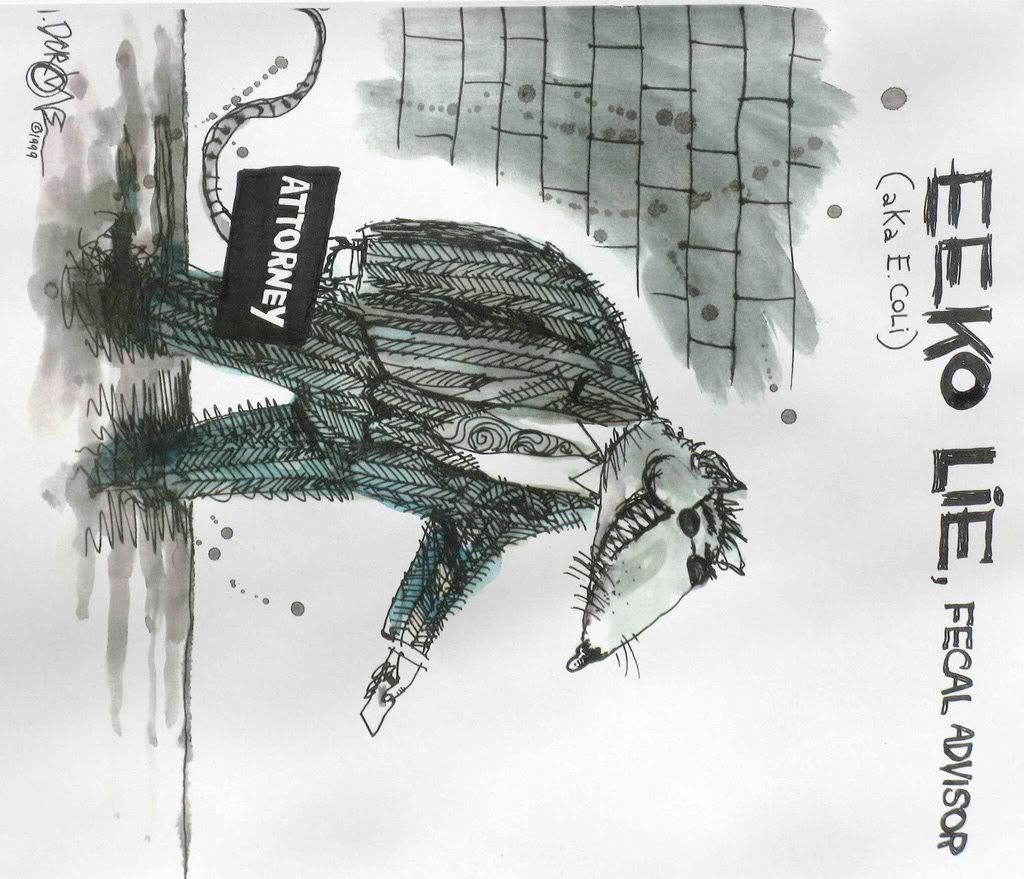
Evidence is growing that seeds used for sprouting may be the source of the E. coli O104:H4 outbreak that has sickened 3,255 people in Europe and North America, and has killed 35 people. Germany accounts for 3,147 of the illnesses and 34 of the deaths.

Germany’s Federal Institute for Risk Assessment (BfR) reports that a family in Lower Saxony became infected with enterohemmorhagic E. coli (EHEC) after eating home-sprouted seeds. Kits for growing sprouts at home are readily available in many stores.

Germany also has confirmed that the strain of E. coli O104:H4 recovered from an opened package of sprouts obtained from a household in Rhein-Sieg-Kreis is identical to the outbreak strain. Two of the family members from this household were infected with E. coli O104:H4.

The German National Reference Laboratory and diagnostic labs in other countries are currently examining seeds for E. coli contamination. German federal and state authorities are continuing to explore all possible avenues of sprout contamination, including a review of epidemiological data, distribution channels and supply lists. A recall or withdrawal of suspect seeds may follow, depending on the outcome of the .

While the outbreak strain has not yet been recovered from a sample of unsprouted seeds, BfR recommends that the public avoid consuming any raw sprouts, whether grown commercially or sprouted at home from seeds.


The Chicken Ranch

Earlier this spring, my husband, our Labradoodle and I moved into our new home in an urban area of coastal San Diego.

This neighborhood has it all – the beach, a vibrant downtown, lots of restaurants, shops and people. And chickens.

Yes, chickens are permitted under the San Diego Municipal Code, as long as they are kept 50 feet from any residence. But our next door neighbor’s chicken coop was less than half that distance from their house and within 50 feet of our house. Their half-dozen well fed hens free-ranged in the back yard, on their entry deck and into their kitchen.

Now, I have no problem with the excited sound that a hen emits when she successfully produces an egg. It is, after all, the highlight of her day. On the other hand, I have a huge problem with the flies, vermin and rodents that free range chickens attract to their immediate area. Inevitably, these “groupies” spill over into adjacent areas – including ours.

We explained to the neighbors that the chickens didn’t bother us, but that the spillover of the birds’ noisome groupies onto our property was unacceptable. We asked them to keep their yard and hen house scrupulously clean to minimize the hangers-on. When nothing happened, we complained to the City. The chickens are now gone, as is the coop.

The birds have moved a city block away, to the backyard of another household, where they are picked up and cuddled by the family’s children and their friends under the watchful eyes of an adult.

Clearly, some people either haven’t heard – or refuse to believe – that apparently healthy chickens and other poultry can harbor and spread Salmonella, Campylobacter and other diseases.

Families in 15 US states ignored the risk when they purchased chicks or ducklings as family pets this year.

CDC is tracking an outbreak of Salmonella Altona that has sickened 39 people since February 25th. Nearly half (44%) of the illnesses are in children under the age of five. More than one-quarter (28%) of the victims have been hospitalized.

Illnesses associated with the outbreak have been reported in Georgia (1), Indiana (1), Kentucky (4), Michigan (1), Maryland (3), Minnesota (1), North Carolina (6), New York (2), Ohio (8), Pennsylvania (4), Tennessee (2), Virginia (3), Vermont (1), Wisconsin (1), and West Virginia (1).

Patient interviews pointed toward contact with chicks and ducklings as a common element. Lab analyses yielded Salmonella Altona from three samples from a chick and its environment collected from an ill person’s household in Ohio, and three environmental samples collected from chick and duckling displays at two locations of a national feed store chain in North Carolina.

According to the Ohio Departments of Health and Agriculture, the chicks and ducklings were supplied by an Ohio company – Mt. Healthy Hatcheries, Inc.

CDC offers the following advice to people who want the experience of keeping poultry:

  • Wash your hands thoroughly with soap and water right after touching live poultry or anything in the area where they live and roam. Adults should supervise hand washing for young children.
  • If soap and water are not readily available, use hand sanitizer until you are able to wash your hands thoroughly with soap and water.
  • Clean any equipment or materials associated with raising or caring for live poultry outside the house, such as cages or feed or water containers.
  • Do not let children younger than 5 years of age, elderly persons, or people with weak immune systems handle or touch chicks, ducklings, or other live poultry.
  • Do not let live poultry inside the house, in bathrooms, or especially in areas where food or drink is prepared, served, or stored, such as kitchens, or outdoor patios.
  • Do not snuggle or kiss the birds, touch your mouth, or eat or drink around live poultry.

Recalls and Alerts: June 11, 2011

Here is today’s list of food safety recalls, product withdrawals, allergy alerts and miscellaneous compliance issues. The live links will take you directly to the official recall notices and company news releases that contain detailed information for each recall and alert.

If you would like to receive automatic email alerts for all new articles posted on eFoodAlert, please submit your request using the sidebar link.

United States

  • Allergy Alert: Kom Son Food Co. (Oakland, CA) recalls Kim So’n Cooked Beef Meat Balls With Chicken & Anchovy Flavored Fish Sauce Added (12 oz. packages), Kim So’n Cooked Pork Meat Balls Anchovy Flavored Fish Sauce Added (12 oz. packages), and Kim So’n Cooked Beef & Tendon Meat Balls With Chicken & Anchovy Flavored Fish Sauce Added (5-lb packages), due to the presence of undeclared wheat. The recalled items were produced on December 9, 2010 through June 9, 2011 and shipped to retail establishments and restaurants in Pennsylvania, Texas, Virginia and California (San Francisco Bay area, only).
  • Outbreak Alert: The CDC has signaled the presence of a norovirus outbreak in Clanton, Alabama, according to a report in The Clanton Advertiser. Several victims have visited the emergency department of Chilton Medical Center with symptoms of vomiting and/or diarrhea consistent with the viral infection.

Canada

  • Outbreak Alert: Forty-nine cases of hospital-acquired Clostridium difficile infections were diagnosed between January 1st and May 6th, 2011 in Cape Breton (NS). The majority of the cases were concentrated in Cape Breton Regional Hospital (32 cases) and Glace Bay Hospital (11 cases).

Europe

  • Food Safety Recall (Netherlands): Van der Plas recalls Rosabi Sprouts® beet sprouts after the Food Safety Authority finds EHEC-E. coli in a sample of the product. The strain of E. coli is different from the E. coli O104:H4 bacterium that has sickened more than 3,000 people, most of them in Germany.
  • Outbreak Alert (UK): Forty (out of 150) guests at a reception south east of Huddersfield town centre have been stricken with vomiting and diarrhea after eating a meal at the June 3rd event. The source of the outbreak is under investigation.

Asia, Africa and the Pacific Islands

  • Outbreak Alert (Mongolia): At least 89 members of a construction crew who were building a road to the Oyu Tolgoi Mine from the village of Khanbogd (Umnugobi Province) developed food poisoning after eating chicken supplied by the Nomads restaurant chain. Two of the ill workers are reported to be in serious condition.

Latin America and the Caribbean

  • Outbreak Alert Update (Haiti): The Pan American Health Organization reports that 2,600 people become infected with cholera weekly in Haiti. An increase in the number of new infections coincided with the onset of rain storms. Only 2% of the population have access to safe drinking water.

Some supermarket chains post recall notices on their web sites for the convenience of customers. To see whether a recalled food was carried by your favorite supermarket, follow the live link to the supermarket’s recall web site.