Here is today’s list of food safety recalls, product withdrawals, allergy alerts and miscellaneous compliance issues. The live links will take you directly to the official recall notices and company news releases that contain detailed information for each recall and alert.
If you would like to receive automatic email alerts for all new articles posted on eFoodAlert, please submit your request using the sidebar link.
United States
- Allergy Alert: Alexis Wholesale, Inc. (Gardena, CA) recalls Salvadorian Brand Chorizo (10-lb boxes; Est. 44823), due to the presence of undeclared monosodium glutamate. The recalled sausages were manufactured on July 2-27, 2012 and sold to a distributor in Los Angeles, CA.
- Allergy Alert: Two Moms in the Raw (Lafayette, CO) recalls Two Moms in the Raw, Gluten-Free Pesto Sea Crackers (4 oz pkg; Lot Nos. 1008, 1016, 1027, 1055, and 1067), because they may contain undeclared peanuts. The recalled batches were distributed from 7/2/2012 to 8/6/2012 to retailers and distributors nationwide.
- Food Safety Recall: Reichel Foods (Rochester, MN) recalls Armour Active Packs Turkey & Cheese Wrap (5.6 oz pkgs; Package code 1026090112 or Case code 27815-17994; Sell by date of Sept 1, 2012) and Armour Active Packs Ham & Cheese Wrap (5.6 oz pkg; Package code 1026090112; Case code 27815-17995; Sell by date of Sept 1, 2012), because the ready-to-eat products may be contaminated with Listeria monocytogenes. The recalled products were manufactured between July 23, 2012 and July 26, 2012 and shipped to distribution centers in Indiana, Minnesota, Pennsylvania and Texas. The products were sold in Wal-Mart stores nationwide and in Shop N Save stores in Illinois and Missouri.
- Food Safety Recall: Kenosha Beef International, Ltd. (Kenosha, WI) recalls Sam’s Choice Fireside Gourmet Black Angus Beef Patties Bacon and Aged Cheddar patties (2-lb cartons; Est 425B; Best if used by 120812B), because they may contain pieces of gasket material. The recalled product was manufactured on June 11, 2012 and distributed in Indiana, Maine, North Carolina, Ohio, Pennsylvania, South Carolina and Wisconsin.
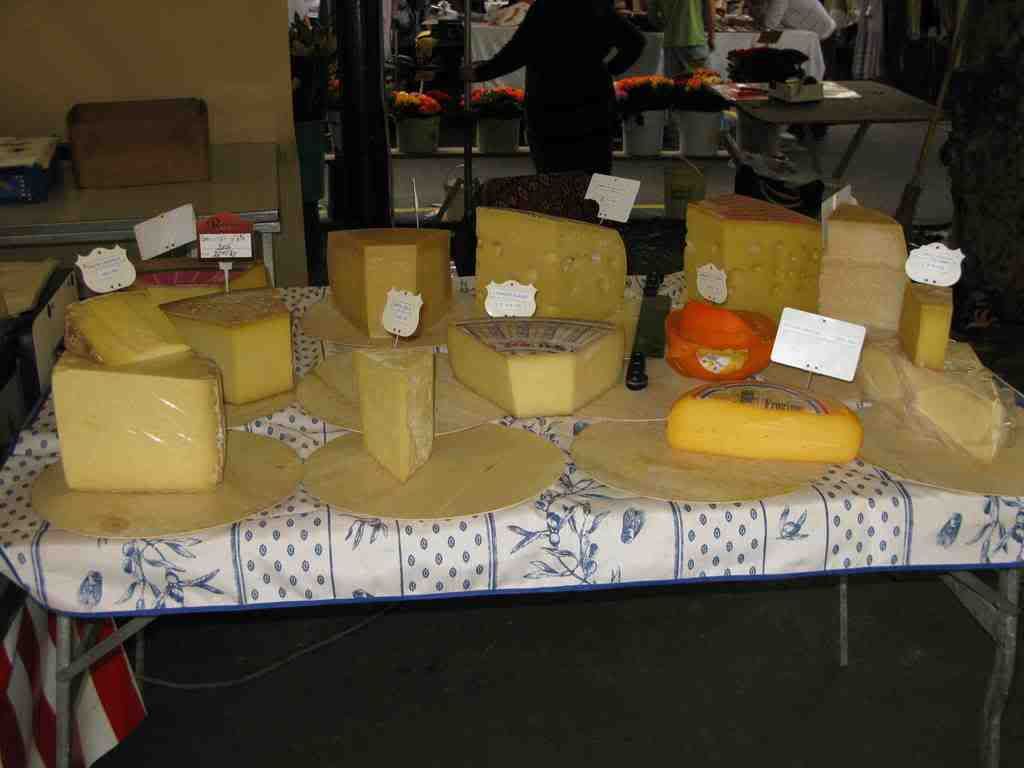
- Food Safety Recall: Tomales Bay Foods, Inc. (Petaluma, CA) recalls all partial wheels of the following cheeses, because of possible Listeria monocytogenes contamination: Shepherd’s Way; Big Woods Blue (make date 7/19/2011-7/27/2011) and Tumalo Farms; Pondhopper (pack date 6-28-2012). The recalled cheese was distributed to restaurants and retail stores in California, North Carolina, and Florida, between June 25th and July 27, 2012.
- Food Safety Recall: Menno Beachy (Cresco, IA) recalls Menno Beachy Certified Organic Grape Tomatoes (1 pt plastic clamshell containers; UPC 044419310176; Lot No (printed only on cases): MB725GT3, MB725GT8, and MB725GT0), because the Minnesota Department of Agriculture found Salmonella in a sample of Lot #MB725GT0 collected at the Minnesota distributor of the tomatoes. The recalled grape tomatoes were supplied to retail stores in Minnesota, Wisconsin and Michigan between July 26, 2012 and August 6, 2012.
- Food Safety Recall: Reichel Foods, Inc. (Rochester, MN) recalls Dippin’ Stix Apples & Caramel with Peanuts (2.75 oz single-serve trays; Case code dates 09/01/12, 09/02/12, and 09/03/12; Single use tray Use By dates 01SEP2012, 02SEP2012, and 03SEP2012) and Armour Active Packs Cheese Pizza (5.6 oz pkg; Package code 1026090112 or Case Code 27815-17996), because the products may be contaminated with Listeria monocytogenes. The recalled products were distributed to retail and convenience stores nationwide. California consumers should check the retail distribution list released by the California Department of Public Health.
- Food Safety Recall: Lucky Country (Lincolnton, NC) recalls Lucky Country Aussie Style Soft Gourmet All Natural Black Licorice (All packages sizes; Lot A3057), because the candy may contain excessive lead levels. The recalled products were sold in California, Colorado, Connecticut, Florida, Georgia, Hawaii, Iowa, Illinois, Indiana, Massachusetts, Minnesota, New Hampshire, Pennsylvania, Utah, Virginia, and Washington State.
- Food Safety Recall: Shatto Dairy (Osborn, MO) recalls Whole Milk, unflavored (1/2-gal; Code date Aug 19), 2% Milk, unflavored (1 pt; Code date Aug 19), 1% Milk, unflavored (1 qt; Code date Aug 20), Skim Milk, unflavored (1 qt; Code date Aug 19), Half and Half (1 pt; Code date Aug 19), Whole Milk, Cotton Candy flavor (1 pt; Code date Aug 20) and Cream (1 pt; Code date Aug 17), because the products may not have been adequately pasteurized. Plant operations have been suspended temporarily, pending the results of investigations by the State Milk Board, and the Missouri Departments of Agriculture and Health and Senior Services. The recalled products are packaged in glass bottles and labeled Grade “A.”
- Food Safety Recall: Christopher Ranch LLC (Gilroy, CA) recalls Fresco Green Farms Inc. brand Fresh Cilantro (30-bunch and 60-bunch undated containers), after random sampling by FDA finds Salmonella in the product. The fresh cilantro was supplied to US Foods for distribution to its customers, and may also have been supplied to other distributors.
- Food Safety Recall Update: USDA releases updated retail distribution list for various meat and poultry salad products that were recalled by Garden Fresh Foods because the onions used in the products were supplied by Gills Onions and may be contaminated with Listeria monocytogenes. The Archer Farms and Market Pantry deli salads were sold in Target stores.
- Food Safety Recall Update: Burch Equipment LLC (North Carolina) corrects the variety of cantaloupe involved in its July 28th and August 2nd recall announcements. The affected cantaloupes are the Caribbean Gold variety; Athena cantaloupes are not subject to the recall. The company has recalled nearly 189,000 cantaloupes, supplied in cases (9 melons/case) and bins (110 melons/bin), due to potential contamination with Listeria monocytogenes. The initial recall was expanded after FDA found unsanitary conditions at the cantaloupe packing shed. The Caribbean Gold cantaloupes were shipped between July 15th and July 27th and distributed in Florida, Georgia, Illinois, Maryland, Maine, North Carolina, New Jersey, New York, Pennsylvania, South Carolina and Virginia. Hannaford, Reid and Food Lion supermarkets carried the recalled Caribbean Gold cantaloupes.
- Food Safety Recall: Busch’s Fresh Food Market recalls various Busch’s brand products that contain Gills Onions’ Peeled Whole Yellow Onions, because they may be contaminated with Listeria monocytogenes. Please refer to the recall notice for a detailed list of affected products.
- Food Safety Recall: Agavera Camichines, S.A. de C.V. recalls 1800® Tequila 1.75 Liter Silver, Reposado and Coconut packaging, due to potential damage during transportation and handling in some cases to the glass stopper, which could result in the presence of small particles of glass in the bottles. Some of the recalled product was supplied to Publix and to Giant Eagle for retail sale.
- Outbreak Alert Update: CDC reports that the number of Salmonella Enteritidis infections linked to the consumption of fresh ground beef supplied by Cargill Meat Solutions has risen to 40 people in Maine (1), Massachusetts (3), New Hampshire (2), New York (18), Rhode Island (2), Vermont (11), Virginia (2), and West Virginia (1). Eleven people have been hospitalized.
- Outbreak Alert Update: CDC reports that small turtles infected with various strains of Salmonella are the source of 168 illnesses in 30 US states. Nearly two-thirds (64%) of the outbreak victims are children under the age of 10 years; 27% are one year old or less. The turtles are behind six distinct outbreaks, caused by Salmonella Sandiego, Salmonella Newport and Salmonella Poona.
Canada
- Allergy Alert: Canadian Food Inspection Agency warns that Healthy Times brand Oatmeal Cereal for Baby (170g/6oz pkg; Product of USA; UPC 0 48685 71786 8; Use by date of 15 Apr 2013) contains undeclared gluten and has been recalled by Canadian importers. The recalled product was distributed in Quebec, Ontario, Manitoba, Saskatchewan, Alberta and British Columbia and may have been distributed nationally.
- Allergy Alert: TWI Foods Inc. (Mississauga, ON) recalls Crispy Just Baked, Crispy, and Sunrize Oven Fresh brands of cookies, due to the presence of undeclared milk. Please refer to the recall notice for a complete list of affected products.
- Allergy Alert: Four Star Enterprise Co. Ltd. recalls Erom Dr. Hwang’s Black Soy and Rice Drink (16 x 190 mL; All codes) due to the presence of undeclared milk. The recalled product was sold in Alberta and British Columbia.
- Allergy Alert: Let’s Pasta Food Services Ltd. recalls Let’s Pasta Barolo Braised Beef Ravioli (500g; All codes), due to the presence of undeclared soy. The recalled product was sold in Alberta.
- Allergy Alert: Maison Dorée (Saint-Hubert, QC) recalls Pain Multi-son/Multigrain bread (6 rolls/pk; All codes), due to the presence of undeclared soy.
- Allergy Alert: Westpoint Distributors Ltd. (Vancouver, BC) recalls certain pine nut products sold under the Blush Lane Organic Market, Capers Community Market/Whole Foods Market, Charlie Brown’s, Dad’s Organic Market, Down to Earth Health Shop, Healthyway, Homesteader Health Organic, Isabel Creek Store Natural Foods, Lifeforce Health Food, Maria’s Health Foods, Nature’s Finest, Nature’s Finest Gourmet, Parsley, Sage & Thyme Health Store, Planet Organic Market, The Organic Grocer, Valley Natural Health Products, and Westpoint Naturals brands, because the products contain undeclared peanuts. Please refer to the recall notice for additional information on the recalled products, which were distributed in Alberta, British Columbia, Saskatchewan and Ontario.
- Food Safety Recall: Shah Trading Co. Ltd. (Scarborough, ON) recalls Spice Kingdom brand BASIL – EGYPTIAN, 30M, Whole, Fancy (25kg/55-lbs bulk bags; Lot #4685/E), because the product may be contaminated with Salmonella. The recalled dried basil was sold to cash & carry outlets, restaurants, bakeries and food service establishments in Quebec, Ontario and Manitoba.
- Food Safety Recall/Alert: Canadian Food Inspection Agency warns the public, distributors, and food service establishments not to consume, sell, serve or use Basil products containing dried basil recalled by Shah Trading Co. Ltd. on August 3, 2012, due to potential Salmonella contamination.
- Food Safety Recall: Agropur Cooperative recalls various Sealtest and Mac’s brand milks, due to the presence of non-harmful extraneous material. Please refer to the recall notice for details.
- Food Safety Recall: Stellar Smoked Salmon recalls Stellar Smoke Salmon brand Sliced Smoked Salmon (125g; All codes), due to a risk of Clostridium botulinum contamination. The recalled product was sold in Ontario.
- Outbreak Alert/Food Safety Recall (Quebec): L’entreprise de Mme Diane Dumont (Saint-Lambert de Lauzon) recalls Oeufs de cane Diane Dumont 1468 (12 eggs/pkg; Best before date 1708 12), because the duck eggs may be contaminated with Salmonella. One illness has been reported to be associated with the consumption of the indicated eggs so far.
Europe
- Allergy Alert (UK): Asda recalls Asda Free From 5 Caramel Wafers (Best before 03 Dec 2012), because the products, which are labeled “gluten free”, contain wheat gluten.
- Allergy Alert (UK): Premier Health Products Ltd. withdraws Basic Nutriton Odourless Garlic 60 Capsules (Best before July 2015; Batch No. M8399 and M8408) because the product contains undeclared soya. The withdrawn product was sold in Home Bargains, Branded Bargains and Quality Save retail stores.
- Food Safety Recall (Belgium): Tamarind Foods recalls Annaki Mezze Apero (320g; Lots #241432 to 241460; Best before 07/08/12 to 21/08/12) and Annaki Mezze Dolmas (380g; Lots #241432 to 241460; Best before 07/08/12 to 21/08/12), due to possible contamination with Listeria. The recalled products were sold in Delhaize stores.
- Food Safety Recall (Belgium): Delhaize Belgique recalls three additional lots of Delhaize brand Fresh Sticks (349g; Lots #241460, 241462 and 241602; Best before 06/08/12, 07/08/12 and 08/08/12, respectively) due to possible Listeria contamination.
- Food Safety Recall (Denmark): delika as recalls principle! Smoked Sausage (Batch 1198; Expiry 06-08-12 and 19-08-12), due to gas production in the packages as a result of excessive concentration of lactic acid bacteria.
- Food Withdrawal (Denmark): Danish Supermarket withdraws budget, Old Mill and Bakersfield brand Pita breads (390g, 400g and 500g packs; Product of England; All date codes), due to mold growth in some packages.
- Food Safety Recall (France): A recall has been issued for SNVC brand Horsemeat Sausages (Lot #121980034, 121980029, 122050015 & 122050016; All date codes) and New Vepeli brand Horsemeat Sausages (Lot #5513 and 5681; All date codes), following the detection of metal pieces in the products.
- Food Safety Recall (Italy): Ditta Molino Spadoni Srl recalls Farina di castagne Molino Spadoni/Molino Spadoni Chestnut Flour (Lot 363 D-11B), due to contamination with aflatoxin.
- Food Safety Recall (Luxembourg): Tamarind Foods/Delhaize recalls Annaki brand Mezze Dolmas (380g; Lots #241432 to 241460; Best before dates 07/08/12 to 21/08/12), due to possible Listeria contamination.
- Outbreak Alert (Finland): Evira is investigating 12 cases of Listeria diarrhea, all due to a single strain. Outbreak cases were reported during July in Vassa (10), Juvalta (1) and Mikkeli (1). The source of the illnesses has not been found.
Asia, Africa and the Pacific Islands
- Allergy Alert (Hong Kong): Smart Year Limited (distributor) recalls Lotte brand Choco Pie (280g; UPC 8 802062 168255), due to the presence of undeclared almonds.
- Food Safety Alert/Recall (Hong Kong): The Centre for Food Safety warns that Wakodo powdered infant formula (for 0-9 months old; 850g; Product of Wakodo Co. Ltd., Japan; All batches) and Morinaga powdered infant formula (for 0-9 months old; 850g; Product of Morinaga & Co. Ltd., Japan; All batches) contain unusually low levels of iodine and should not be used. Importers of the products have been informed, and have initiated a product recall.
- Food Safety Recall (Israel): Ein Gedi Mineral Water recalls Bottled Water (2-liter bottles; Produced 1.8.12, 2.8.12 and 3.8.12; Expiry 1.8.13, 2.8.13 and 3.8.13, respectively), due to suspected contamination with Pseudomonas aeruginosa.
- Food Safety Recall (Israel): Tnuva recalls 3% homogenized milk (1-liter cartons; Kosher Rabbi Whiteman only; Expiry 02/22/2012B), due to possible detergent contamination. The milk was distributed in the central region between Binyamina in the north and Rishon LeZion in the south and east of Lod.
Australia and New Zealand
- Food Safety Recall (New Zealand): A.E. Preston Ltd. recalls Bay Cuisine Ezi Carve (plain packaged) boneless leg ham pieces (All best before dates up to and including 12 September 2012; Prestons price labeling; sold at Prestons Stores in Wellington and Porirua between 27 June and 8 July) and Bay Cuisine Ezi Carve (plain packaged) whole hams Ratanui cooked on bone half hams (All best before dates up to and including 12 September 2012; Sold at Wellington and Porirua Stores between 27 June and 16 July 2012), because the products may be contaminated with Listeria.
- Food Safety Recall (Australia): Grand Foods recalls Mint Tr Kuru Nane (Tr) dried mint (200g clear plastic packaging; Best before 08/08/2013; Product of Turkey), due to Salmonella contamination. The recalled product was sold in the Grand Foods retail outlet in Campbellfield, VIC.
Some supermarket chains post recall notices on their web sites for the convenience of customers. To see whether a recalled food was carried by your favorite supermarket, follow the live link to the supermarket’s recall web site.
- A&P
- Big Y® World Class Market®
- BJ’s Wholesale Club, Inc.
- Bloom
- Brookshire’s
- Costco Wholesale Corporation (US stores)
- Costco Wholesale Canada Ltd.
- EDEKA (Germany)
- Food City
- Food Lion
- Giant Food LLC
- Gros Cidac (Italy)
- Hannaford Brothers Co.
- Harris Teeter
- H-E-B
- The Kroger Company*
- Lucky Supermarkets
- Price Chopper
- Publix
- Raley’s
- Roundy’s Supermarkets, Inc.
- Safeway**
- Sainsbury’s
- ShopRite
- Stop & Shop
- Sweetbay Supermarkets
- Target
- Top Food & Drug
- Tops Friendly Markets
- Wal-Mart Stores, Inc.
- Wegmans
- Whole Foods Market
- WinCo Foods
- Winn-Dixie Stores, Inc.
*The Kroger umbrella encompasses numerous supermarket, marketplace and convenience store chains, listed on the Kroger corporate home page.
**Includes Safeway, Vons, Pavilions, Dominick’s, Genuardi’s, Randalls, Tom Thumb, Carrs and Pak N’ Save.