

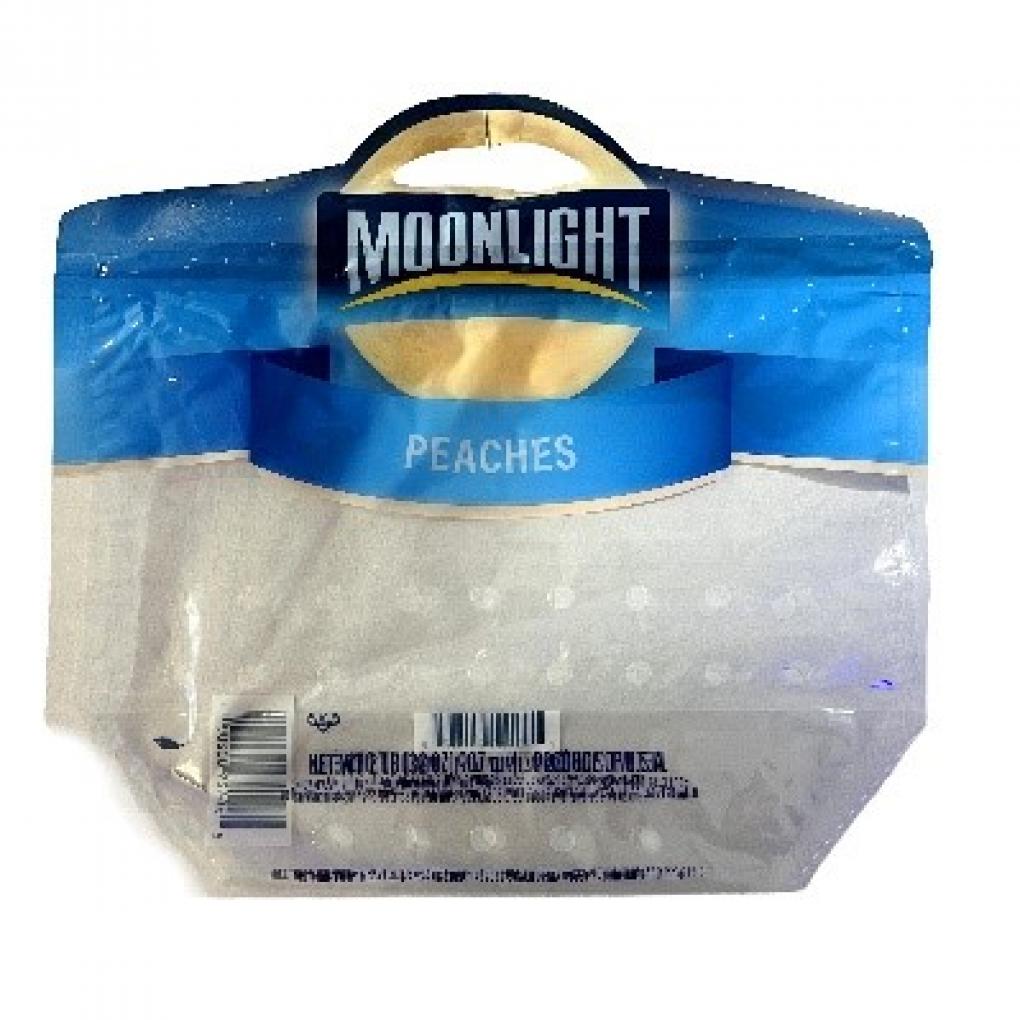
An outbreak in 2025 of eight Listeria monocytogenes illnesses in an unspecified number of states is suspected to be due to contaminated peaches, according to information obtained by eFoodAlert in response to a Freedom of Information Act request.
Although the two cases for which traceback was possible both led to the same distributor and packer, the FDA was not confident enough in the size of the traceback study to implicate a specific firm, variety, or growing field as the source of the contaminated produce.
The FDA conducted a Produce Safety Rule inspection and sampling at the packer identified in the traceback study. The inspection resulted in the issuance on October 9, 2025, of FDA Form 4056 (Produce Farm Inspection Observations), citing concerns related to equipment and tools, as well as inaccurate sanitation recordkeeping, according to the investigation report.
Three of the samples collected during the inspection were positive for Listeria monocytogenes. These included one water sample, one environmental swab sample, and one sample of produce.
None of the Listeria monocytogenes isolates was a genetic match to the outbreak strain or to any other isolates in the national database.
The FDA shared the results of the sample analysis with company management, who initiated an internal root cause analysis and found presumptive positive Listeria results on a set of brushes.
On October 29, 2025, Moonlight Packing Corporation voluntarily recalled California-grown conventional yellow and white peaches that had been processed on or after September 14, 2025, the date the contaminated brush set had been placed into service. The recalled peaches were distributed in more than 30 states and also exported to Canada and Mexico.
The Moonlight recall triggered further recalls by other companies who had purchased and distributed the peaches. On October 30th, Supreme Produce announced a recall of peach salsa that contained peaches supplied to it by Moonlight. That recall was followed on November 3rd by annoucement from JFE Franchising, Inc. that it, too, was recalling multiple batch codes of peach salsa.
While the Moonlight Packing recall did not specify the extent of retail distribution, the peach salsa recalled by both Supreme Produce and JFE Franchising was sold through stores belonging to the Kroger chain.
None of the recalled products were available to consumers at the time of the outbreak, which had ended in late August, 2025. The October recall by Moonlight Packing may have averted a new outbreak, but there was still no conclusive evidence that the company’s previous shipment(s) of peaches were the cause of the eight outbreak cases.
The simplest hypothesis is that an earlier set of brushes (the set that was replaced on September 14th) might have harbored the Listeria monocytogenes outbreak strain.
But, we’ll never know.
This investigation illustrates the difficulties in attributing a small outbreak to a specific (and highly perishable) product. Epidemiological evidence was suggestive, but not conclusive. Only two of the victims were able to supply sufficient data to allow for traceback. Both tracebacks led ultimately to the same distributor and packer. But the outbreak strain—the “smoking gun”—was not found in any of the samples collected during the FDA’s investigation. The finding of other strains of Listeria monocytogenes was suggestive, but not determinative.
It has happened before
This was not the first outbreak to be associated with consumption of contaminated peaches and other stone fruits.
In 2023, the CDC reported on an outbreak of 11 cases of Listeria monocytogenes in 7 states. That outbreak sent ten people to hospital and was associated with one death.
The outbreak strain was recovered from a sample of HMC Farms peaches and from two environmental samples collected during an FDA inspection of the company’s packing plant. In its recall notice, the company acknowledged the link between its produce and the outbreak and provided real transparency—a 109-page list providing the name and address of every retail store to which it believed the recalled produce had been supplied.
A note about transparency
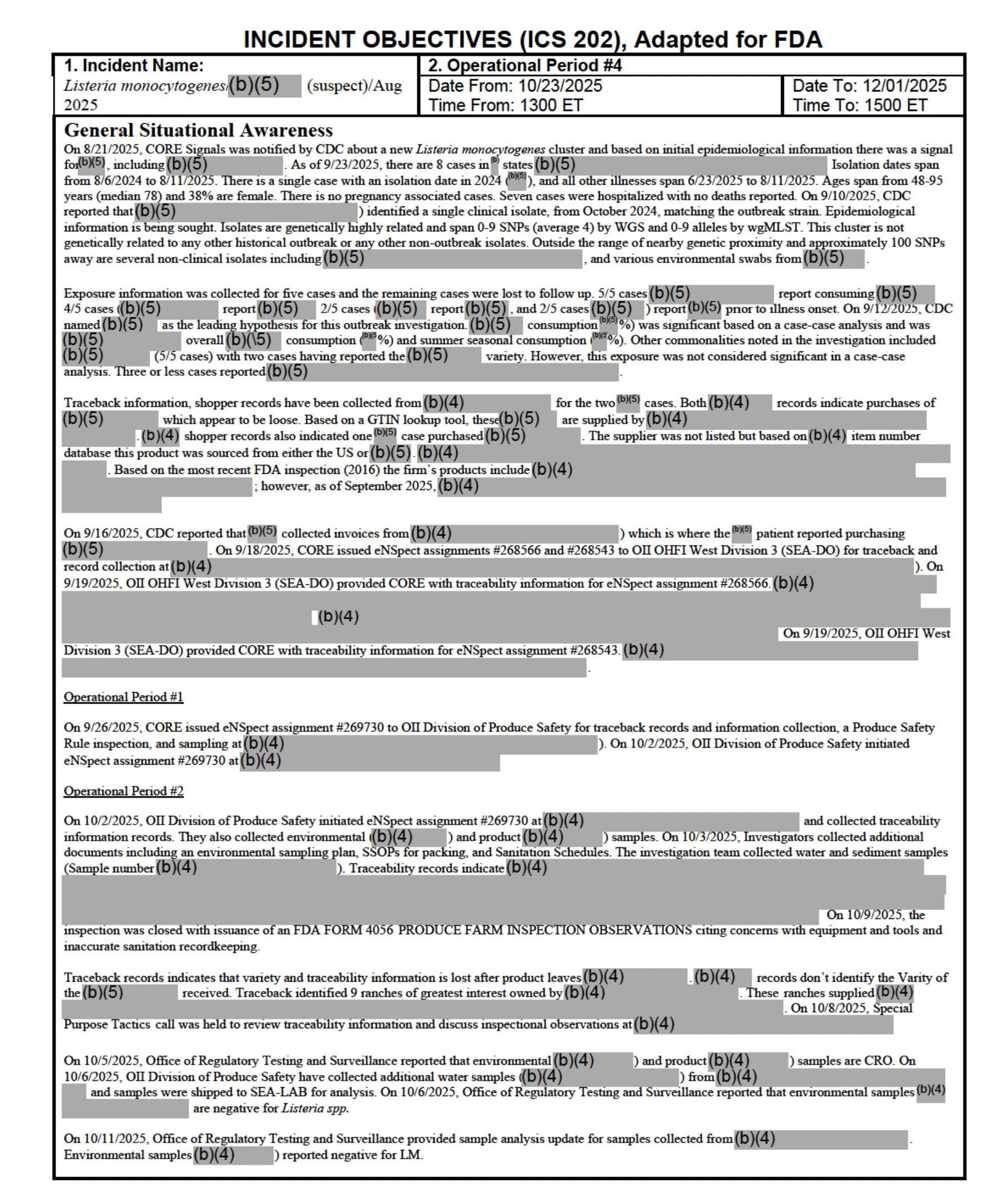
The current administration has put on a big show of “transparency” in its dealings with the media and the public. Nevertheless, the FDA chose to redact significant information from the CORE investigation report before releasing it under the Freedom of Information act.
- The suspect food was redacted
- The identity and number of the states reporting outbreak illness was redacted
- The name of the packer was redacted
- The retail chain where outbreak victims had purchased the suspect food was redacted
This is a sample page from the investigation report released to eFoodAlert.
Much of the redacted information was already part of the public record. It was only necessary to know where to look.
In order to identify the food and company suspected of being behind this outbreak, we were able to follow the cookie crumbs of unredacted information. The October 29, 2025, recall mentioned in the report led us to the Moonlight Packing peaches recall—the only relevant recall listed on the FDA website for that date.
The rest of the information fit, too. The investigation report mentions that the most recent previous inspection of the company took place in 2016. Moonlight Packing was inspected in 2016, with no violations noted. It was not inspected again until the FDA’s October 2025 inspection.
Excessive and random redactions are time-wasting, frustrating, and serve no useful purpose. It is time for the FDA to review its redaction criteria and release all information that does not contravene the relevant privacy and “proprietary commerical information” rules.

Interested in learning more about food safety and the history of foodborne disease outbreaks and investigations?
Click on the link to listen to a short excerpt, then follow the buy links to add a digital, print or audio copy to your personal library.


One thought on “California peaches suspected in 2025 Listeria outbreak”