
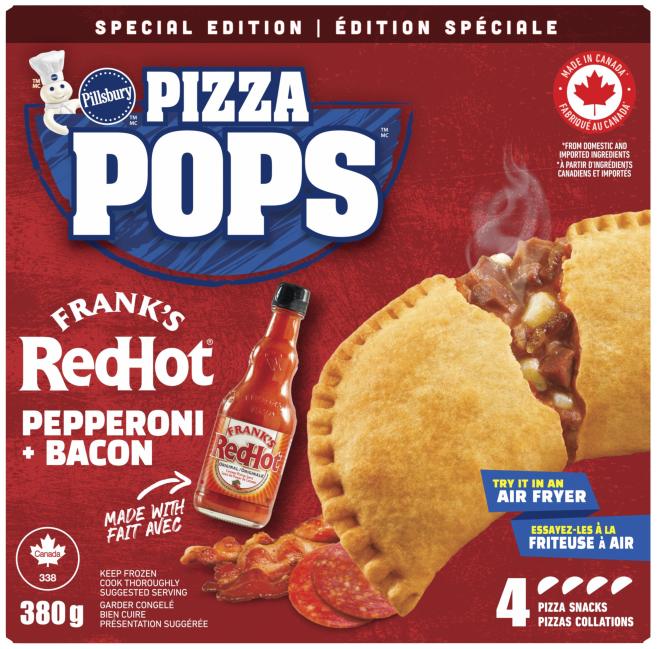
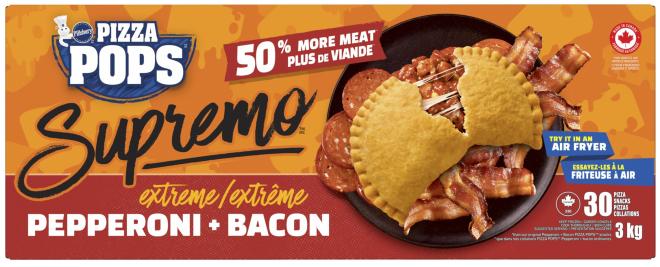
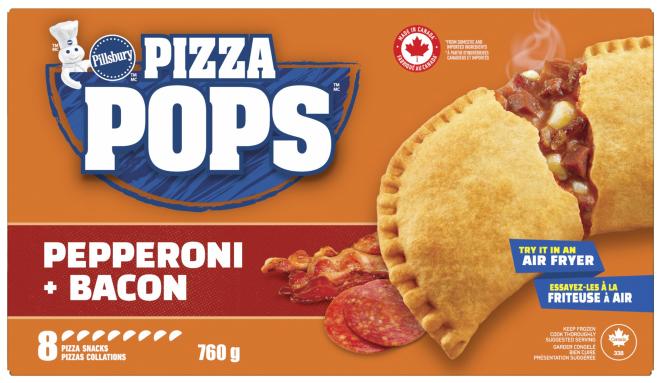

Certain Pillsbury brand Pizza Pops + Bacon have been linked through epidemiological analysis to an outbreak of 20 cases of E. coli O26 infections in 5 Canadian provinces.
Victims range in age from 1 to 87 years. Four of the victims have been hospitalized. There have been no deaths.
The Public Health Agency of Canada (PHAC) reports that confirmed cases have been recorded in British Columbia (3), Alberta (9), Saskatchewan (5), Ontario (2), and New Brunswick (1).
Many people who became sick reported eating or handling Pillsbury brand Pizza Pops prior to becoming ill. The investigation is ongoing and it is possible that additional sources may be identified.
General Mills Canada Corporation has initiated a recall of the following items:
- Pillsbury Pizza Pops Pepperoni + Bacon (30 pizza snacks (2.85 kg); Better if used by 09JN2026WN and 10JN2026WN; UPC 0 69052 12961 9)
- Pillsbury Pizza Pops Supremo Extreme Pepperoni + Bacon (30 pizza snacks (3 kg); Better if used by 10JN2026WN, 11JN2026WN, and 12JN2026WN; UPC 0 69052 46901 2)
- Pillsbury Pizza Pops Pepperoni + Bacon (8 pizza snacks (760 g); Better if used by 09JN2026WN and 10JN2026WN; UPC 0 69052 12967 1)
- Pillsbury Pizza Pops FRANK’s RedHot Pepperoni + Bacon (4 pizza snacks (380 g); Better if used by 14JN2026WN; UPC 0 69052 12947 3)
The recalled products are labeled as “Made in Canada” from domestic and imported ingredients.
The Canadian Food Inspection Agency (CFIA) is conducting a food safety investigation, which may lead to the recall of other products.
What the public should know (per PHAC)
The following advice applies to individuals, as well as retailers, distributors and food service establishments, such as grocery stores across Canada:
- Check to see if you have the recalled products in your home or establishment by looking for the specific product name and size, UPC and codes in the recall alert.
- Do not consume, serve, use, sell or distribute recalled products.
- Throw out or return recalled products to the place of purchase. Consumers or establishments who are unsure if they have purchased the recalled products are advised to contact their retailer or supplier where the products were purchased.
- Clean and sanitize all surfaces and storage areas that recalled products may have come in contact with, including countertops, containers, utensils, freezers, and refrigerators.
- Do not cook food for other people if you’ve been diagnosed with an E. coli infection or have symptoms of infection such as diarrhea.
- Contact your health care provider if you think you’re experiencing symptoms of E. coli.
For general use of frozen foods, like Pizza Pops, the following advice can help prevent illness:
- Some frozen foods are not ready-to-eat products. They must be cooked thoroughly before they are safe to eat. Always follow the cooking instructions on the packaging.
- Wash your hands with soap and warm water for at least 20 seconds before and after handling frozen food that is not ready to eat.
- Clean and sanitize any surfaces that touched the frozen food or its packaging, such as countertops, containers, utensils, freezers, and refrigerators.
Most people who become ill from an E. coli infection will recover fully, after a few days, without treatment, but infection can also cause severe illness and hospitalization.
Those at higher risk for serious illness include:
- people who are pregnant
- children ages 5 and under
- people with weakened immune systems
- adults ages 60 and over
E. coli infections, including E. coli O26, have a wide range of symptoms. You may not get sick at all. However, if you do get sick, symptoms usually start within 1 to 10 days after exposure, and last for 5-10 days. Symnptoms can include nausea, vomiting, headache, mild fever, severe stomach cramps, and/or watery or bloody diarrhea.

Interested in learning more about food safety and the history of foodborne disease outbreaks and investigations?
Click on the link to listen to a short excerpt, then follow the buy links to add a digital, print or audio copy to your personal library.


 eFoodAlert