
CDC Statement on E. coli O145 Outbreak Investigation

CDC has provided eFoodAlert with the following statement about the multi-state outbreak of E. coli O145 illnesses.

State Reported Outbreak Information

 As of June 8, 2012, there are 14 cases of Shiga toxin-producing Escherichia coli (STEC) O145 infection with indistinguishable DNA patterns that have been identified in lab samples from persons in 6 states: Alabama (2), California(1), Florida (1), Georgia (5), Louisiana (4), Tennessee (1). The dates when those persons became ill range from April 15 to May 12, 2012. Three ill persons have been hospitalized. One death has been reported in Louisiana. The most recent report of illness was on June 4, 2012.

The time from the beginning of a patient’s illness to the confirmation that he or she was part of an outbreak is typically about 2-3 weeks. Case counts during an outbreak investigation are therefore preliminary and must be interpreted within this context.

This ongoing multi-state investigation has not yet identified a source of these infections. The investigation is looking at both food-and non-food exposures are part of the ongoing investigation. State public health officials are interviewing ill persons to obtain information regarding foods they might have eaten and other exposures in the week before illness. There is no evidence to suggest the recent death of a child in Louisiana, who had this O145 strain, and a child in Massachusetts, who had the O157 strain, are related to one another. The patients had two different kinds of STEC infection.

Advice to Consumers

We do not have specific consumer advice at this time, but in general E. coli can be prevented using these tips:

  • WASH YOUR HANDS thoroughly after using the bathroom or changing diapers and before preparing or eating food. WASH YOUR HANDS after contact with animals or their environments (at farms, petting zoos, fairs, even your own backyard).
  • COOK meats thoroughly. Ground beef and meat that has been needle-tenderized should be cooked to a temperature of at least 160°F/70˚C. It’s best to use a thermometer, as color is not a very reliable indicator of “doneness.”
  • AVOID raw milk, unpasteurized dairy products, and unpasteurized juices (like fresh apple cider).
  • AVOID swallowing water when swimming or playing in lakes, ponds, streams, swimming pools, and backyard “kiddie” pools.
  • PREVENT cross contamination in food preparation areas by thoroughly washing hands, counters, cutting boards, and utensils after they touch raw meat.

If a specific food source is identified for this outbreak, public health officials will advise the public and take steps to prevent additional illnesses.

People at higher-risk for foodborne illness are pregnant women and newborns, children, older adults and those with weak immune systems.

Clinical Features/Signs and Symptoms

People usually get sick from STEC 2 – 8 days (average of 3 – 4 days) after swallowing the organism. Most people infected with STEC O145 develop diarrhea (usually watery and often bloody) and abdominal cramps. Most illnesses resolve on their own within 7 days. Some illnesses last longer and can be more severe.∙ Infection is usually diagnosed by testing of a stool sample.

Many clinical laboratories do not test for non-O157 STEC, such as STEC O145. Compared with STEC O157 infections, identification of non-O157 STEC infections is more involved. First, clinical laboratories must test stool samples for the presence of Shiga toxins. Then, the positive samples must be sent to public health laboratories to look for non-O157 STEC.∙ Most people recover within a week but, rarely, some develop a more severe infection. Hemolytic uremic syndrome (HUS), a type of kidney failure, can begin as the diarrhea is improving. HUS can occur in people of any age but is most common in children under 5 years old and the elderly.

Further information about STEC can be found at http://www.cdc.gov/nczved/divisions/dfbmd/diseases/ecoli_o157h7/ and http://www.foodsafety.gov/poisoning/causes/bacteriaviruses/ecoli/

Our thanks to Lola Russell of the US Centers for Disease Control and Prevention for sharing this information.

Recalls and Alerts: June 9, 2012

Here is today’s list of food safety recalls, product withdrawals, allergy alerts and miscellaneous compliance issues. The live links will take you directly to the official recall notices and company news releases that contain detailed information for each recall and alert.

If you would like to receive automatic email alerts for all new articles posted on eFoodAlert, please submit your request using the sidebar link.

United States

  • Allergy Alert: Best Maid Cookie Company (River Falls, WI) recalls Sienna Bakery® Oatmeal Walnut Raisin Baked Cookies (6/40/1.35-oz; Lot No. 121222011525001 on the master case, 12122201 on the retail box) and Sienna Bakery® White Chocolate Macadamia Baked Cookies (6/40/1.35 oz; Lot Nos. 121222061052009, 121222061052001 on the master case, 12122201 on the retail box), due to the potential of undeclared walnuts. The master cases of product may contain retail boxes that are labeled as White Chocolate Macadamia Nut, but have Oatmeal Walnut Raisin cookies inside. Affected product was sold through GFS Marketplace stores from May 11th through June 7th in the states of Florida, Illinois, Indiana, Kentucky, Michigan, Ohio, Pennsylvania and Tennessee. Affected product was distributed to Gordon Food Service® (GFS) delivery customers from May 11, 2012 through June 7, 2012 in the states of Florida, Illinois, Indiana, Kentucky, Michigan, Ohio, Pennsylvania, South Carolina, Tennessee and West Virginia.
  • Allergy Alert Update: USDA releases retail distribution list for lasagna products that were recalled by Windsor Quality Food Co.
  • Food Safety Recall: Popchips recalls Sea Salt & Vinegar Potato Chips (3-oz bags; UPC 82666 70050; Best by dates of MAY213, MAY0313, MAY 1013LY or MAY2113), because the product may contain metal fragments.
  • Outbreak Alert Update: CDC reports that the outbreak of human Salmonella infections linked to live chicks and ducklings has grown to 123 confirmed cases in 25 states. Twenty-six people have been hospitalized; 36% of the confirmed victims are children 10 years of age or younger. The infected live poultry were supplied by Mt. Healthy Hatchery in Ohio.

Canada

  • Allergy Alert: Quantimpex Inc. recalls Koska Apricot Preserve (380g; EXP 22 11 2013; Lot #17 326), due to the presence of undeclared sulphites. The recalled product was distributed in Ontario and Quebec.

Europe

  • Allergy Alert (Ireland): Supervalu withdraws Supervalu Nice Price Milk Chocolate Wafer Biscuit (125g pack size; All batches and All best before dates), due to inconsistent egg allergen labelling.
  • Food Safety Recall (France): Marcel Baey recalls Marcel BAEY Flétan Fumé/Smoked Halibut (sliced or whole; Lot Nos. 124 12, 125 12, 128 12, 130 12 et 131 12; Best before dates 02/06/12, 03/06/12, 06/06/12, 08/06/12 et 09/06/12, respectively), due to contamination with Listeria monocytogenes. The recalled product was distributed across France.
  • Consumer Product Safety Recall (Belgium): Trafic recalls Metaltex Kitchen Utensil Set (pkg of 5 melamine kitchen utensils; Sold from March 2011 to May 2012), due to excessive levels of melamine and formaldehyde.
  • Outbreak Alert (Switzerland): Approximately 40 military recruits are being treated in the infirmary for vomiting and diarrhea believed to be of viral origin. Diagnostic tests are being carried out to determine whether the outbreak is due to norovirus.
  • Outbreak Alert Update (UK): The Health Protection Agency reports an additional 60 cases of cryptosporidiosis were confirmed in four affected regions of England between June 1st and June 7th, bringing the total number of cases in these regions to 327 since May 11, 2012. There is no evidence that public water supplies are the source of the spike in illnesses in these regions.
  • Food Safety Notification (EU #2012.0766): Diazinon in fresh oranges from Italy; distributed to Denmark.
  • Food Safety Notification (EU #2012.0767): Salmonella Mbandaka in mini chicken paprika skewer from France; distributed to France, Germany and Luxembourg.
  • Food Safety Notification (EU #2012.0768): Salmonella spp. in tahini liquid from Syria; distributed to Netherlands.
  • Food Safety Notification (EU #2012.0769 & 2012.0770): Salmonella spp. in tahini from Syria; distributed to Netherlands.
  • Food Safety Notification (EU #2012.0771): Fenitrothion in wheat from Brazil; distributed to Spain.
  • Food Safety Notification (EU #2012.0772): Listeria monocytogenes in raw milk cheese from France; distributed to France and Germany.
  • Food Safety Notification (EU #2012.0774): Imazalil in grapefruit from Turkey; distributed to Romania.
  • Food Safety Notification (EU #2012.0775): Mercury in fresh swordfish from Madagascar; distributed to France.
  • Food Safety Notification (EU #2012.0776): Coagulation of and too high count of mesophiles in UHT milk from Slovenia; distributed to Italy.
  • Food Safety Notification (EU #2012.0777): Rodent fragments in frozen leaf spinach from Belgium; distributed to Denmark.
  • Food Safety Notification (EU #2012.0778): Ochratoxin A in barley malt syrup from Belgium; distributed to Austria, Belgium, Italy and Netherlands.
  • Food Safety Notification (EU #2012.0779): Aflatoxins in chili powder from China; distributed to Belgium and France.
  • Food Safety Notification (EU #2012.0780): Sulfamethoxazole in acacia honey from Poland; distributed to Slovakia.
  • Food Safety Notification (EU #2012.0781): Listeria monocytogenes in soft cheese preparation made with gorgonzola and cream from Italy; distributed to Austria and Germany.
  • Food Safety Notification (EU #2012.0782): Salmonella spp. in whole black pepper from Brazil, via the Netherlands; distributed to Denmark.
  • Food Safety Notification (EU #2012.0783): Pesticides in coriander from Malaysia; distributed to Belgium.
  • Food Safety Notification (EU #2012.0784): High Escherichia coli count in black mussels from Greece; distributed to Italy.
  • Food Safety Notification (EU #2012.0785): Parasitic infestation with Anisakis of chilled anchovies from Slovenia; distributed to Italy.
  • Food Safety Notification (EU #2012.0787): Methomyl in table grapes from Chile; distributed to Netherlands.

Australia and New Zealand

  • Food Safety Recall (Australia): Parmalat Australia Ltd. recalls Pauls Smarter White Milk (1L plastic bottles; Use by 20 JUN), due to Listeria monocytogenes contamination. The recalled milk was sold from Woolworths, Coles, BP service stations and smaller independent outlets in Northern Territory only.
  • Food Safety Recall (Australia): Casa recalls Casa Marinated Feta (250g plastic jar; Best before 01OCT12, 26OCT12, 31OCT12 and 14NOV12), due to E. coli contamination. The recalled product was sold at Coles supermarkets, IGA stores and independent supermarkets in Western Australia.

Some supermarket chains post recall notices on their web sites for the convenience of customers. To see whether a recalled food was carried by your favorite supermarket, follow the live link to the supermarket’s recall web site.

*The Kroger umbrella encompasses numerous supermarket, marketplace and convenience store chains, listed on the Kroger corporate home page.
**Includes Safeway, Vons, Pavilions, Dominick’s, Genuardi’s, Randalls, Tom Thumb, Carrs and Pak N’ Save.

Diamond Pet Foods Recalls: International Buyers Be Wary! – UPDATED

“We do not share our product and distribution lists for competitive reasons.”

– Diamond Pet Foods (by email), June 8, 2012

More than two months after its initial recall announcement, and more than one month after announcing its expanded recall of dry pet food manufactured in Gaston, South Carolina, Diamond Pet Foods still has not provided international consumers with a list of countries (other than the USA and Canada) that are affected by its product recalls.
Nor, eFoodAlert has been told, does the company intend to do so in future. In reply to my repeated email and telephone requests for a list of countries to which the recalled products had been shipped, Diamond’s Media Desk put up a stone wall.

It’s not as though I was asking for a list of the company’s overseas wholesale and distribution network; all I was looking for was a list of countries.

FDA, too, has declined to release a list of affected countries, citing “confidentiality” concerns. It is standard practice, though, for FDA to notify all appropriate foreign counterparts in the event of any Class 1 recall, according to Laura Alvey, Deputy Director, Communications Staff for FDA’s Center for Veterinary Medicine. It’s then up to the notified counterpart agencies to decide what to do with the information.

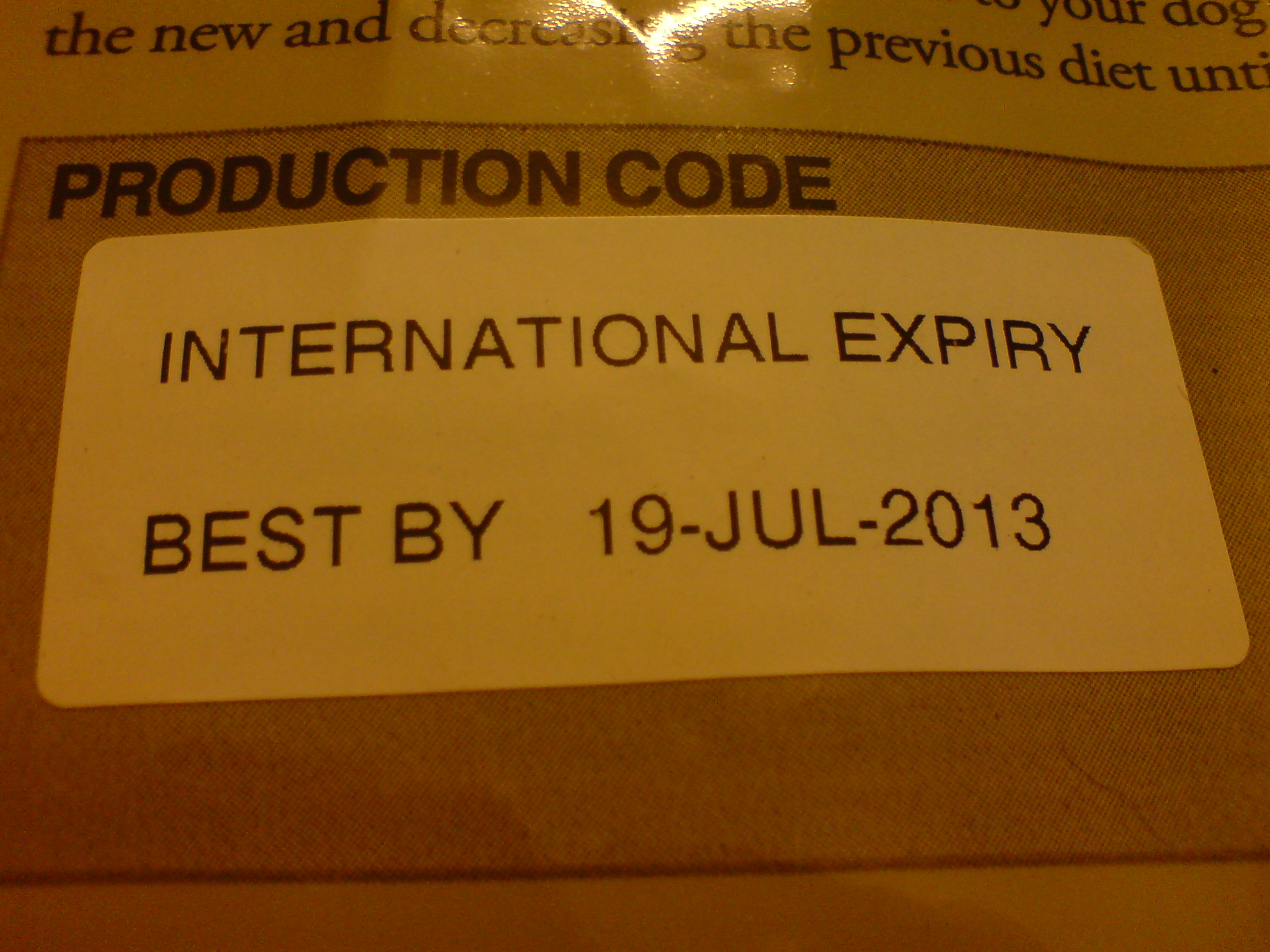
This latest round of futile effort at communicating with Diamond Pet Foods was triggered by a pet owner in Malaysia who communicated with Mollie Morrissette of Poisoned Pets. This consumer purchased a bag of Taste of the Wild dog food with an unusual label.

Stick-on label on bag of Taste of the Wild dog food

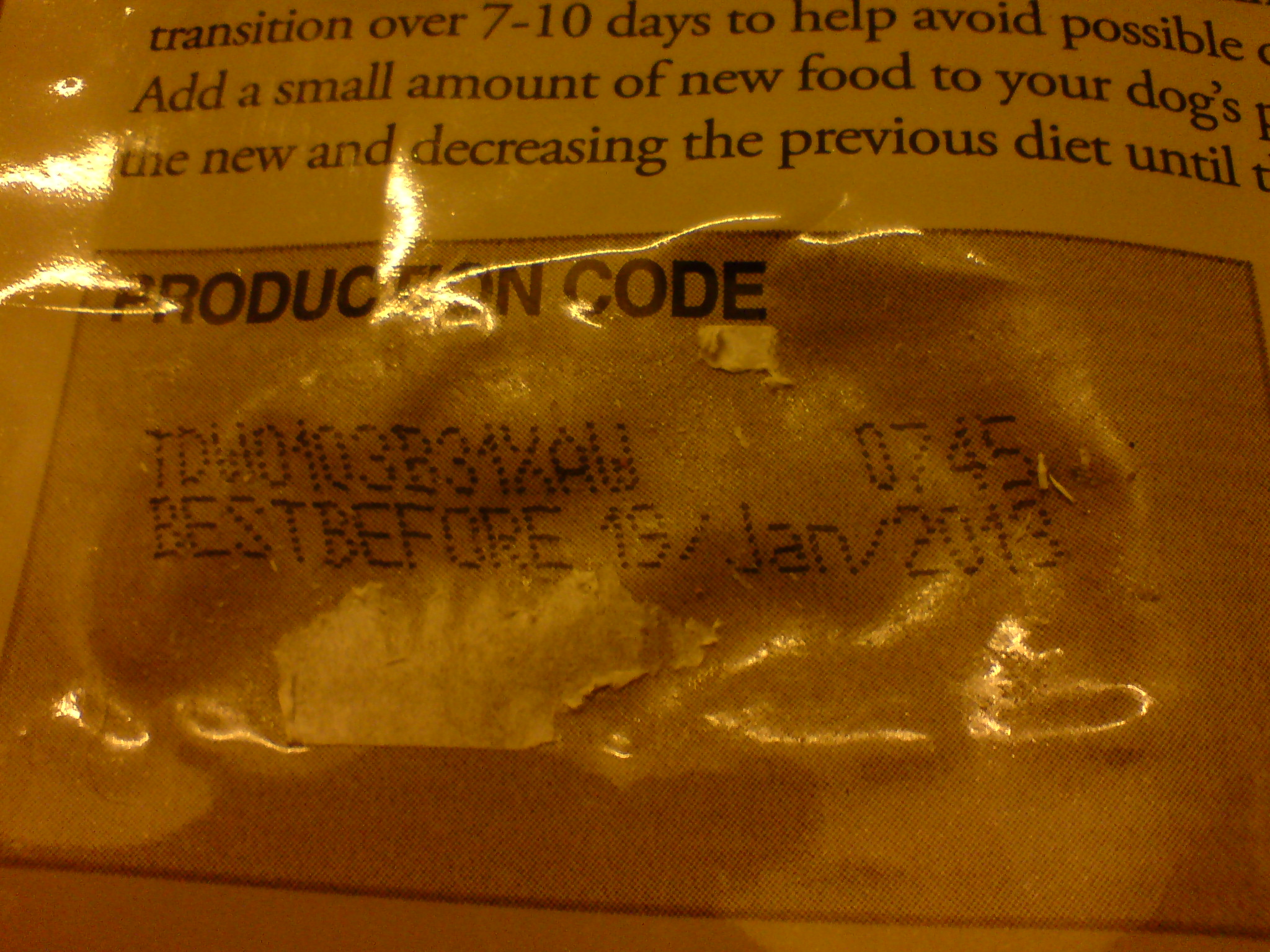
When he peeled the label off of the bag, he discovered that the dry dog food he purchased from his local supplier was actually included in the list of recalled production codes and bore a Best before date of 19/Jan/2013.

Production code and expiry date revealed after stick-on label was removed

I was able to determine that this stick-on label was NOT affixed by Diamond Pet Foods. “Diamond Pet Foods,” I was told in an email, “does not use a sticker for production codes or date codes. Our production and date codes are printed on the packaging inline after the bag is filled and sealed. Countries may use different date formats depending on the regulation of the importing country.” The company’s reply did not address the alteration in the Expiry date.

UPDATE (June 11, 2012): The pet owner in Malaysia received the following reply from Diamond Pet Foods earlier today:

The distributor made a mistake and did not inform us until your complaint.

They sticker another pet food competitor’s bags and their warehouse over stickered ours by mistake.

They are not authorized to do this and i have informed them of the damage that has been done in particular through comments made in pet food alert.

Disappointed this happened and too bad we did not have an opportunity to investigate and rectify.

Will not be happening again.

Adding to the confusion and consternation are the reports from European consumers. A consumer in Ireland and one in Holland were told by their retailer (Zooplus) that the recalled bags of Taste of the Wild dog food had been retested on entry to the EU, had been found to be safe, and that the recall codes could be disregarded. The original production codes and expiration dates imprinted on the bags by the manufacture were not altered or hidden in Europe.

Pet owners in Australia and Singapore, on the other hand, can breathe more easily than their European and Malaysian counterparts. Formal recall notices for the affected batches of food have been issued by the Singapore distributors, and are posted on the web site of the Agri-food and Veterinary Authority of Singapore. And the recalled product never was shipped to Australia. I have been informed by a spokesperson at Australia’s Department of Agriculture, Fisheries and Forestry that “…manufacturing facilities that produce goods for Australia are all located in California.” Diamond’s California manufacturing plant was not implicated at all in the company’s pet food recalls.

As of last report, the contaminated pet food was the source of 15 cases of Salmonella Infantis infections in the USA and 2 cases in Canada. At least two dogs are confirmed to be infected with the outbreak strain, and dozens of other reports of sick animals – dogs and cats – have been posted by readers of eFoodAlert. The full animal and human scope of this outbreak is undoubtedly far larger than the reported numbers of cases.

More worrisome than the actual numbers, however, is the inadequacy of the notification system. It’s usual for FDA to include in its Weekly Enforcement Reports (one of which will almost certainly summarize the Diamond Pet Food recalls – eventually) a list of countries to which a recalled product was shipped. But by then, the information will be irrelevant. Why not release this information when it can be of some use?

And why is Diamond Pet Foods making such a secret of which countries were the recipients of the recalled products?