Raw pet food recalled following consumer-reported pet illness

April 11, 2025

Blue Ridge Beef has recalled one ton of raw pet food due to contamination with Salmonella and Listeria.

On March 20, 2025, the New York State Department of Agriculture and Markets received a customer complaint of animal illness and responded by sampling 2-lb logs of the company’s Kitten Mix and Puppy Mix.

On April 1, 2025, Blue Ridge Beef was notified by the North Carolina Department of Agriculture that both products tested positive for Salmonella and Listeria.

Blue Ridge Beef’s recall announcement encompasses the following products:

  • Blue Ridge Beef Puppy Mix (2 lb; Lot #N25 1230)
  • Blue Ridge Beef Kitten Mix (2 lb; Lot #N26 0114)

This is the second recall issued by Blue Ridge Beef in 2025 and the ninth recall in eight years.

On January 31, 2025,  Blue Ridge Beef recalled 5,700 lbs of its Natural Mix for Dogs (2-lb logs; Lot #N25/12/31; UPC 854298001054) after the North Carolina Department of Agriculture’s Food and Drug Protection Laboratory found Salmonella in a sample of the product. Although there were no pet illnesses associated with the January recall, two recalls initiated in 2024 were triggered by pet illness reports.

The FDA issued a Warning Letter to Lea-Way Farms (dba Blue Ridge Beef) in 2021, following a failed food safety inspection. A follow-up inspection also resulted in a failing grade (“Official Action Indicated”), yet there has been no subsequent evidence of enforcement follow-up actions.

Bottom line? Find another source of food for your dogs and cats until this company sorts out its chronic food safety problems.


“A complete and compelling account of the hidden and not-so-hidden ways the food we give our beloved pets can be contaminated.” JoNel Aleccia, Health Reporter, Food & Nutrition, The Associated Press.

“An invaluable resource for busy pet owners” – Food Safety News

New York City cats stricken with bird flu. Recall pending

March 15, 2025

The New York City Department of Health is advising cat owners not to feed Savage Cat Food to their cats after the bird flu virus was confirmed in two cats. A third cat also was suspected of being infected with the virus.

Two of the three cats had eaten Savage Cat Food, poultry packets lot number 11152026. The third cat had not been fed this product, but had come into contact with one of the other sick cats.

Both cats with confirmed infections died; the third cat became ill with symptoms consistent with bird flu, but survived and was not tested.

Cat A became ill earlier this month, and was hospitalized with fever, loss of appetite and severe respiratory disease and died as a result of its infection. Testing for the H5 bird flu virus was conducted by the Cornell Veterinary Diagnostic Laboratory. Confirmatory H5N1 testing by the USDA’s National Veterinary Services Laboratory (NVSL) is pending.

Cat B became ill in February 2025 with fever and severe respiratory and liver disease and also died as a result of infection. The cat was confirmed by the NVSL to be infected with the H5N1 virus. Additional testing recently performed at NVSL suggests the cat was infected with an H5N1 strain related to that found in Savage Cat food, lot 11152026. Cat B did not consume the Savage Cat Food, but had come into contact with Cat C.

Cat C became ill with fever after consuming Savage Cat Food lot number 11152026, but survived. The cat was not tested for bird flu at the time of its illness, and cannot be tested now as too much time has elapsed.

On February 17, 2025, Savage Cat Food posted a notice on the company’s website advising its customers that a cat in Colorado had developed bird flu after consuming Lot 11152026 of the company’s raw poultry cat food.

Colorado State University tested a sealed package of the food and detected the H5 virus using PCR technology. The company initiated a “market withdrawal” while awaiting virus viability test results from the National Veterinary Services Laboratory.

The NVSL was unable to recover live H5N1 virus from the sample.

Upon learning that the New York City cats had been exposed to the same batch code of raw cat food as the Colorado cat, the company announced it would convert its “market withdrawal” to a voluntary product recall.

The recall covers product with lot code/best buy date of 11152026 which was sold in Large and Small Chicken Boxes in November 2024.

As the product has been shipped across state lines, we can expect a recall notice to be posted on the FDA’s website in the next few days.

Savage Cat Food is not the first example of a raw pet food that tested positive by PCR for the H5 bird flu virus, but tested “negative” for live virus. A similar situation occurred with Northwest Naturals raw frozen pet food in December 2024.

Microbiologists know well that microbes—whether bacteria or viruses—are not uniformly distributed in a solid food. Especially if contamination is low, a pathogen might be present in only one or two packages out of a hundred, possibly less. And a contaminated package might only harbor the pathogen in one small zone within the box.

It is not unusual in foodborne disease outbreak investigations for the source of the outbreak to be identified based on epidemiology (eating patterns), without the outbreak strain ever being recovered from a sample of the implicated food.

That is what occurred with Northwest Naturals, and that is what has happened (so far) with Savage Cat Food.

The New York City Department of Health strongly encourages New Yorkers whose cats are experiencing illness after consuming Savage Cat Food products or other raw meat or dairy products to contact their veterinarian.

Symptoms of H5N1 bird flu virus infections in cats may include:

  • Fever
  • Lethargy
  • Low appetite
  • Reddened or inflamed eyes
  • Discharge from the eyes and nose
  • Difficulty breathing
  • Neurologic signs, like tremors, seizures, incoordination, or blindness

The New York City Department of Health offers the following tips for pet owners:

  • Avoid feeding pets raw food or raw milk 
  • If you pet has eaten raw food and shows sign of sickness, call your vet immediately and isolate from other pets 
  • Keep your cats indoors 
  • If you are walking your dog, avoid dead or sick animals 


“A complete and compelling account of the hidden and not-so-hidden ways the food we give our beloved pets can be contaminated.” JoNel Aleccia, Health Reporter, Food & Nutrition, The Associated Press.

“An invaluable resource for busy pet owners” – Food Safety News
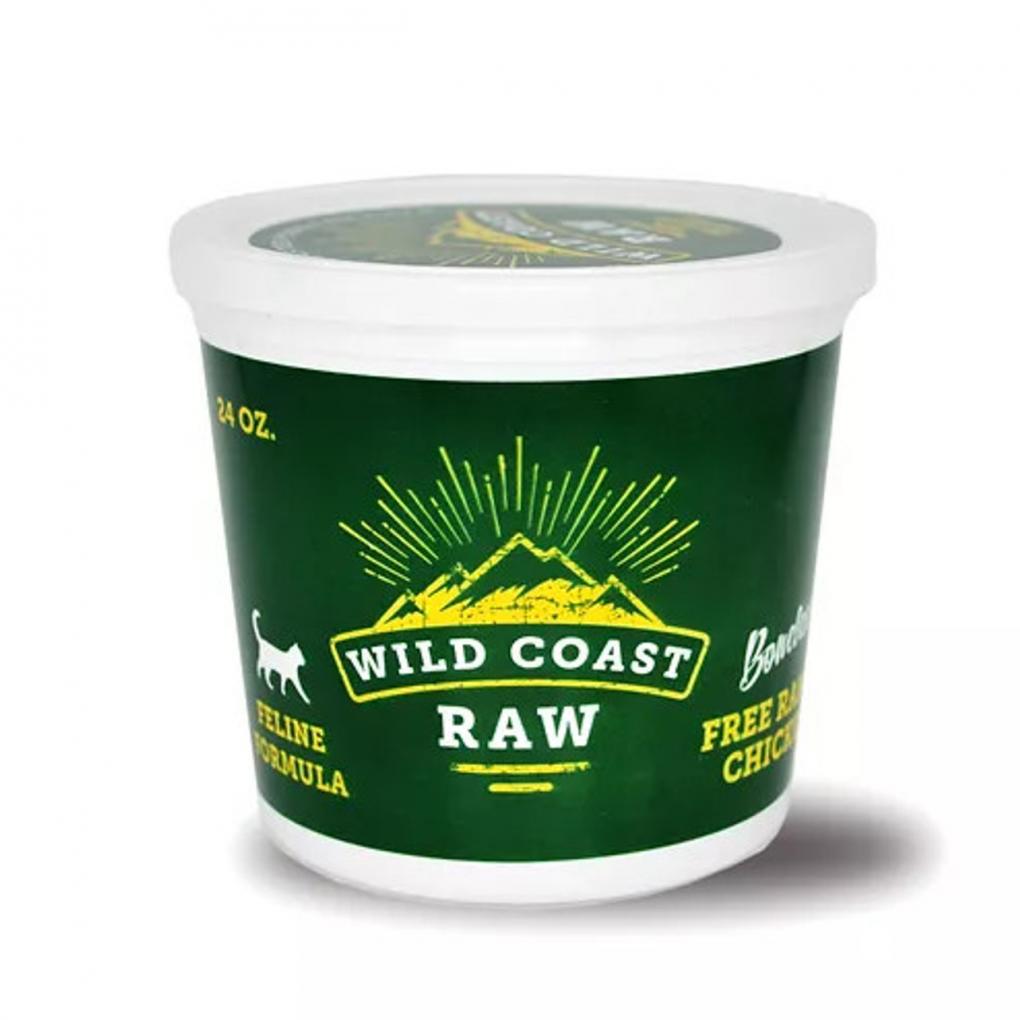
USDA lab finds live bird flu in Wild Coast cat food, triggering recall

The USDA’s National Veterinary Services Laboratories (NVSL) has confirmed the presence of viable bird flu virus (H5N1) in a sealed sample of Wild Coast Raw frozen Boneless Free Range Chicken Formula raw pet food for cats, according to a spokesperson for the Washington State Department of Agriculture (WSDA).

As a result of this finding—the first time viable bird flu virus was confirmed in a previously sealed container of raw pet food—the US Food and Drug Administration (FDA) recommended a product recall.

On March 1, 2025, Wild Coast LLC complied with the FDA’s request and recalled six batches of Wild Coast Raw frozen Boneless Free Range Chicken Formula raw pet food for cats (Lots  #22660, #22653, #22641, #22639, #22672 and #22664), all with a Best Buy date of 12/25.

On February 14, 2025, the Oregon Department of Agriculture (ODA) advised the public of two confirmed cases of bird flu in domestic cats from two separate households in the state.

Both cats had been fed Wild Coast Raw cat food, manufactured in neighboring Washington state. Both cats were euthanized due to the severity of their illness.

The WSDA sampled and analyzed the two implicated batches of cat food using PCR to detect the viral nucleic acid. Upon finding evidence of the H5 antigen (referred to as a “non-negative” or presumptive positive result), the WSDA issued a “stop sale” order for both batches and submitted the samples to the NVSL for confirmation.

On February 26, 2025, the WSDA reported on two confirmed cases of bird flu in domestic cats from two separate households in Washington state. One of the cats was euthanized due to the severity of its illness; the other was under veterinary care.

On March 1, 2025, Wild Coast LLC announced its product recall.

This is not the first instance of domestic cats contracting bird flu after being fed a commercial raw poultry-based diet.

A recent prior incident involving Northwest Naturals (an Oregon company) did not result in a product recall, as the NVSL was unable to confirm the presence of viable bird flu virus in the samples of pet food that had been submitted to the lab.

This abortive confirmation of a “non-negative” result led some commentators to suggest that the whole thing was a tempest in a teapot.

That interpretation is no longer valid.

The bird flu virus (H5N1) now has been confirmed in domestic cats from four separate households in two different states.

  • All four cats were confirmed to have been infected by the virus.
  • All four cats were fed the same brand and variety of raw cat food.
  • Viable bird flu virus has been confirmed by the USDA’s National Veterinary Services Laboratory to be present in sealed containers of the implicated cat food.

The outstanding question is how viable bird flu virus entered the cat food which, according to the manufacturer, was made using “USDA-passed and inspected poultry meat.”

In addition to the recall, Wild Coast LLC has taken several steps to respond to this situation, according to a Letter to Customers posted on the company’s website. These include:

  • market withdrawal of all Feline Poultry SKUs due to the uncertainty surrounding USDA-passed and inspected poultry meat and the serious impact of HPAI on cats.
  • transition to fully cooked poultry recipes to eliminate any potential risk. The new recipes will be in place indefinitely.

The company has pledged to work cooperatively with WSDA, the FDA and other regulatory bodies as the investigation proceeds.


“A complete and compelling account of the hidden and not-so-hidden ways the food we give our beloved pets can be contaminated.” JoNel Aleccia, Health Reporter, Food & Nutrition, The Associated Press.

“An invaluable resource for busy pet owners” – Food Safety News