Myanmar Refreshment Stands

Back in the days of my grandparents, when refrigerators hadn’t yet replaced iceboxes in the kitchen, the iceman’s visit was part of the morning routine. In Yangon (Rangoon), as in many other parts of Southeast Asia, the iceman still makes his morning rounds.

This video, which was taken in the Yangon’s city centre market, shows how – and where – the iceman prepares to make his deliveries. First, he saws the large blocks of ice into smaller pieces. Then, his helpers stack the smaller ice blocks, separating the stacks with sawdust to help insulate them and to prevent them from sticking to each other. He’s now ready to undertake his daily deliveries to the local market stalls, or to any household or business on his list of customers.

The Iceman Cometh

The ice blocks, which are made from non-potable water, are used in numerous ways by the Myanmar people. Those who are lucky enough to have iceboxes will use a block of ice to keep perishable food cool.

Some vendors crush ice and add it to fruit juices to make a refreshing beverage.
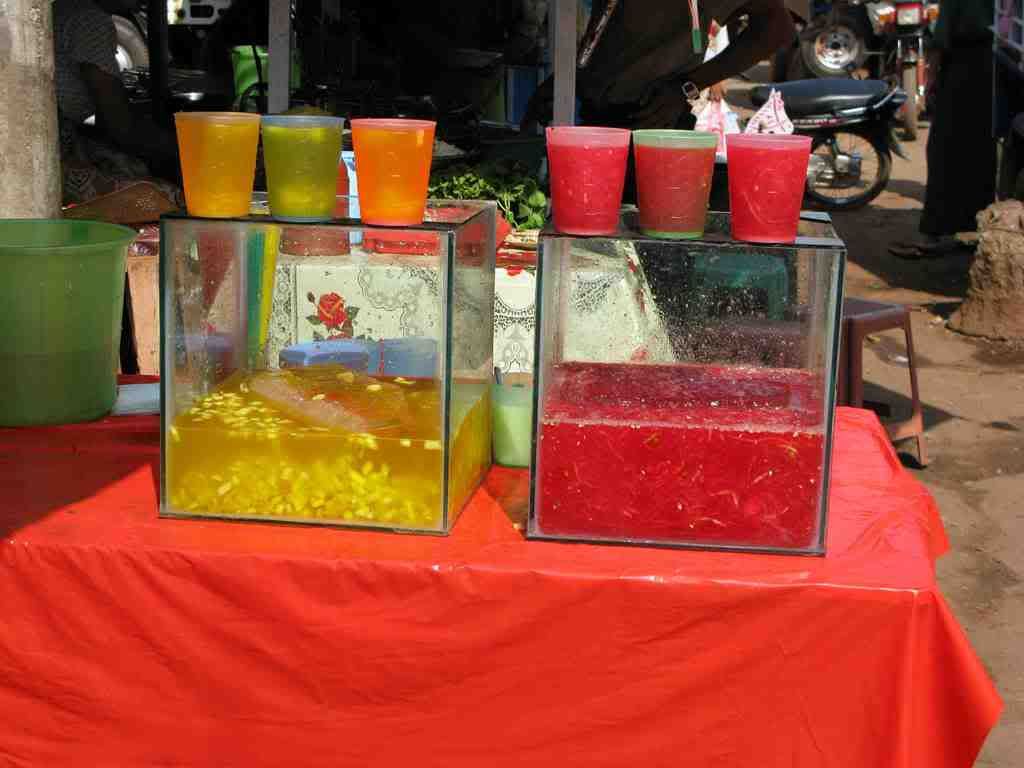
One popular beverage in the Bagan region of Myanmar is lime-flavored sugar cane juice, squeezed fresh while you wait. We watched the process at a roadside refreshment stand.

The juicer’s assistant takes a small block of ice in hand, crushes it by hitting it with a wooden stick, and puts the crushed ice into a glass mug.
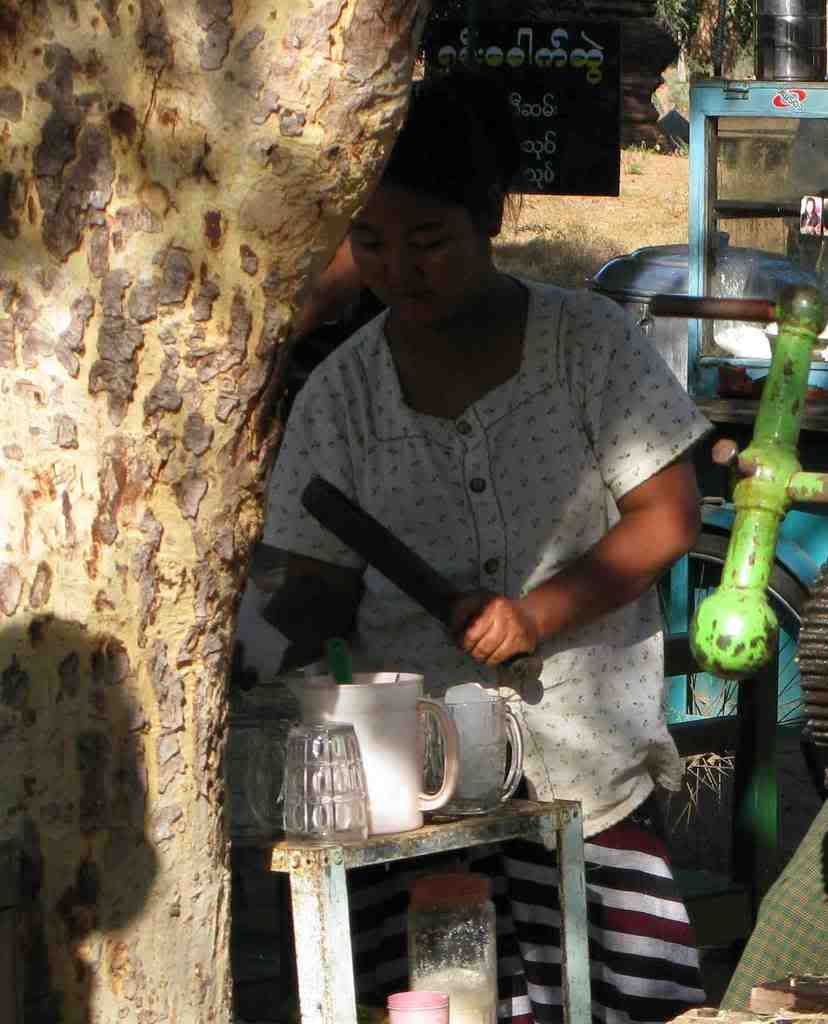
In the meantime, the juicer grabs a handful of sugar cane stalks and proceeds to feed them into a hand-cranked crushing machine. He feeds the stalks through several times, in order to extract all of the juice. On the last run-through, he sandwiches a couple of wedges of fresh lime between the stalks.
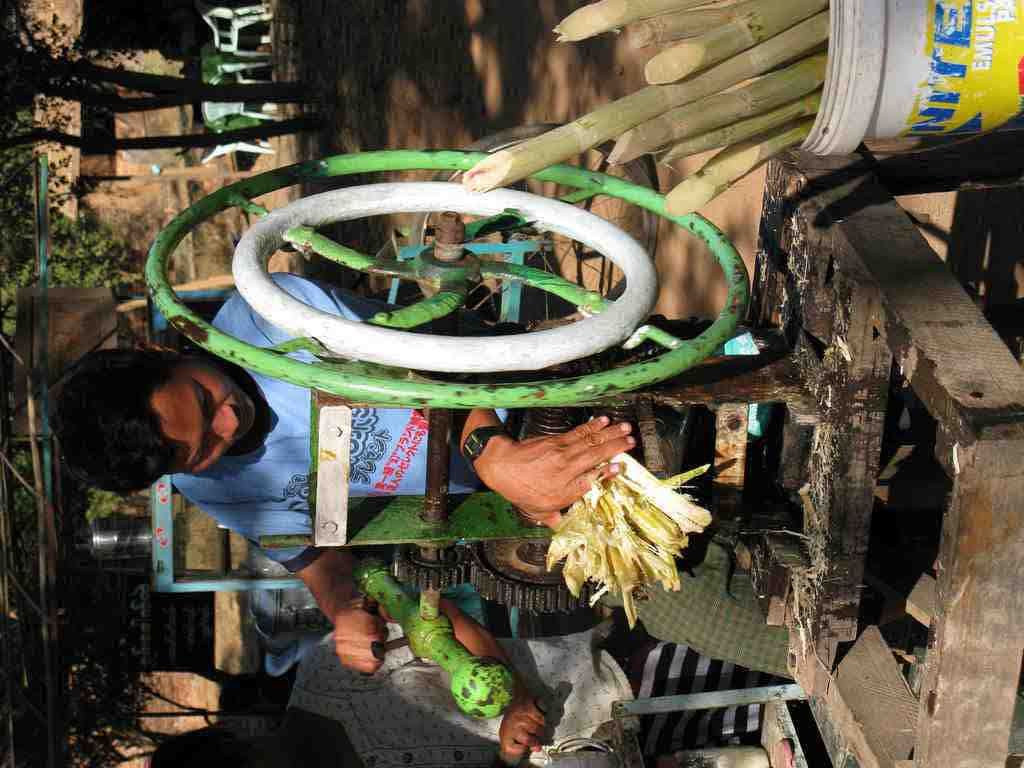
The juice collects in a small bowl, which the assistant empties periodically into a pitcher.
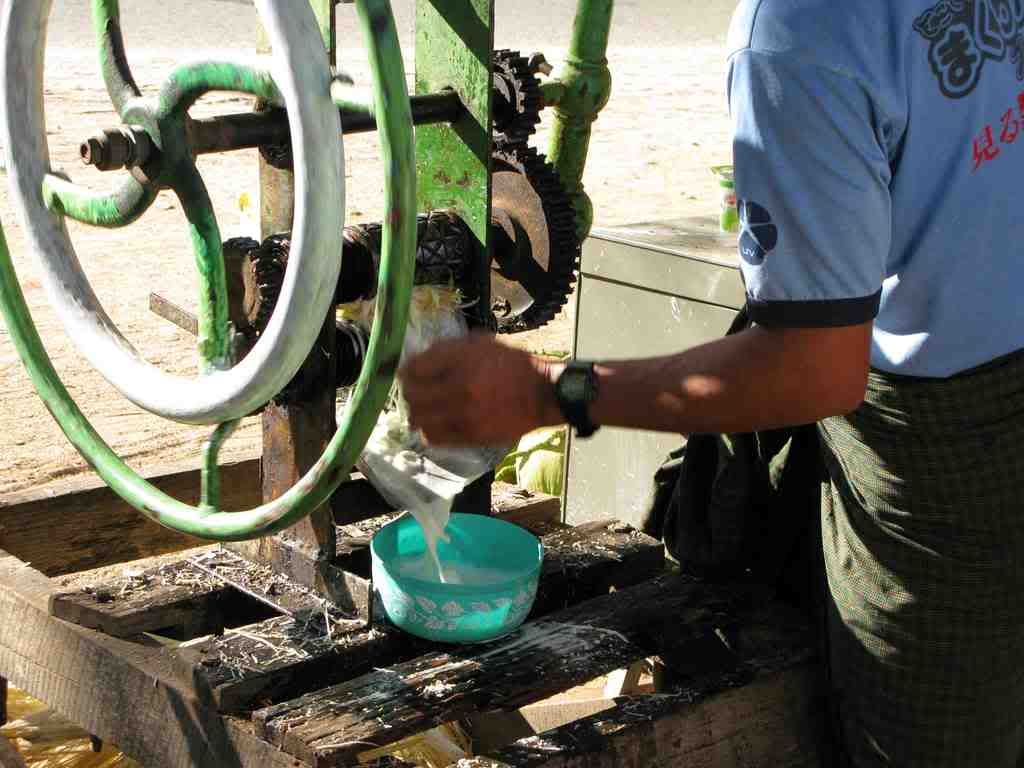
Finally, the assistant pours the juice into the ice-filled mugs.
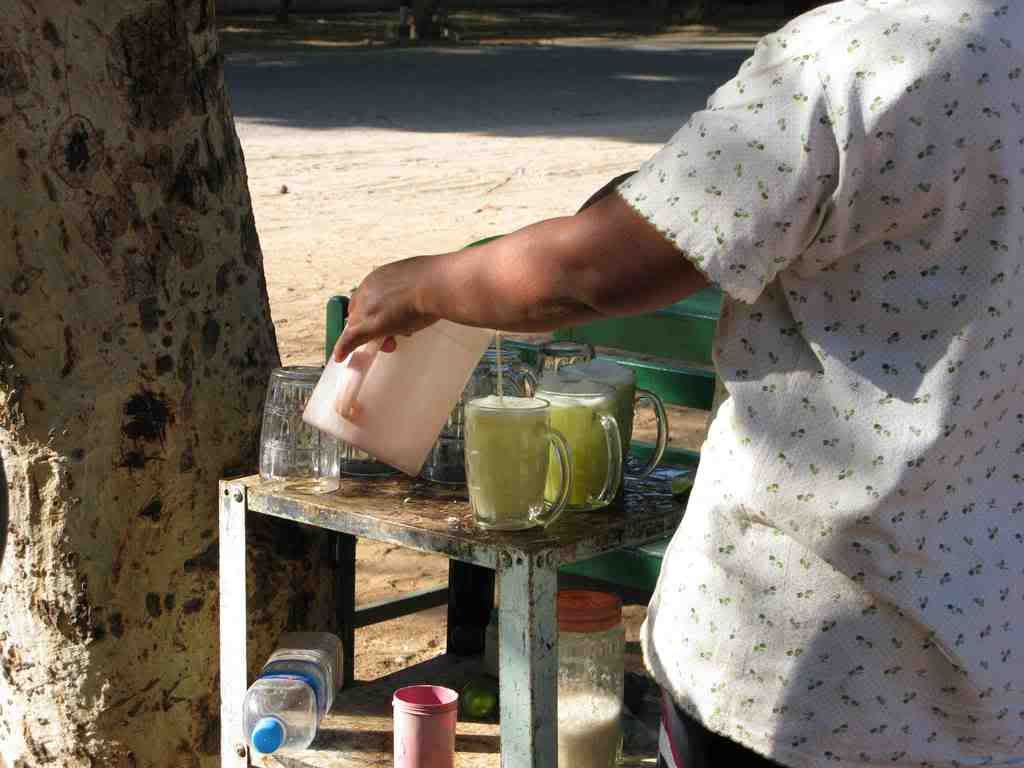

A side note about Myanmar attire. Most men and women wear a traditional “skirt” known as a longhi. This is a long piece of fabric (typically cotton for everyday wear) sewn into a tube. Men tie the tube in a large knot in front, whereas women tie or tuck it on the side. It’s not unusual to see men undo and retie their longhi as they walk along the street.

The Great Myanmar Watermelon Caper

One precaution that we were very careful to follow throughout our entire Southeast Asia tour was to avoid eating any fruit that had not been peeled by one of us. This was difficult, as the usual dessert offered in most of the restaurants was cut fruit – especially, luscious-looking papaya and watermelon. Inevitably, this resulted in a craving for watermelon, which was in season and on display in every Myanmar food market.

While we were walking through the Mandalay food market with our guide, Michael spied a display of watermelons stacked neatly at a booth. He decided that – by hook or by crook – we were going to enjoy some watermelon. With the help of our Mandalay guide, he purchased a watermelon (for the equivalent of US$1.00). Next, we needed to figure out how to enjoy this dirt-encrusted treasure.

We returned to our hotel, the Mandalay Hill Resort, and asked the receptionist whether their restaurant would be able to wash the watermelon for us (using bottled water, of course), and slice it at our table so that we could be certain how it had been handled. The receptionist agreed readily, and offered to hold the watermelon at the desk until we came down to dinner (more about that dinner in another post). We thanked her and our guide for their assistance in our quest and headed up to our room to relax before dinner.

Within five minutes of arriving in our hotel room, we received a call from the reception desk. The clerk informed us that the restaurant manager had refused to serve our watermelon to us because it was “food from outside”.

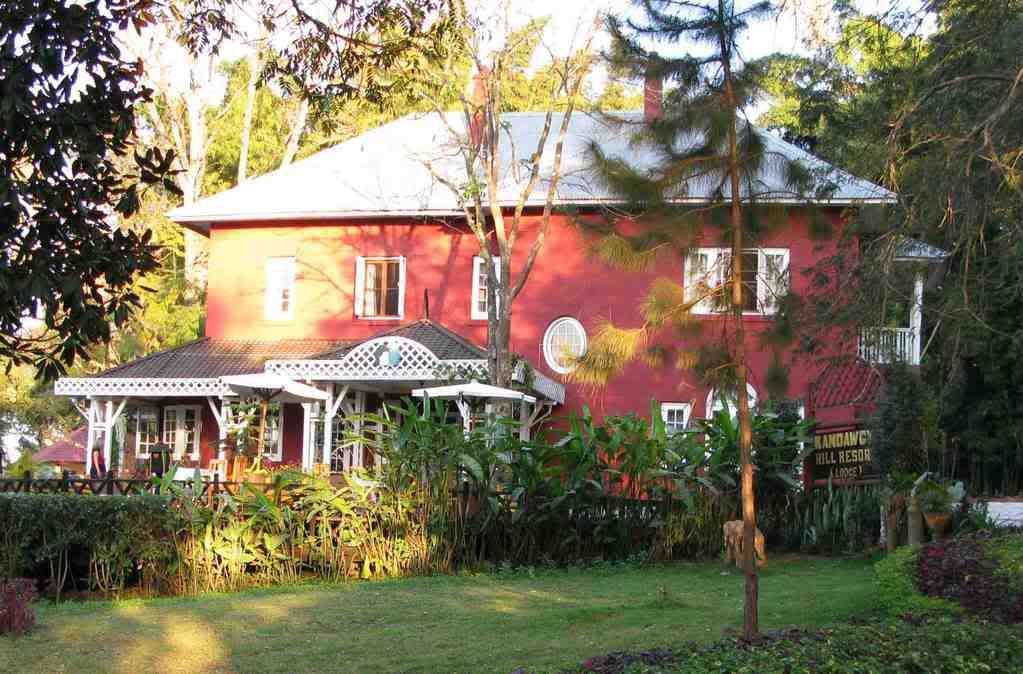
The following morning, we reclaimed our watermelon from the reception desk, and left for Maymyo with our guide. Maymyo is a small mountain resort town about 40 miles from Mandalay and was quite popular with the British during the height of their Empire. Our guide offered to babysit the watermelon (it spent the drive nestled at his feet), and said that he would arrange for our hotel in Maymyo – the Kandawgyi Hill Resort – to help us.

The management of the inn was very accommodating, and agreed to assist in Operation Watermelon.

This is the inn where the watermelon caper attained its grand climax.

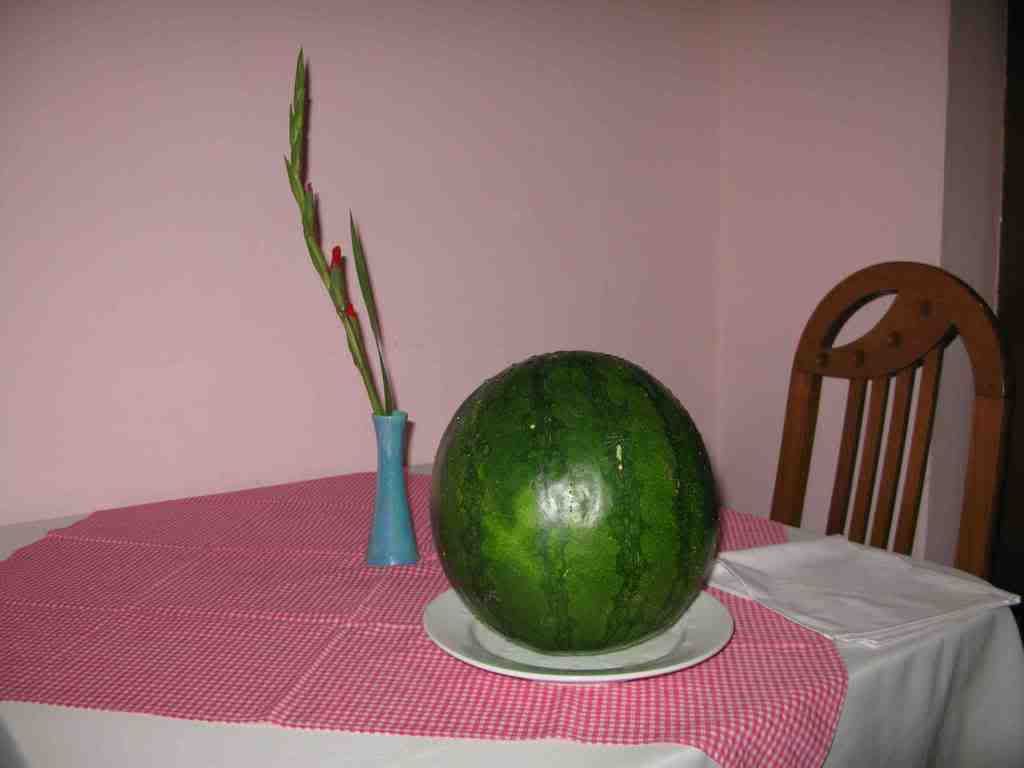
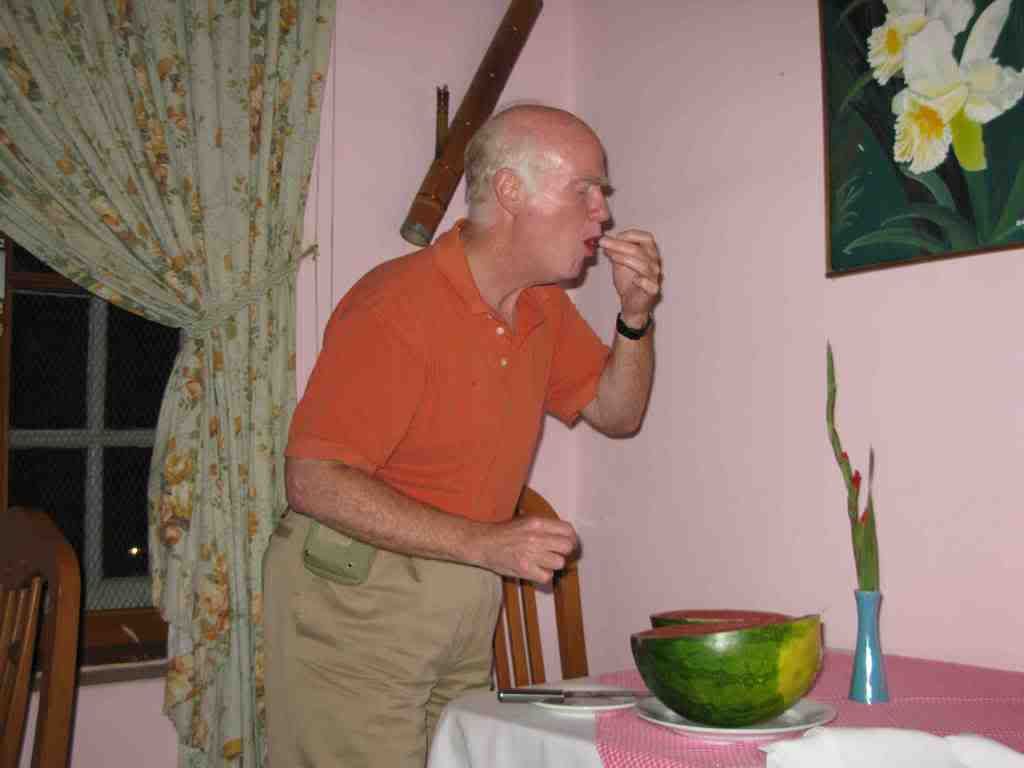
That night, after we had finished our main course at dinner, the maitre d’ arrived with our freshly-bathed watermelon.

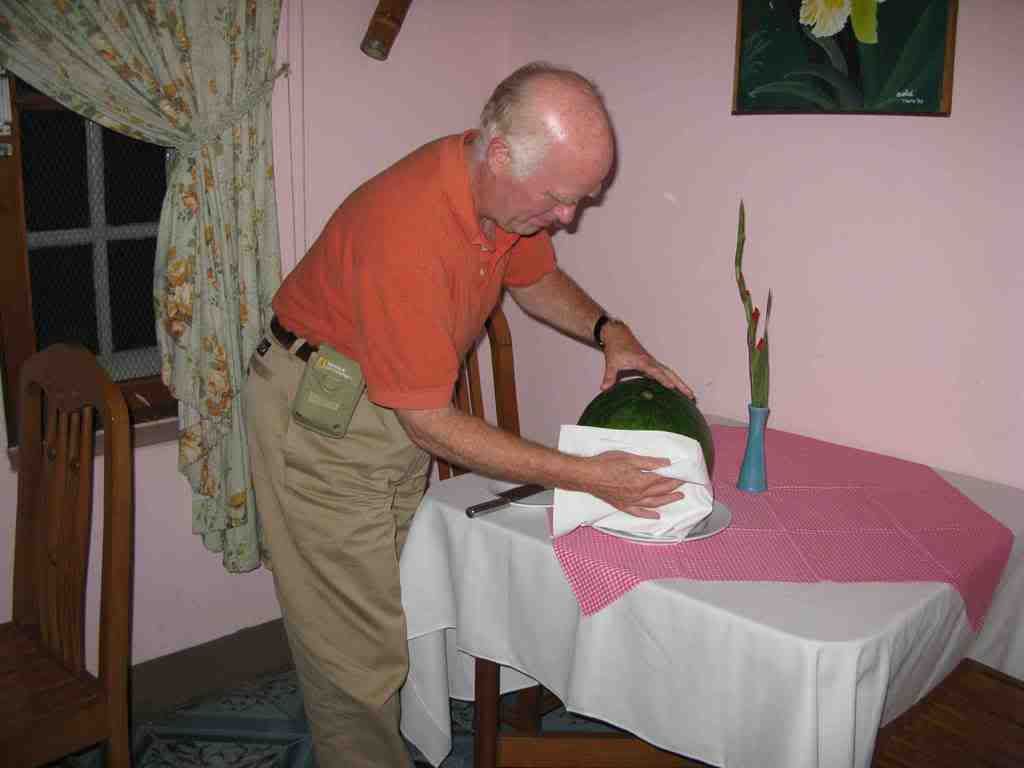
The first order of business was to complete the clean-up by drying the melon.

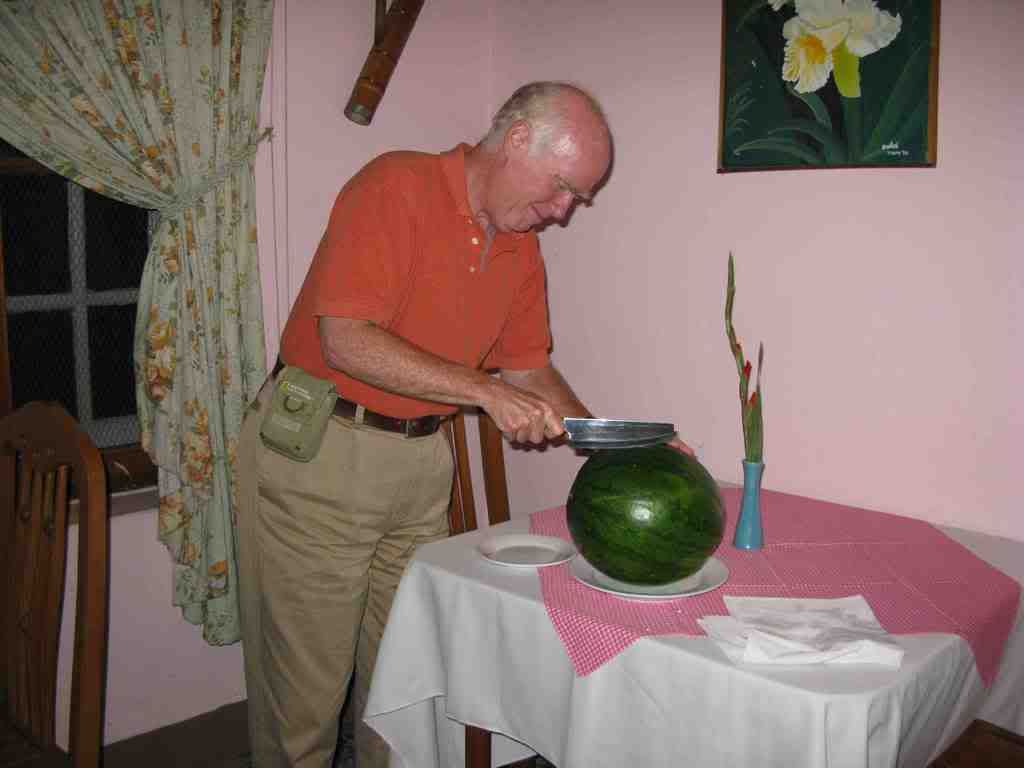
With the patient properly “prepped” for surgery, it was time for the first incision.

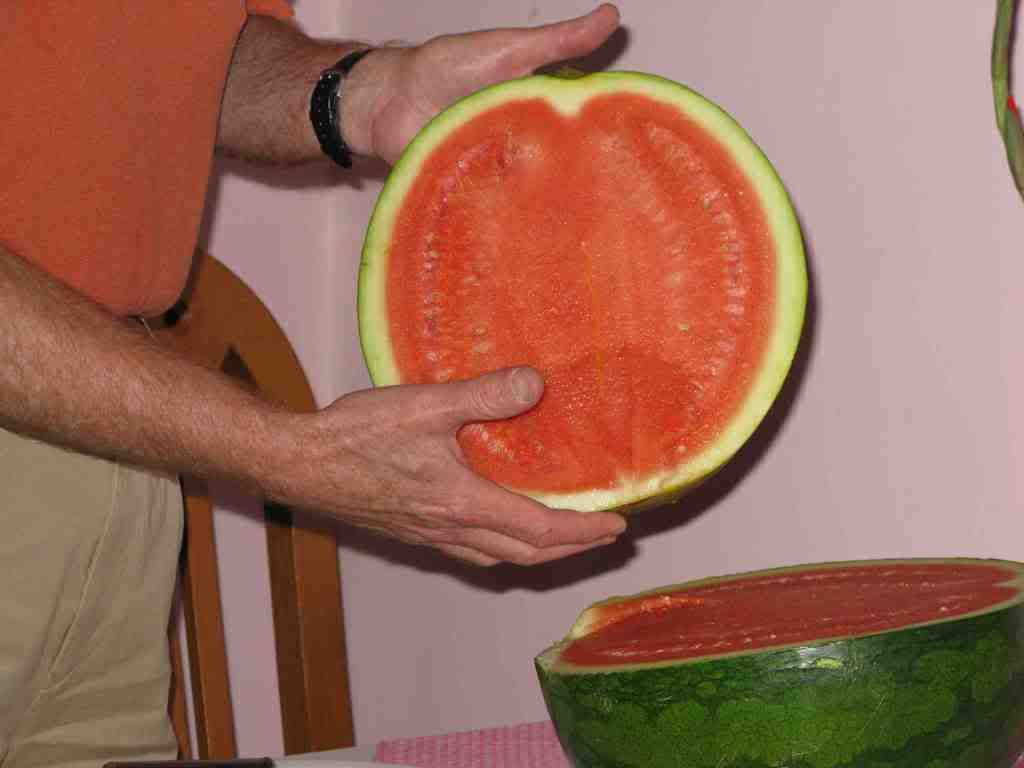
The surgery was successful…

… and the patient was delicious.


There were two other tables filled with diners in the Inn’s restaurant that evening. Everyone received a share of our “certified clean and safe” watermelon.

Dunkin’ Donuts – Thai Style: A Follow-up

One of the first reports I published on our Southeast Asia travels concerned our visit to a Dunkin’ Donuts location in Bangkok, Thailand. Some of you might recall my description of the coffee cream dispenser, and the instructions for preparing a croissant sandwich.

I emailed the Dunkin’ Donuts US customer service department to advise them of my blog posts. I am delighted to report that my email was forwarded to Mr. Nadim Salhani, the Group General Manager of Golden Donuts (Thailand). I received the following message from Mr. Salhani by email this morning:

Dear Mrs Entis,

Many thanks for the comments in regards to our Dunkin store at Siam Square well received, and on behalf of Golden Donuts (Thailand), I sincerely apologize for this unfortunate incident that must have spoiled yours and your husband day.

The experience you had is not acceptable and it is very clear we did not keep our standards were it should be. This shows we have failed to train our people on proper hygienic conduct.

I want to make sure this does not happen again and therefore will be conducting special training sessions within this week to discuss and revise our hygiene and sanitation standards with our operations team. The plastic cup will have to go, and maybe we should try to improve English communication in the stores that service to more foreign customers.


Thank you once again for bringing this issue to our attention. I know the damage is already done and unfortunately the scar remains, but I would like you to know that we will be taking the proper corrections in order to offer the customer experience we strive for at Dunkin Donuts.

Yours sincerely
——————————————————————————
Nadim Xavier Salhani
Group Managing Director
Abp Cafe (Thailand) – www.aubonpainthailand.com
Golden Donuts (Thailand) – www.dunkindonuts.com
Golden Food Services
209/1 K Tower B, 25th Floor. Sukhumvit road No.21. Klongtoey Nua, Wattana, Bangkok 10110, Thailand
Tel: +66 2261 5354, Fax: +66 2261 5360

A tip of the hat to Dunkin’ Donuts in the US for forwarding my email, and to Mr. Salhani for his prompt and substantive response.