Myanmar Food Processing: Inle Lake Saké Factory

Rice is ubiquitous in Southeast Asia, so it should come as no surprise that the people of Myanmar ferment some of their crop to produce rice wine, or saké. We had the opportunity to visit a typical saké factory on Inle Lake during our visit to the area.

In a country where transportation by road and rail is limited, manufacturers must rely on local resources as much as possible for their raw materials and their equipment. One of the villages we visited near the shore of Inle Lake specialized in producing clay pots, some of which are used in the production of saké.

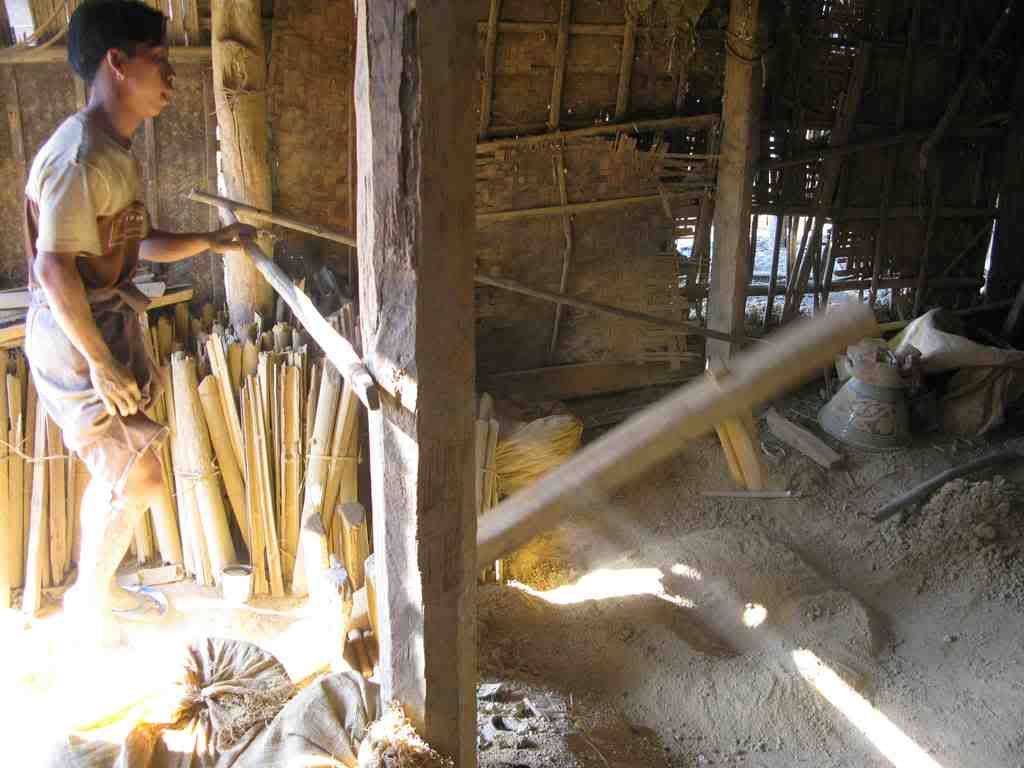
Here, a villager pounds clay into a fine powder.

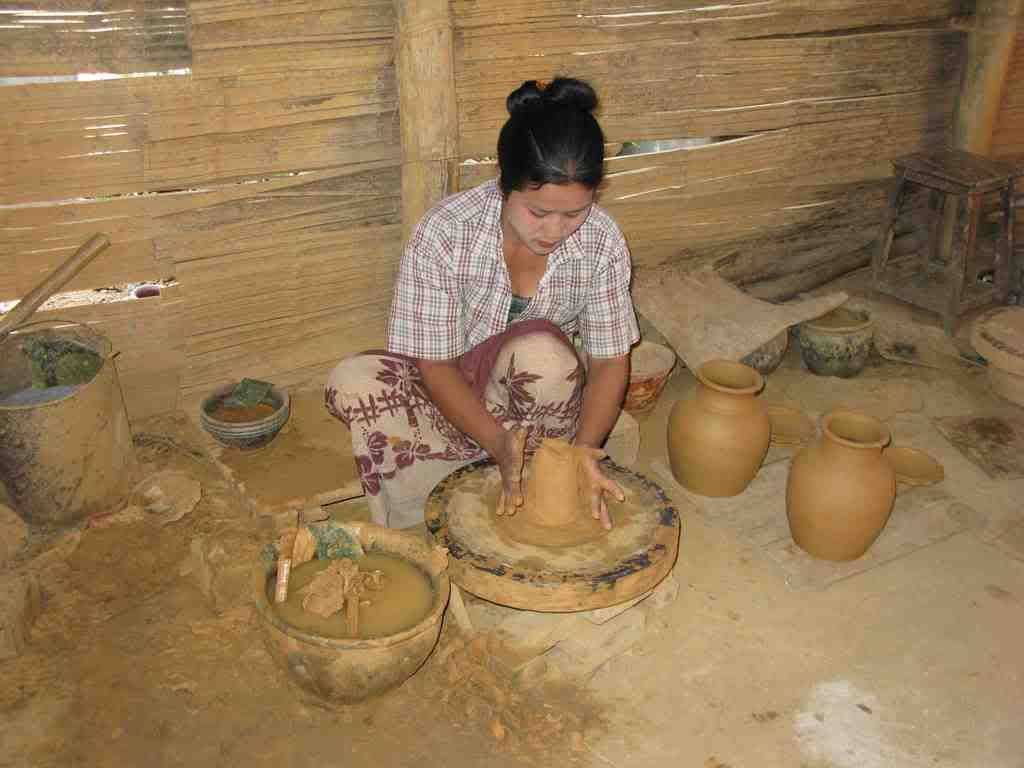
This villager showed us how she shapes her pots on a hand-driven wheel.

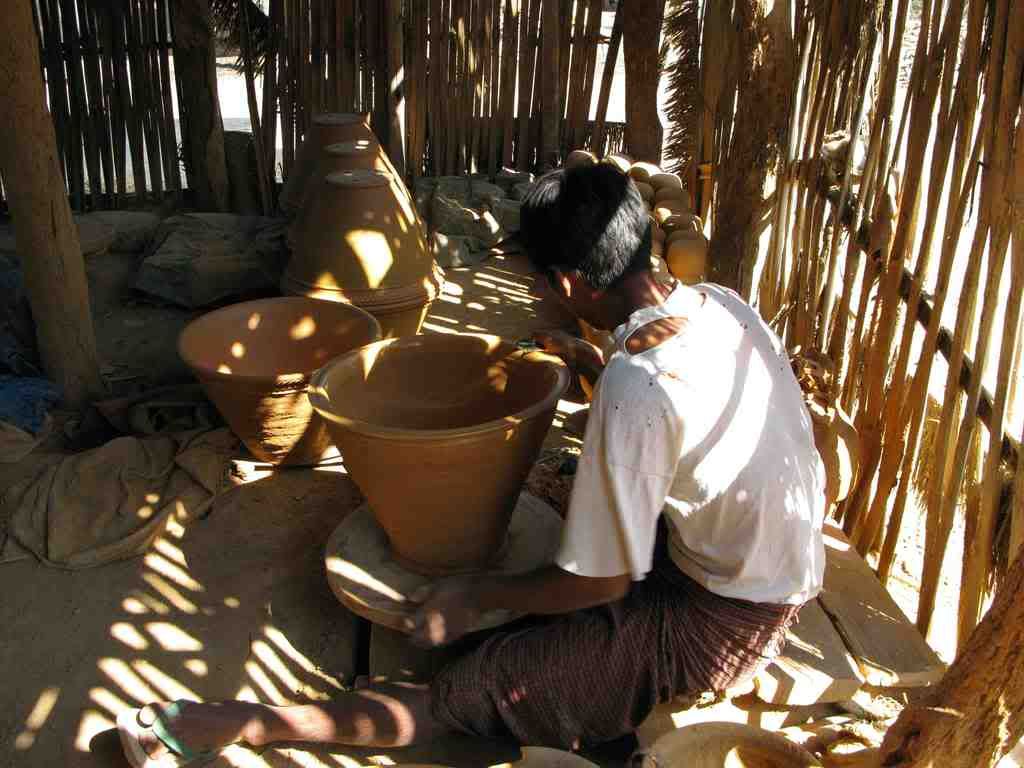
This potter is putting some finishing touches on the top rim of his pot.

Rice farming is a mainstay of Inle Lake agriculture. Villagers mill their rice in factories like this. Some of this grain will find its way to the saké factory.

http://i244.photobucket.com/player.swf?file=http://vid244.photobucket.com/albums/gg11/FoodBugLady/MVI_1077.flv

Saké production begins by cooking the rice in water. Other ingredients, including yeast, molasses, and sugar are added to the cooked rice, and the entire mixture is poured into clay pots. The pots are covered with cloths, and the mixture is left at room temperature to ferment for one week.

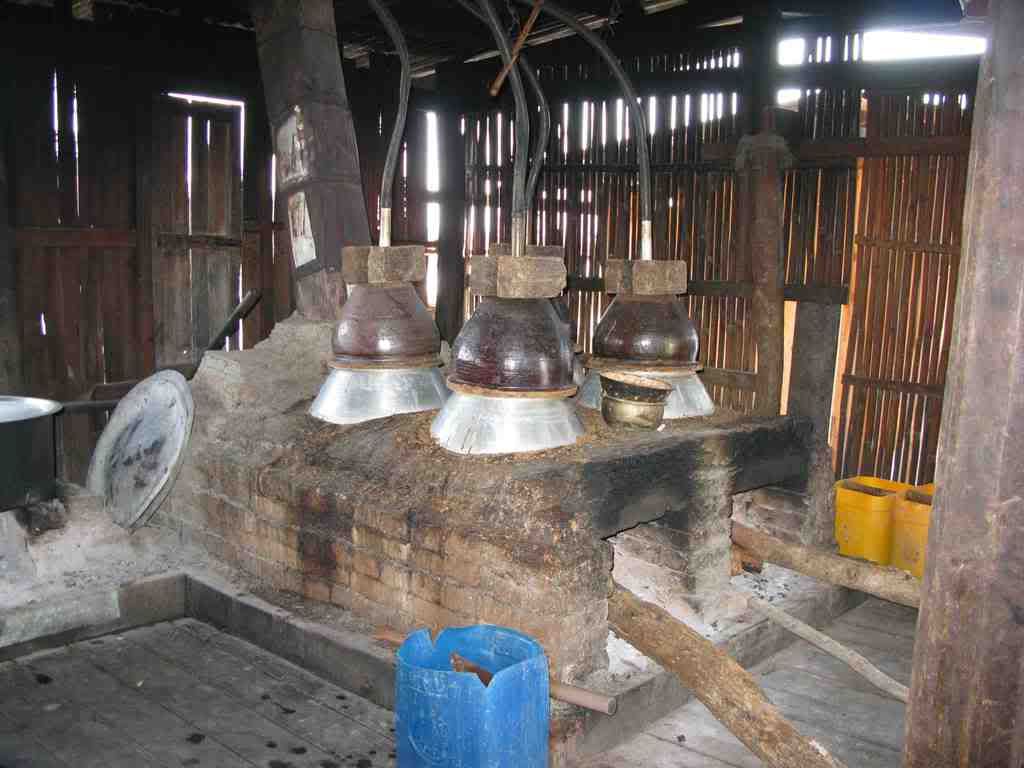
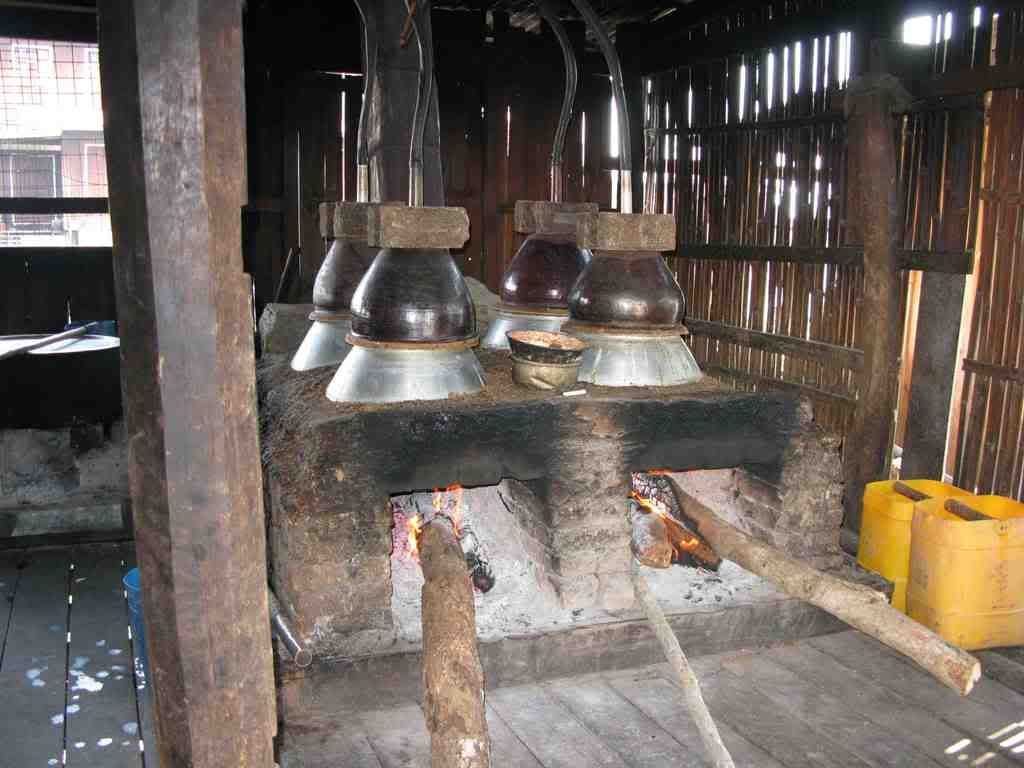
At the end of the week, the contents of the clay pots are poured into stills, and a glazed clay pot is inverted over the top of each still.

The stills are heated to boil off the alcohol from the fermented mixture. Steam is trapped by the inverted clay pots and flows through the black hoses to the condensers.

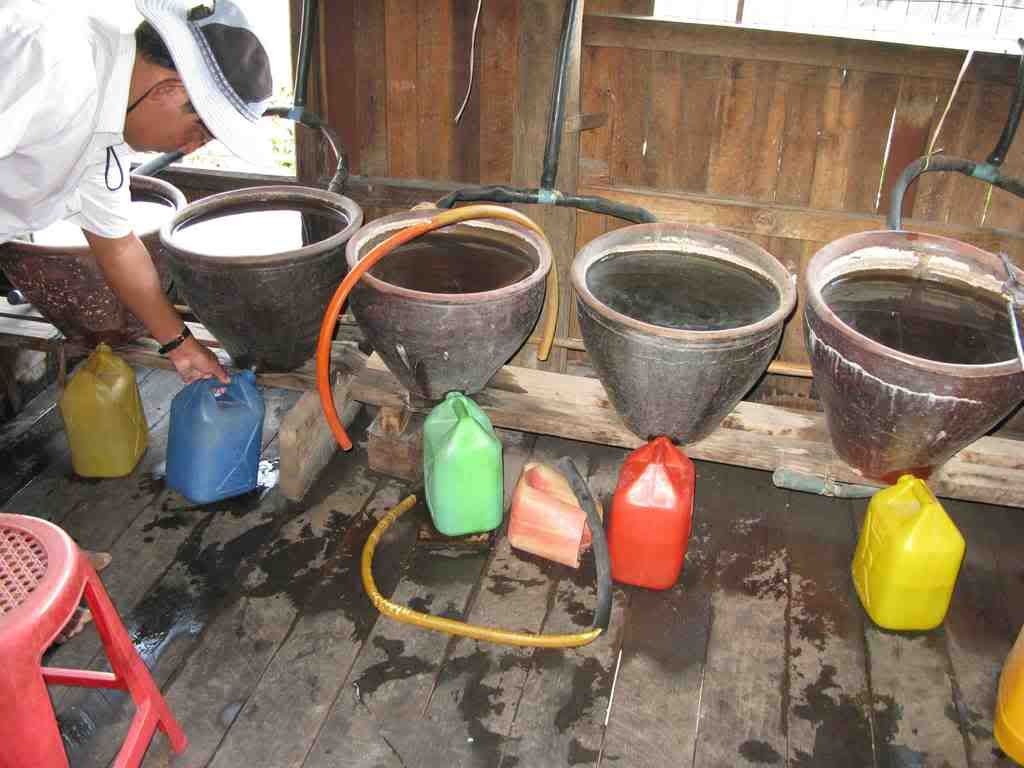
The condensers are double-walled clay pots. The outer wall of each pot has two openings – an inlet for the steam, and an outlet for the condensed saké. The body of each condensation pot contains water. The steam flows out of a tube, which is connected to an inlet hole in the outer wall of the pot, and the saké condenses between the outer and inner walls of the clay pots. The condensate is collected in plastic jugs.


The finished saké, which has an alcohol content of approximately 25%, is poured into bottles and sold to wholesalers for resale in markets and to local restaurants.

Rat Dim Sum?

According to a February 15th article in the National Post, Toronto health authorities have closed down a Chinatown restaurant after a passer-by photographed live rats in the restaurant’s picture window and posted the picture on a Toronto city blog site.

The manager of the Dumpling House restaurant was quoted in the article as saying,

“In this city, rats are a huge problem. It’s a city problem, not a restaurant problem. I don’t think the city has a plan to fight the rat problem.”

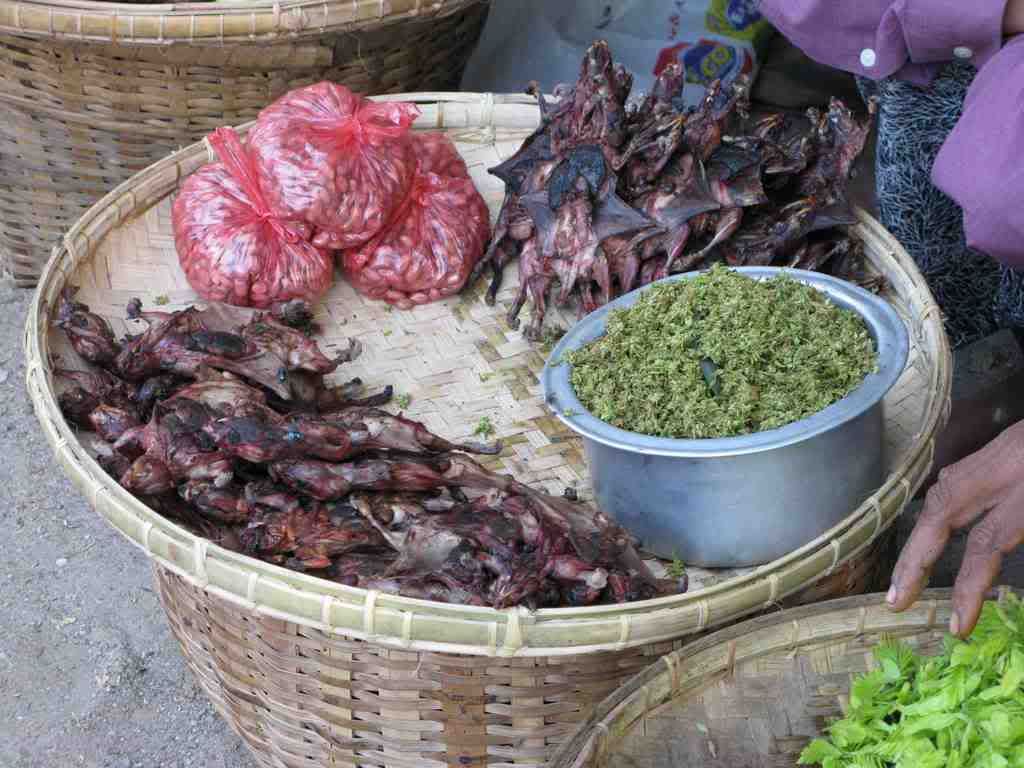
Perhaps Toronto should export its rats to Bagan, Myanmar, where they are considered a delicacy.

Myanmar Refreshment Stands

Back in the days of my grandparents, when refrigerators hadn’t yet replaced iceboxes in the kitchen, the iceman’s visit was part of the morning routine. In Yangon (Rangoon), as in many other parts of Southeast Asia, the iceman still makes his morning rounds.

This video, which was taken in the Yangon’s city centre market, shows how – and where – the iceman prepares to make his deliveries. First, he saws the large blocks of ice into smaller pieces. Then, his helpers stack the smaller ice blocks, separating the stacks with sawdust to help insulate them and to prevent them from sticking to each other. He’s now ready to undertake his daily deliveries to the local market stalls, or to any household or business on his list of customers.

The Iceman Cometh

The ice blocks, which are made from non-potable water, are used in numerous ways by the Myanmar people. Those who are lucky enough to have iceboxes will use a block of ice to keep perishable food cool.

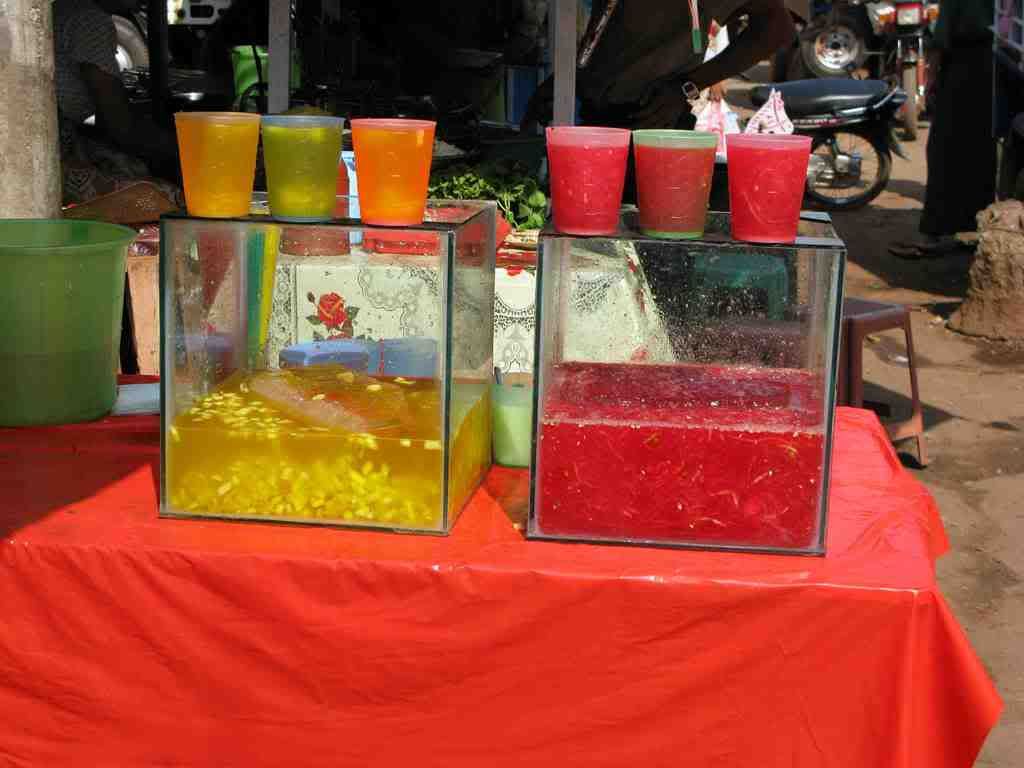
Some vendors crush ice and add it to fruit juices to make a refreshing beverage.

One popular beverage in the Bagan region of Myanmar is lime-flavored sugar cane juice, squeezed fresh while you wait. We watched the process at a roadside refreshment stand.

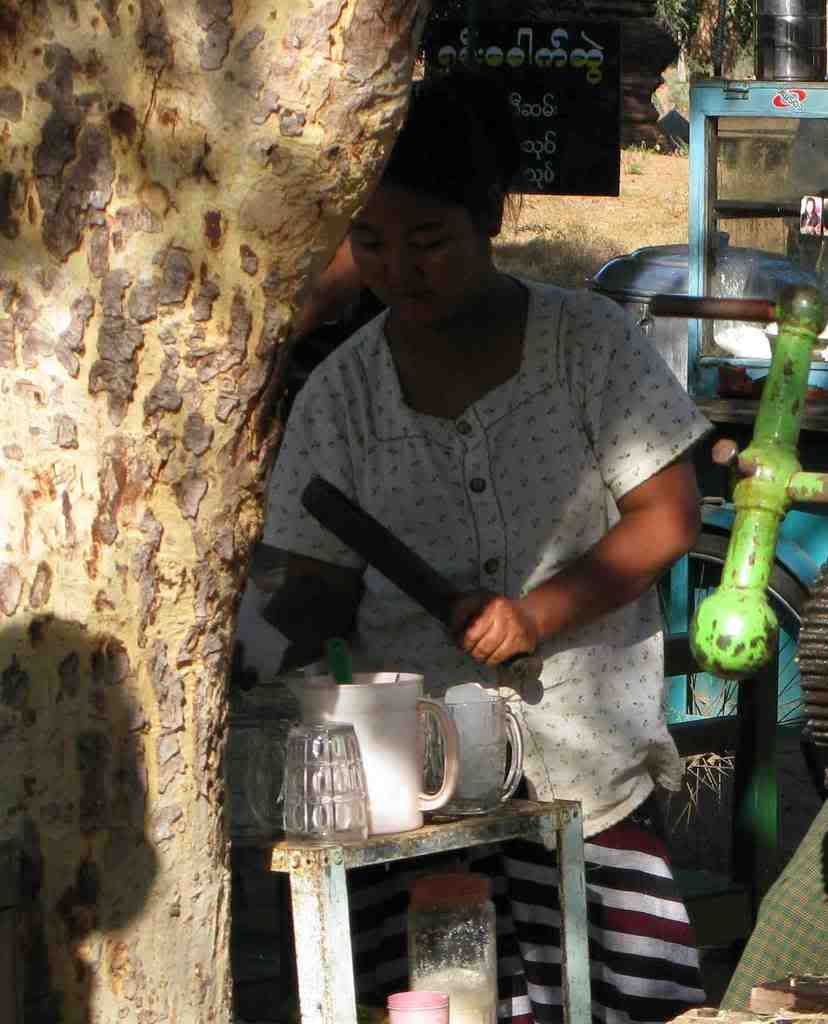
The juicer’s assistant takes a small block of ice in hand, crushes it by hitting it with a wooden stick, and puts the crushed ice into a glass mug.

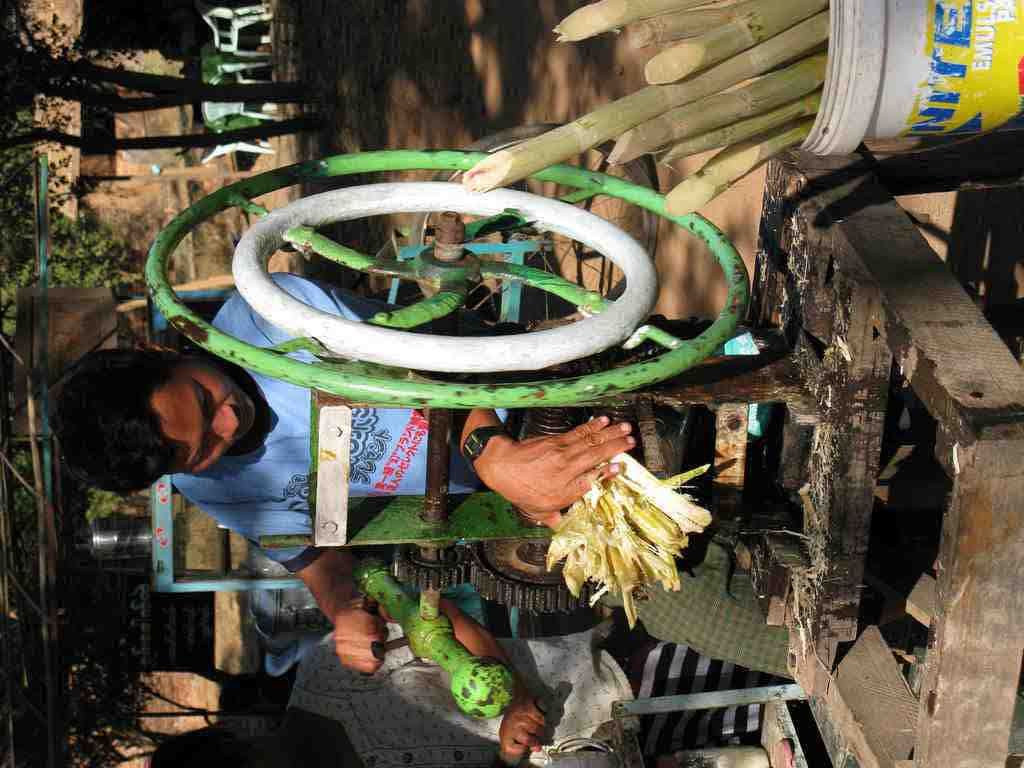
In the meantime, the juicer grabs a handful of sugar cane stalks and proceeds to feed them into a hand-cranked crushing machine. He feeds the stalks through several times, in order to extract all of the juice. On the last run-through, he sandwiches a couple of wedges of fresh lime between the stalks.

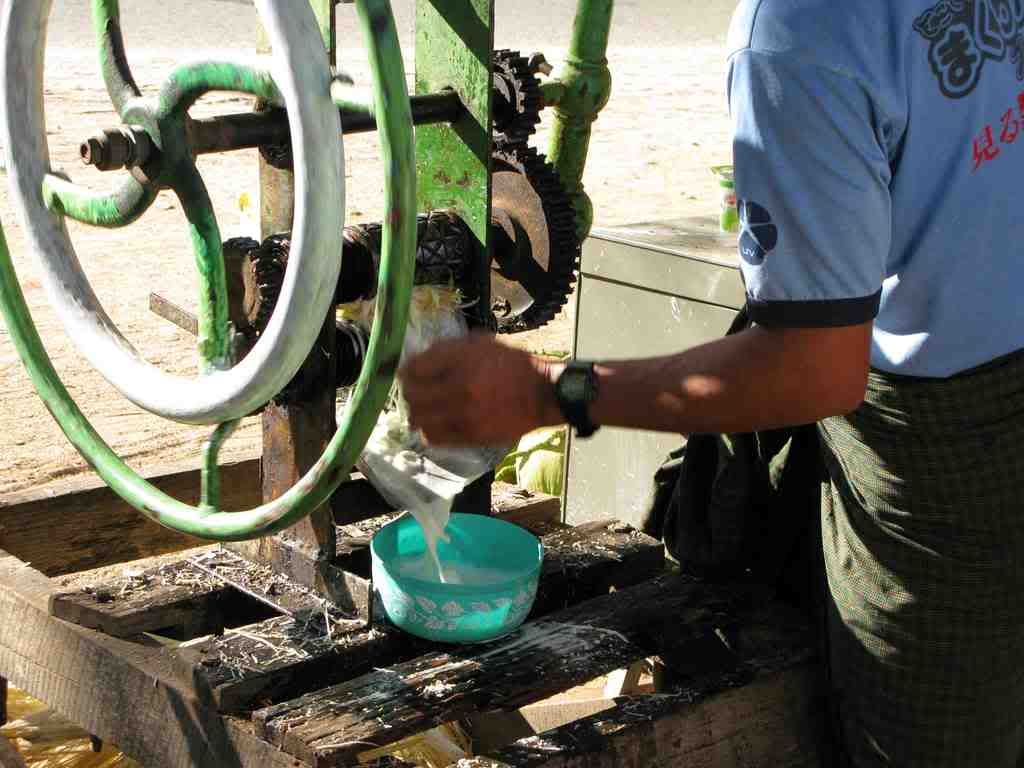
The juice collects in a small bowl, which the assistant empties periodically into a pitcher.

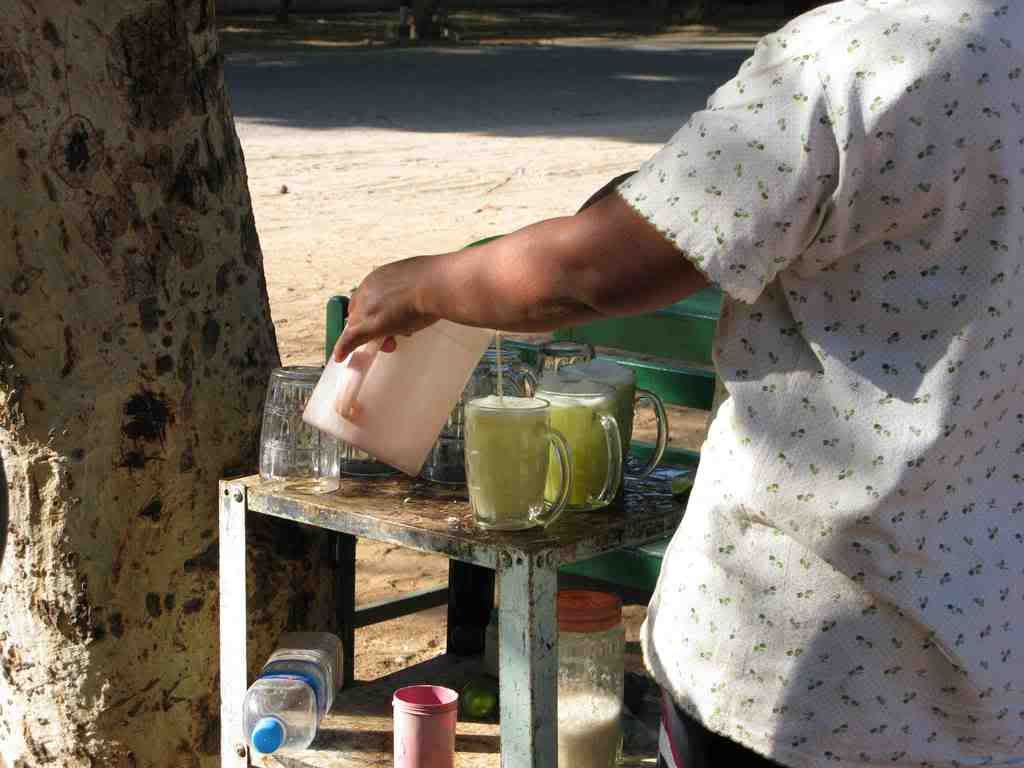
Finally, the assistant pours the juice into the ice-filled mugs.


A side note about Myanmar attire. Most men and women wear a traditional “skirt” known as a longhi. This is a long piece of fabric (typically cotton for everyday wear) sewn into a tube. Men tie the tube in a large knot in front, whereas women tie or tuck it on the side. It’s not unusual to see men undo and retie their longhi as they walk along the street.