Meandering Through Myanmar Markets

As we walked through markets in the different towns and cities, we were struck by both the similarities and the regional differences in the selection of food. Here are a few of the things we encountered.

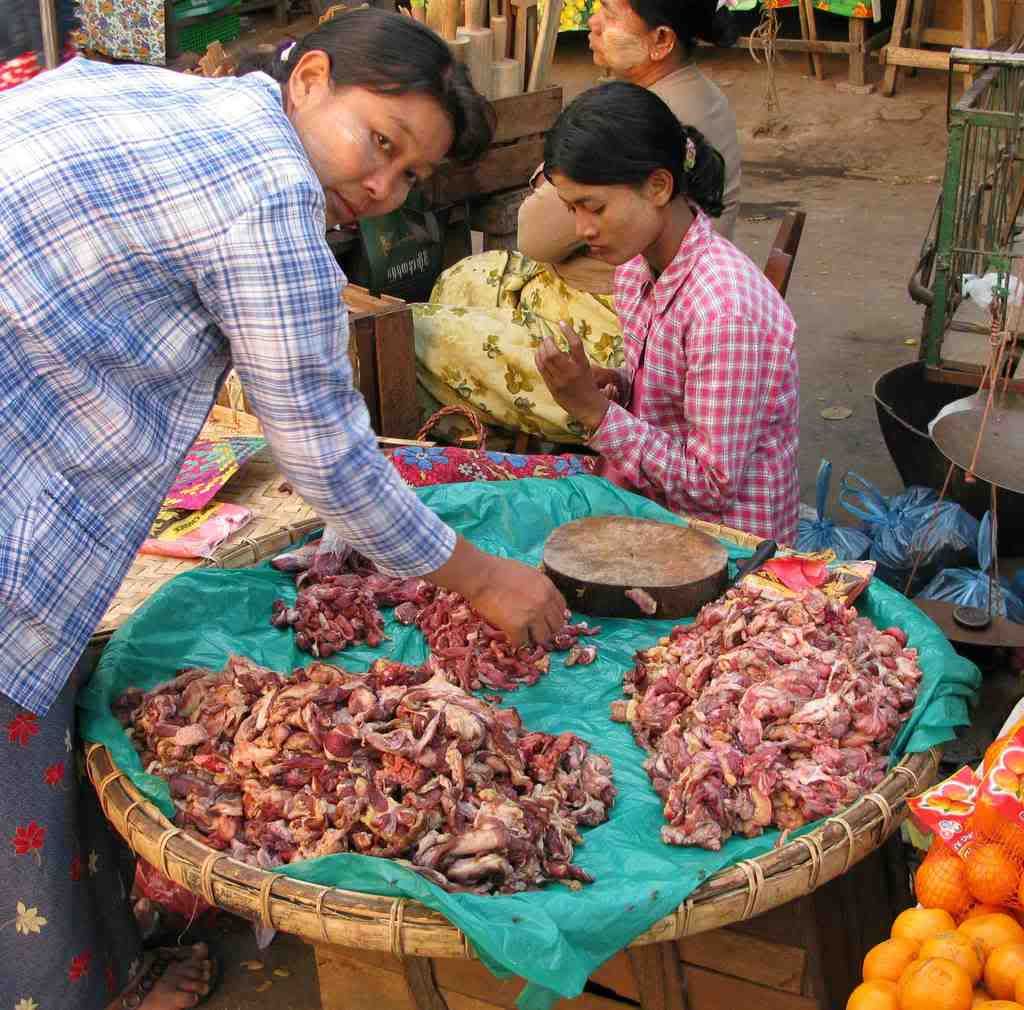
We saw meat trimmings in just about every market. They are used in soups, stews and curries.

We only saw this blood sausage in Mandalay

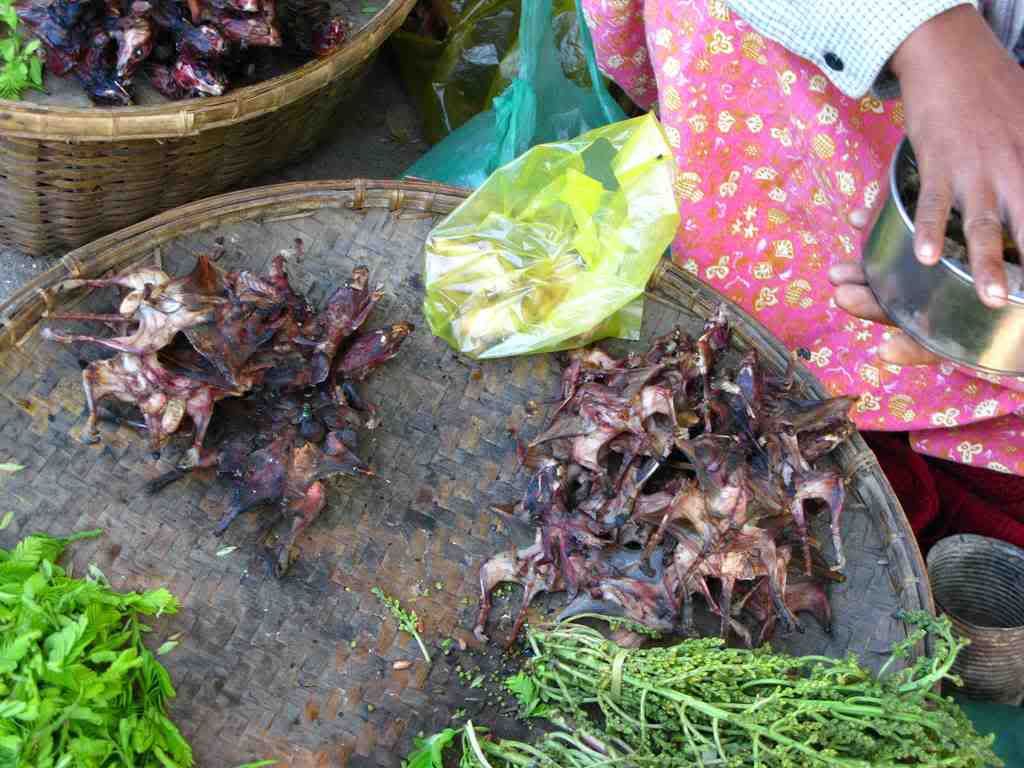
I’m happy to report that the only market where dried rat was on sale was in Bagan. Once was enough!

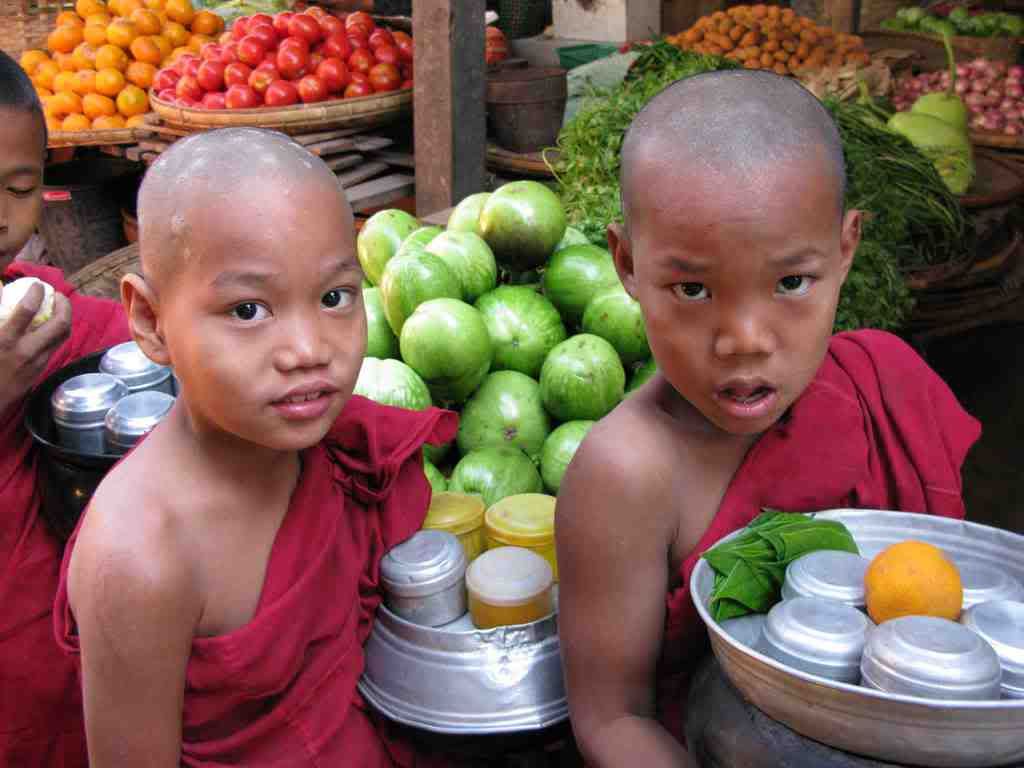
These young monks, begging for their daily food in the Bagan market, were happy to receive whatever was offered.

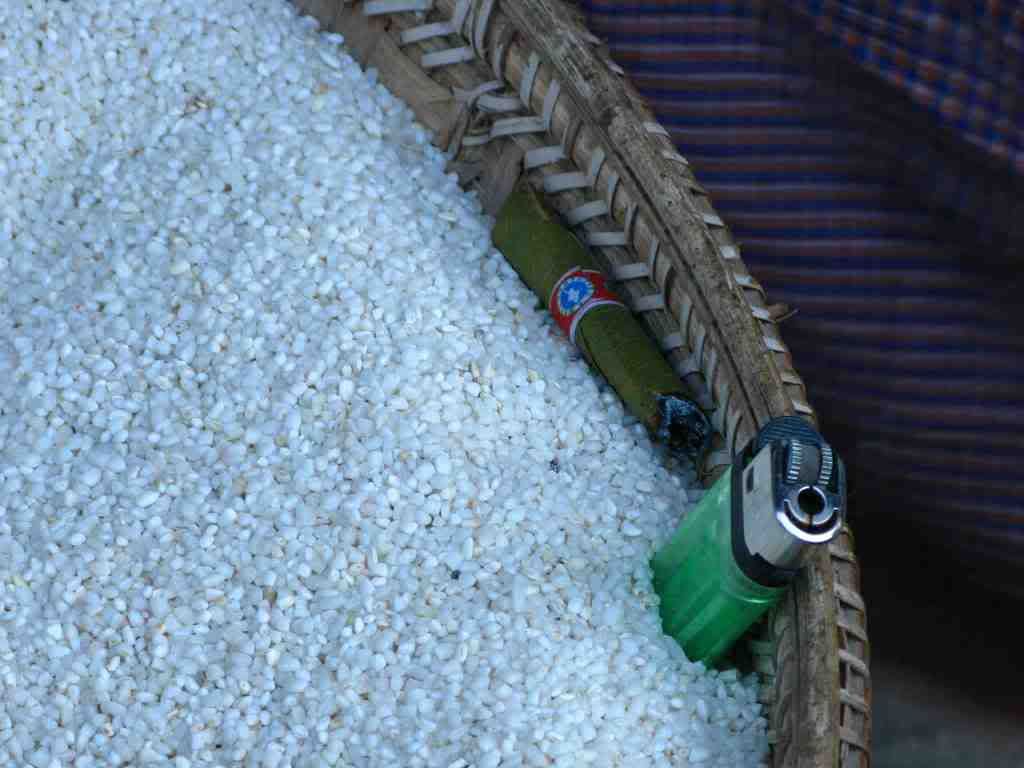
I’ll leave this Bagan image to your imagination. Would anyone care to hazard a guess?

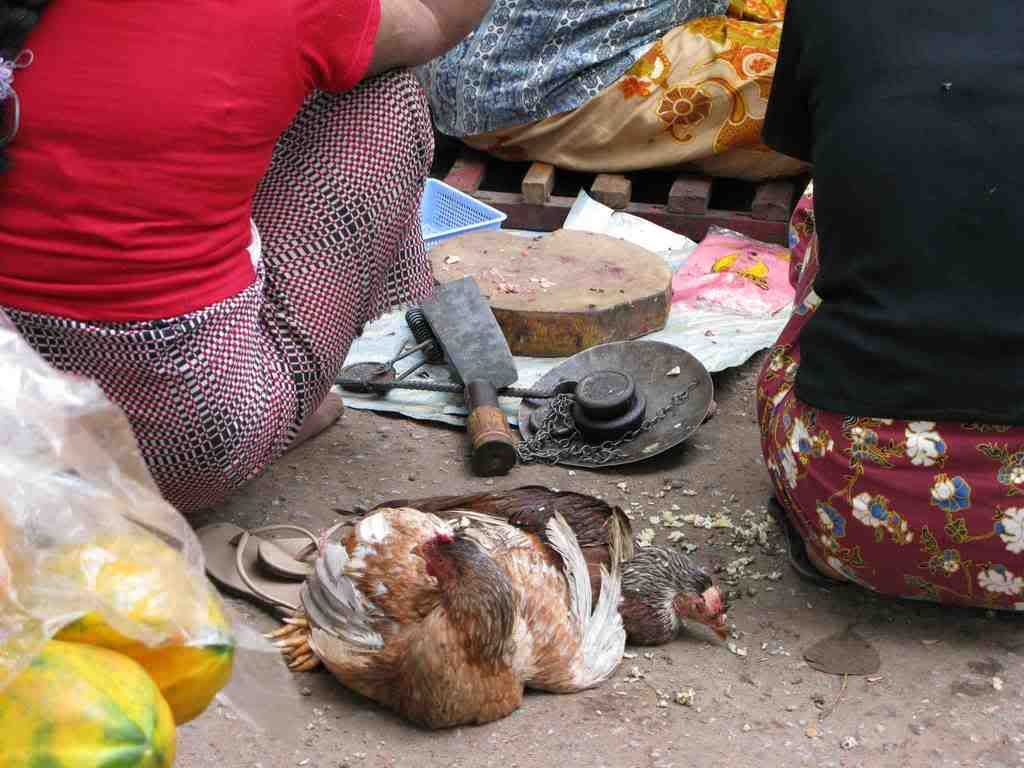
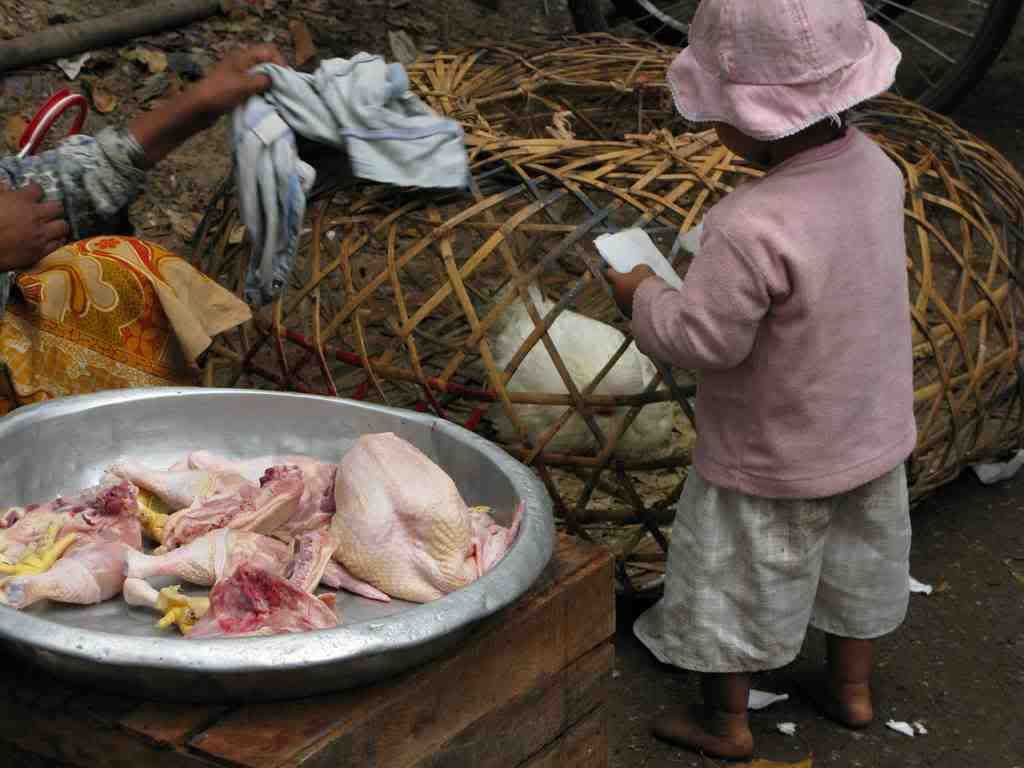
The Yangon city center market was the only place we saw live poultry.

Did these chickens have any premonition of their fate?

Myanmar Village Scenes

The first village that we visited in Bagan was on the “tourist trail”. In fact, we encountered two groups of tourists arriving at this village as we were leaving. Villagers make at least part of their income demonstrating local crafts.

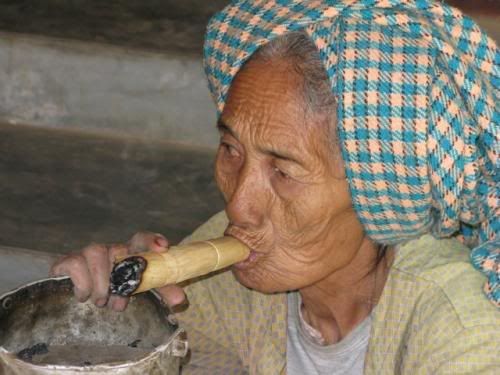
This young woman makes cheroots and demonstrates their use. Notice the deft use of the ashtray.

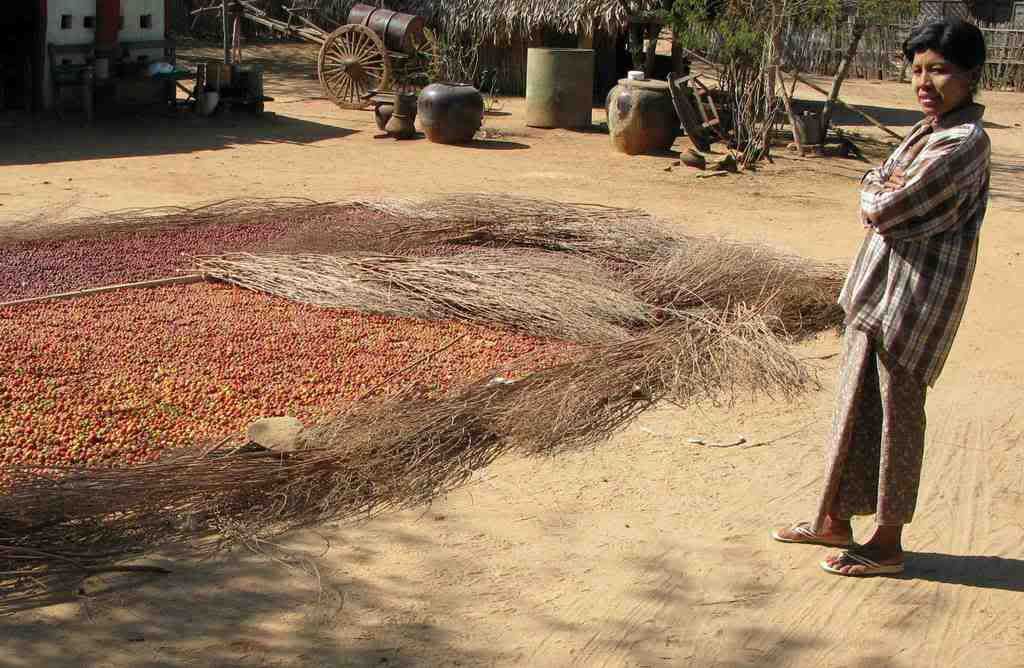
Villagers dry fruit such as these small plums in the sun, and sell them in the local market.

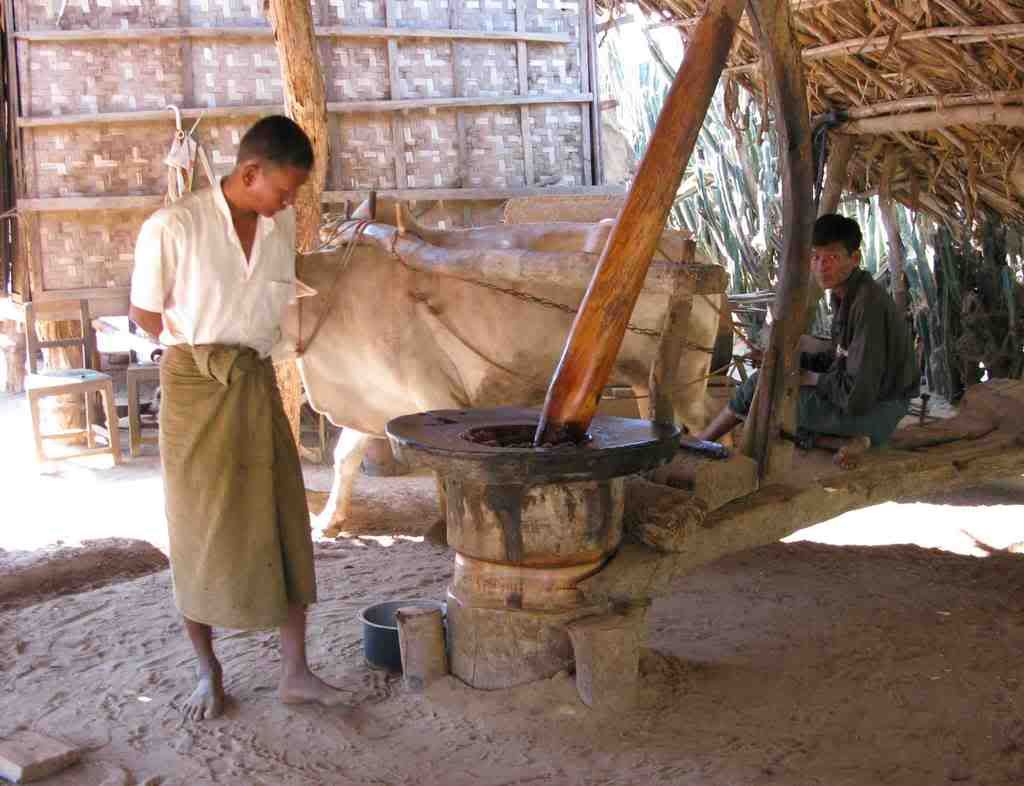
Peanuts and sesame seeds are also sun-dried, and then pressed to extract cooking oil. The oil press is turned using a “one-ox-power” engine, which was happy to pose for this picture.

The day we visited, peanut oil was on the production schedule.

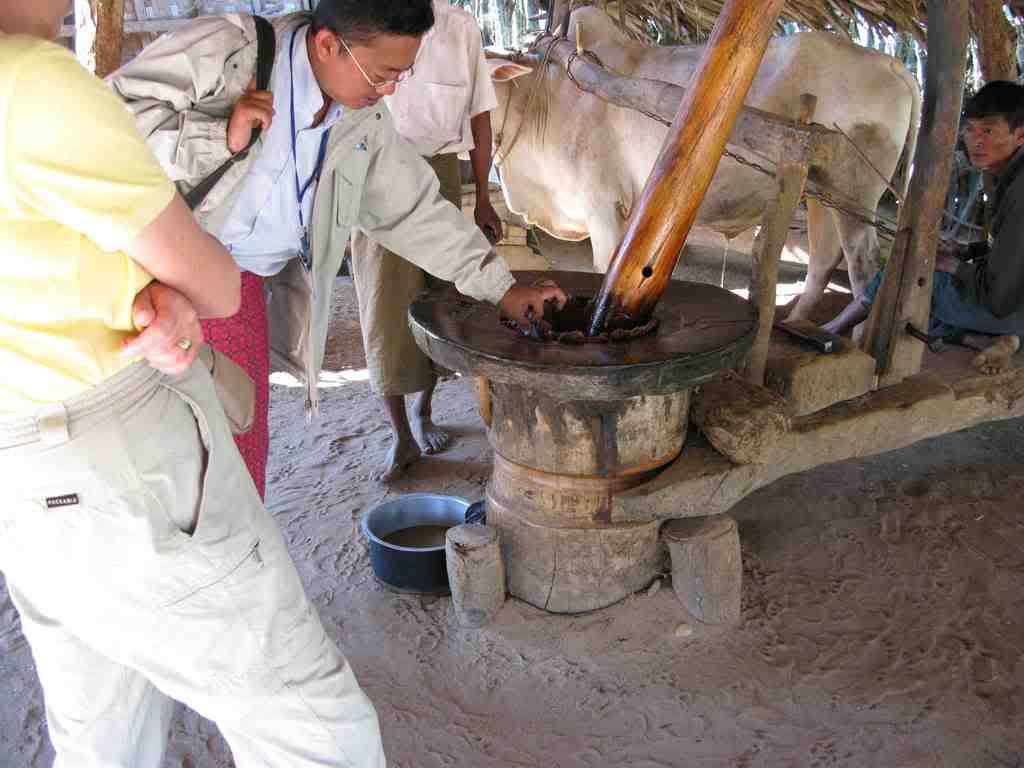
The oil drizzles out of the bottom of the press and collects in the small container just beside the mill operator’s left foot. The peanut meal that remains after grinding is fed to the chickens and oxen.

Peanut oil wasn’t the only liquid being produced while we watched. The ox took advantage of a break in the action to engage in some production of its own.


The second village we visited in the area didn’t have an oil press, but it boasted both a primary school and a general store. The family that owns the general store is considered “middle class” by Bagan standards, and is the wealthiest family in the village.

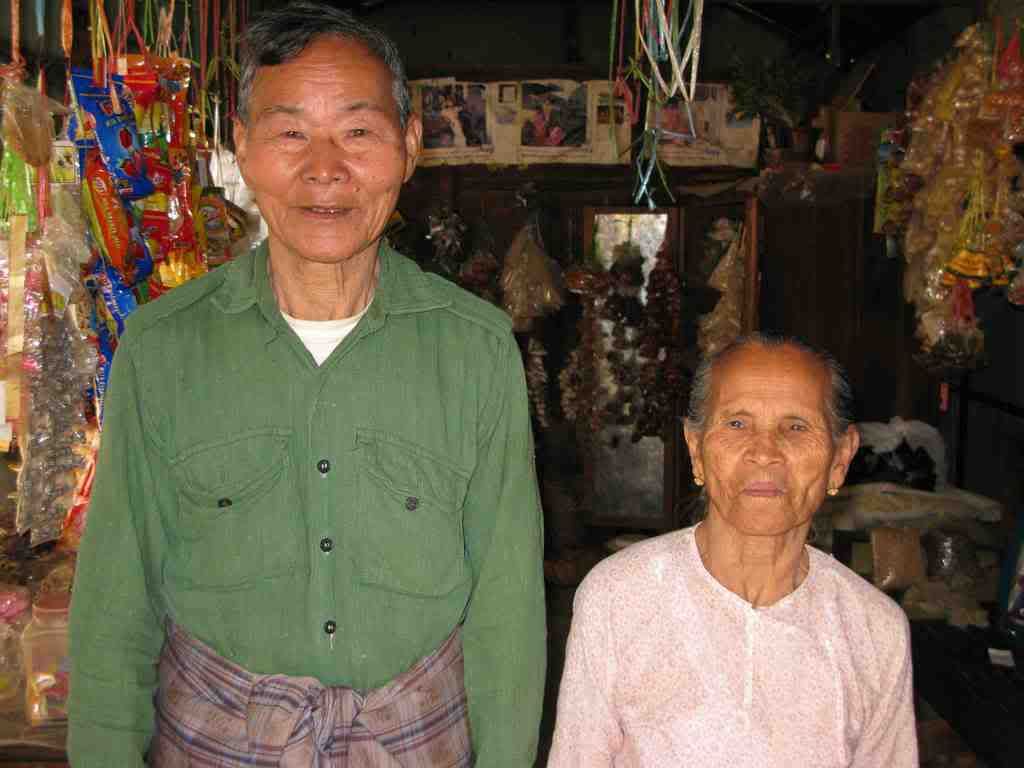
We met the proprietor and his wife.

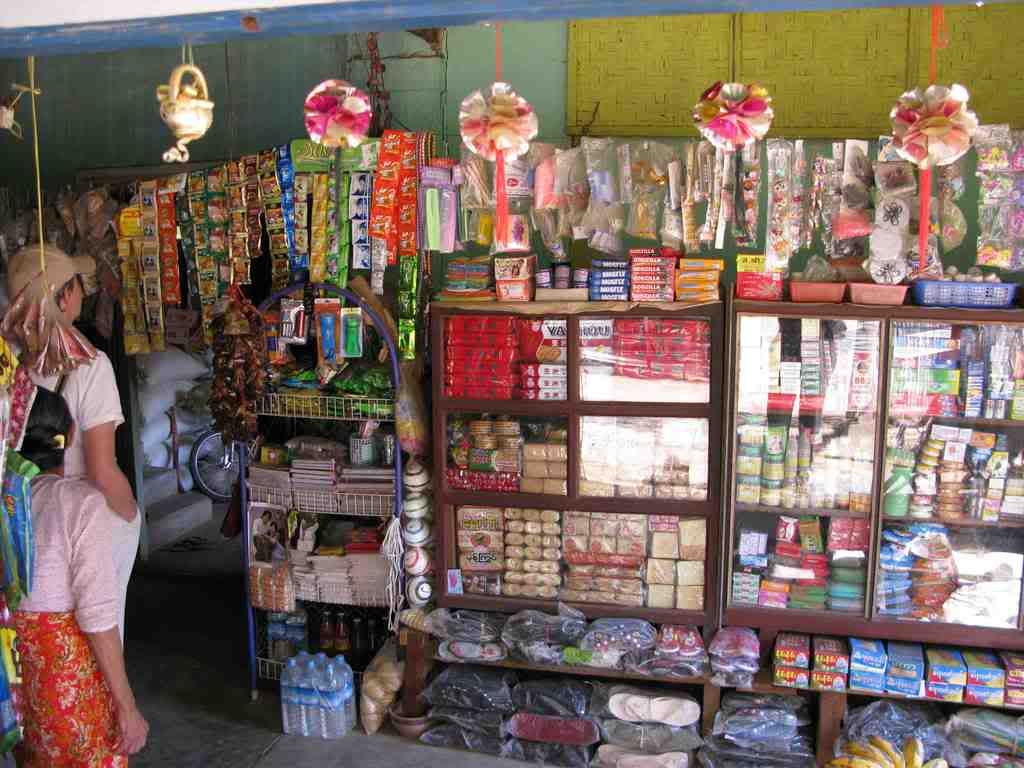
The shelves were well-stocked with a wide variety of packaged foods and other goods.

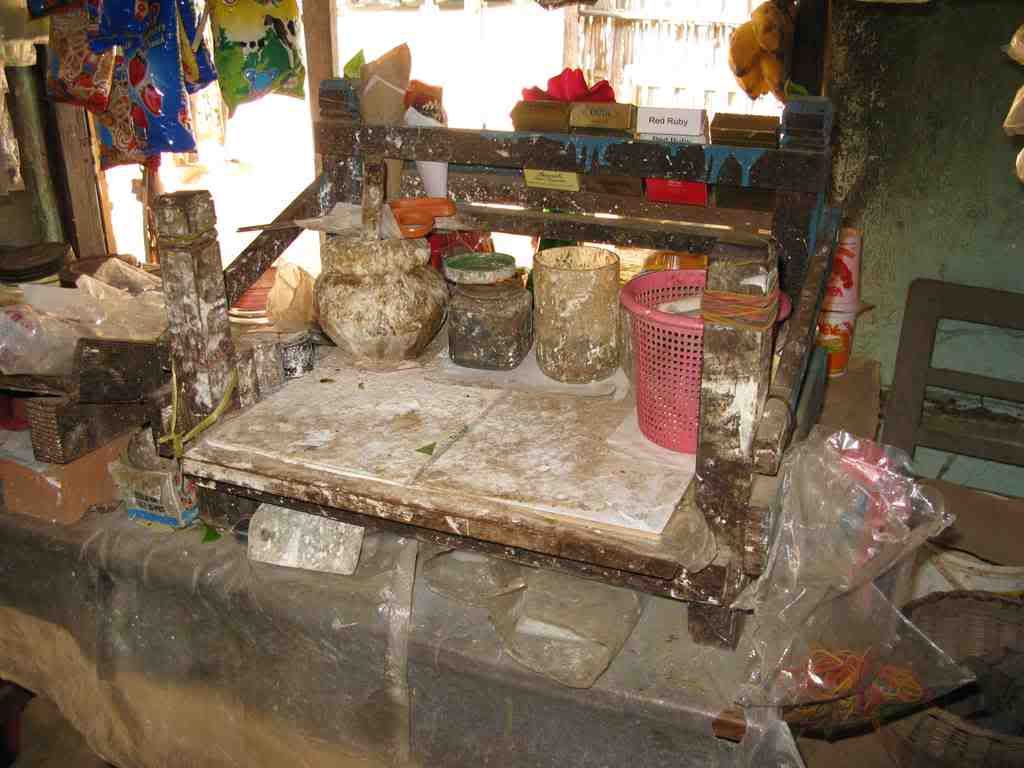
This was a full-service store. It even had a paint department.

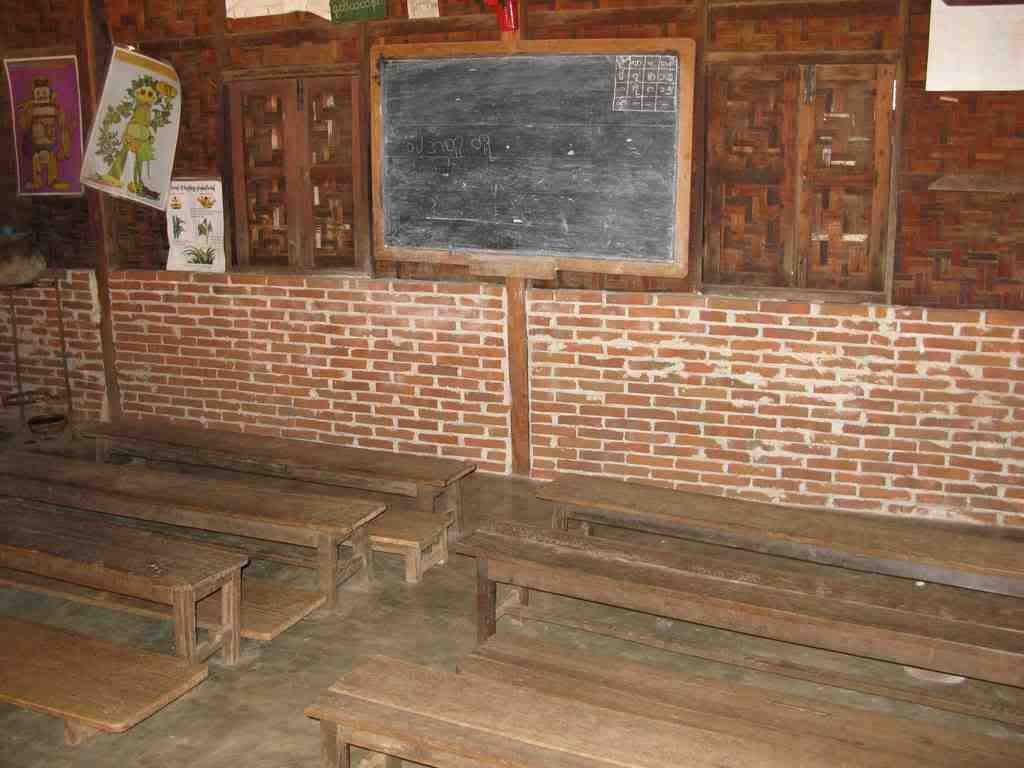
In Myanmar, tourists are not usually permitted to visit the schools. But the day we stopped by this village was a “festival” day and school wasn’t in session. We were able to tour the school house, which is divided into five open classrooms. There is just one teacher, and she is responsible for the entire student body (grades one through five).

This is one of the classrooms.

The Myanmar government provides the school building and pays the teacher’s (small) salary. It’s up to the villagers to pay for school supplies and to find the money to maintain the building. When we visited, the village was gradually accumulating a supply of bricks to repair and enlarge the school.

Myanmar Restaurants and Buffets

Our first experiences with restaurant and hotel buffets in Myanmar were not very appetizing. The cooked dishes were tepid, at best, and other perishable items, such as milk and cream, were left at room temperature. The dinner and breakfast buffets at the Mandalay Hill Resort hotel were sickening – literally. Ants crawled all over the toaster and Salmonella lurked in the “roast beef”.

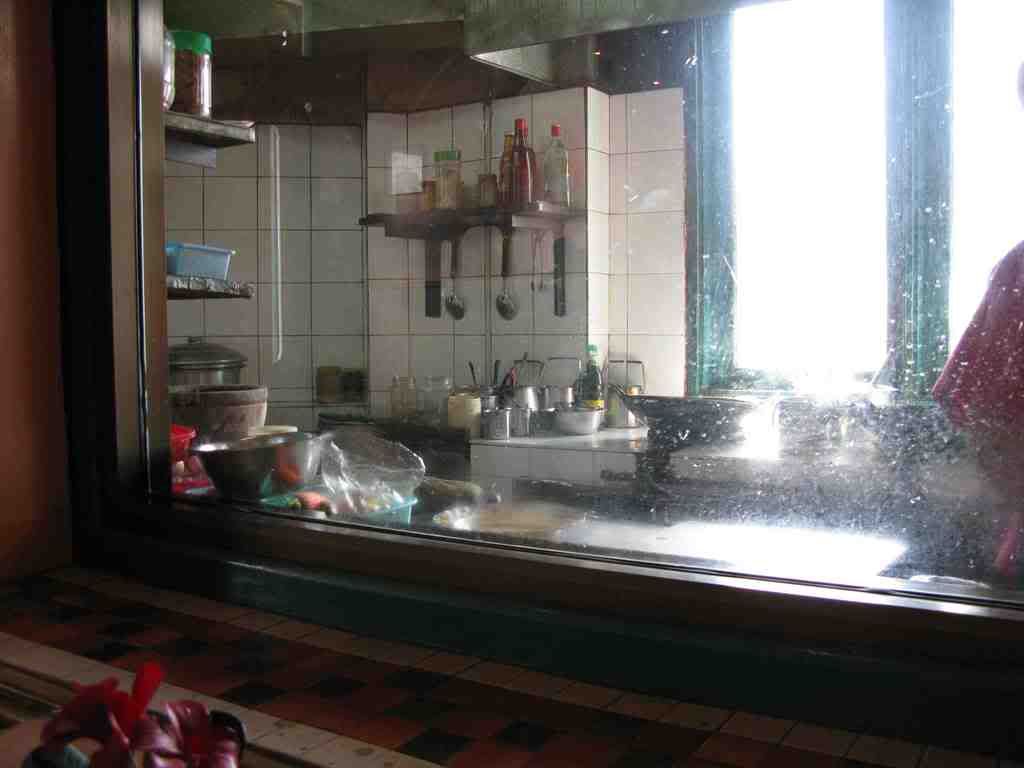
Restaurants that were not buffet-style tended to be more appetizing – at least the problems were hidden from view. But we ate at one restaurant in Mandalay that left nothing to the imagination. We were seated at a table next to a picture window, and had a view of the restaurant’s kitchen.

As I gazed into the kitchen, I could see one of the cooks preparing a sauce. I watched with interest as she mixed a few ingredients in a saucepan and stirred the mixture with a large spoon. Then she used the spoon to taste her sauce. Deciding that there was something lacking, she added another ingredient and used the same spoon to stir the extra ingredient into the mixture. At this point, she walked out of my line of sight. I can only hope that the sauce was destined to be cooked.

This was my view of the restaurant kitchen, with the cook just disappearing “stage right”

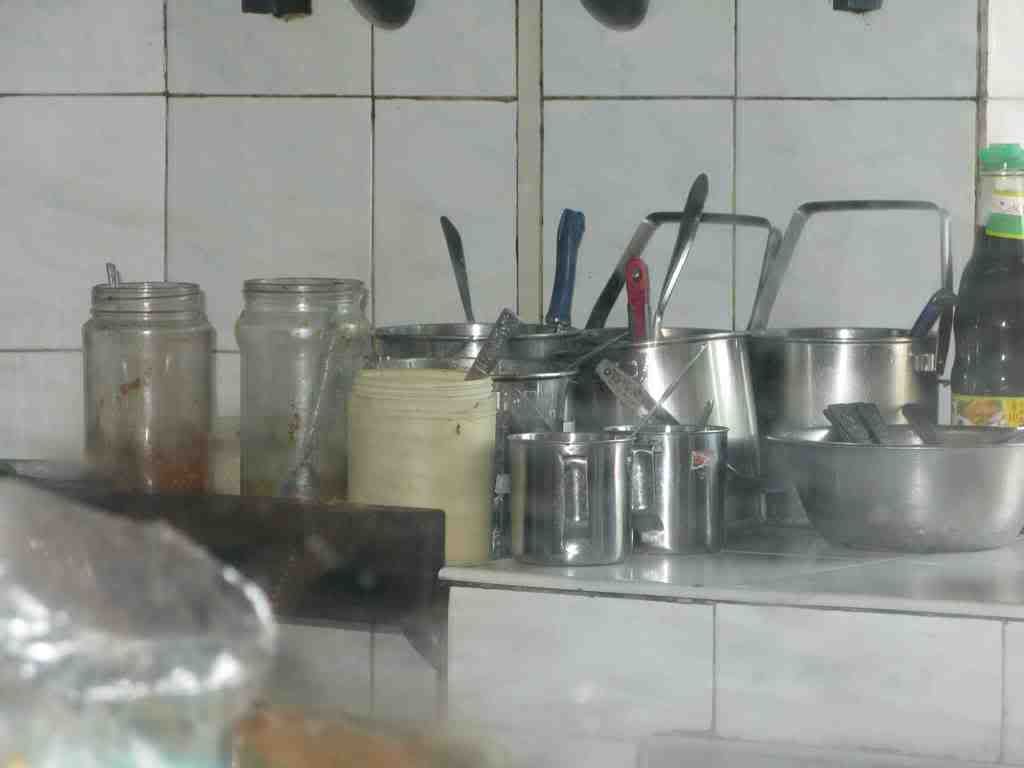
A close-up of part of the kitchen work space

Away from the major cities, kitchen duties sometimes migrated outside – where it’s cooler


One of our better hotel breakfast buffet experiences was at the Japanese-managed Thiripyitsayar Sakura Hotel in Bagan. Even though the setting was outdoors, there were no ants on the toaster at this hotel!

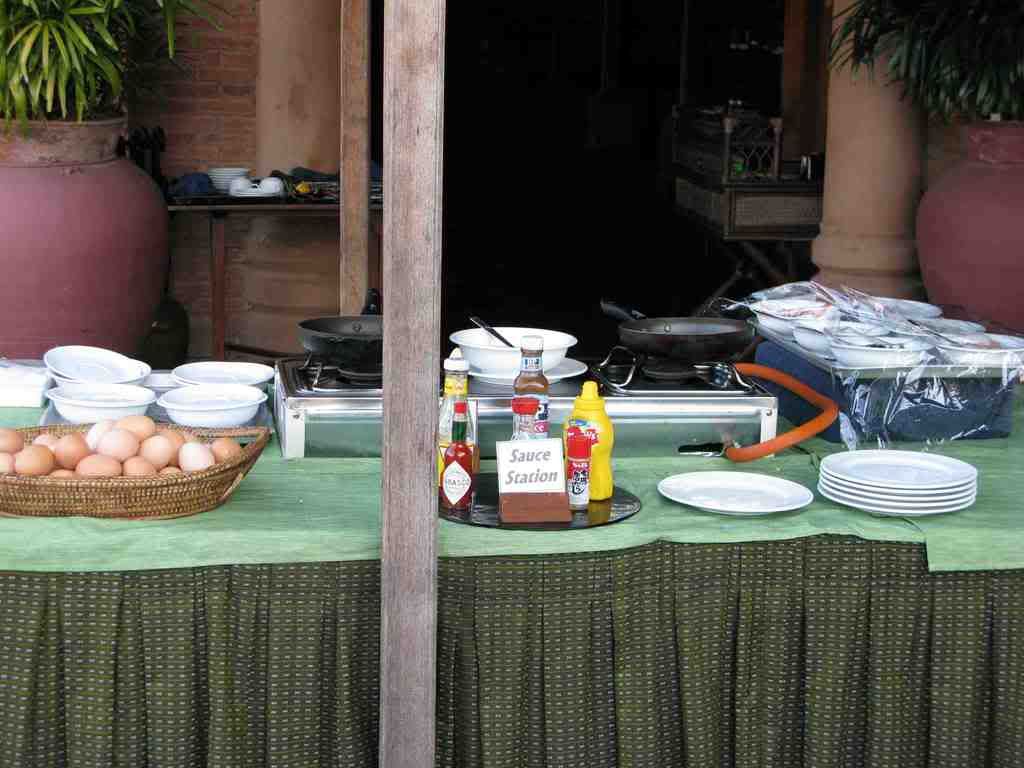
Eggs were cooked to order

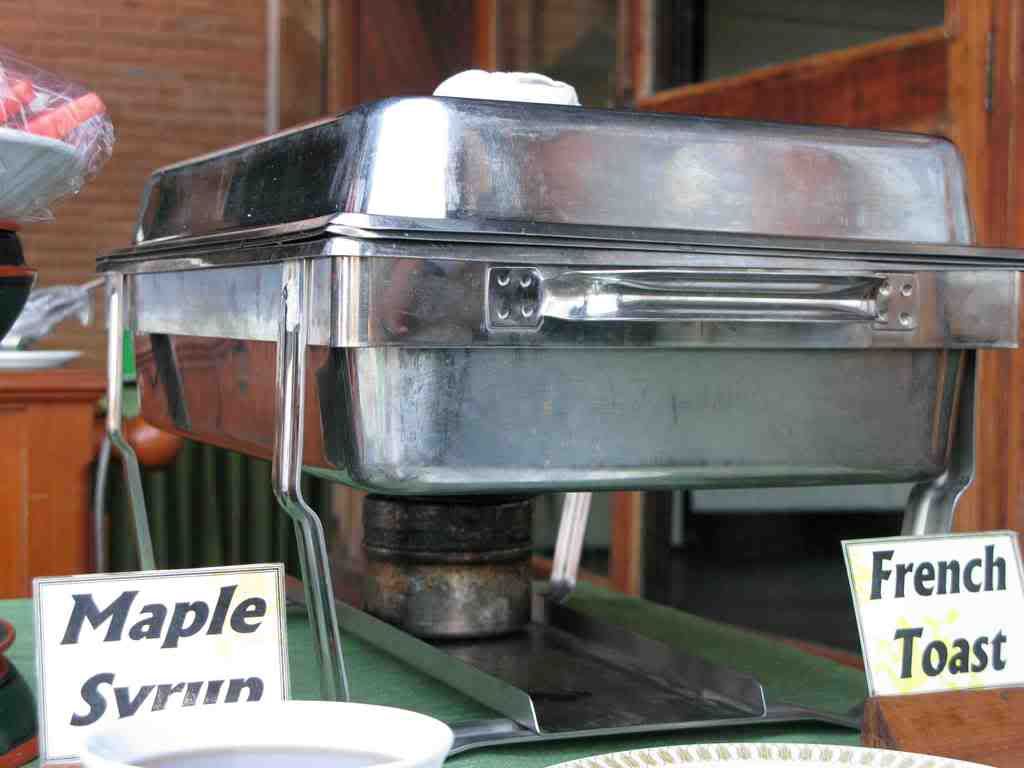
And cooked dishes were kept hot in covered chafing dishes

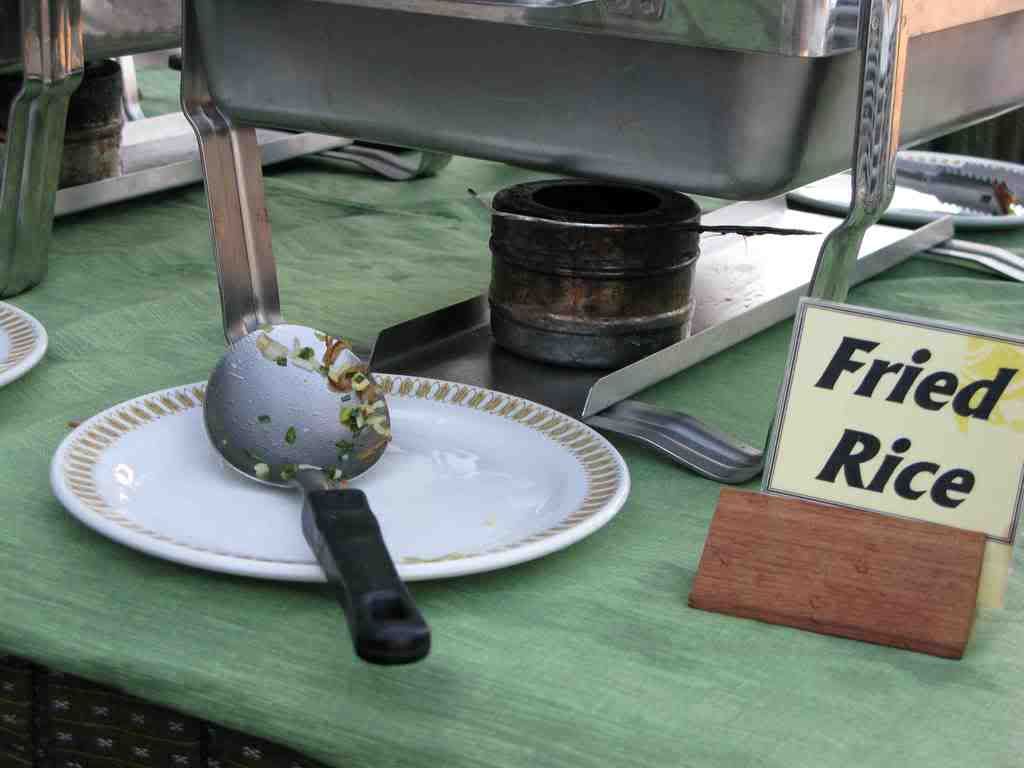
But the serving spoons were left out in the open air, where bacteria could multiply

Milk sat in an open jug with nothing but banana leaves to keep it cool

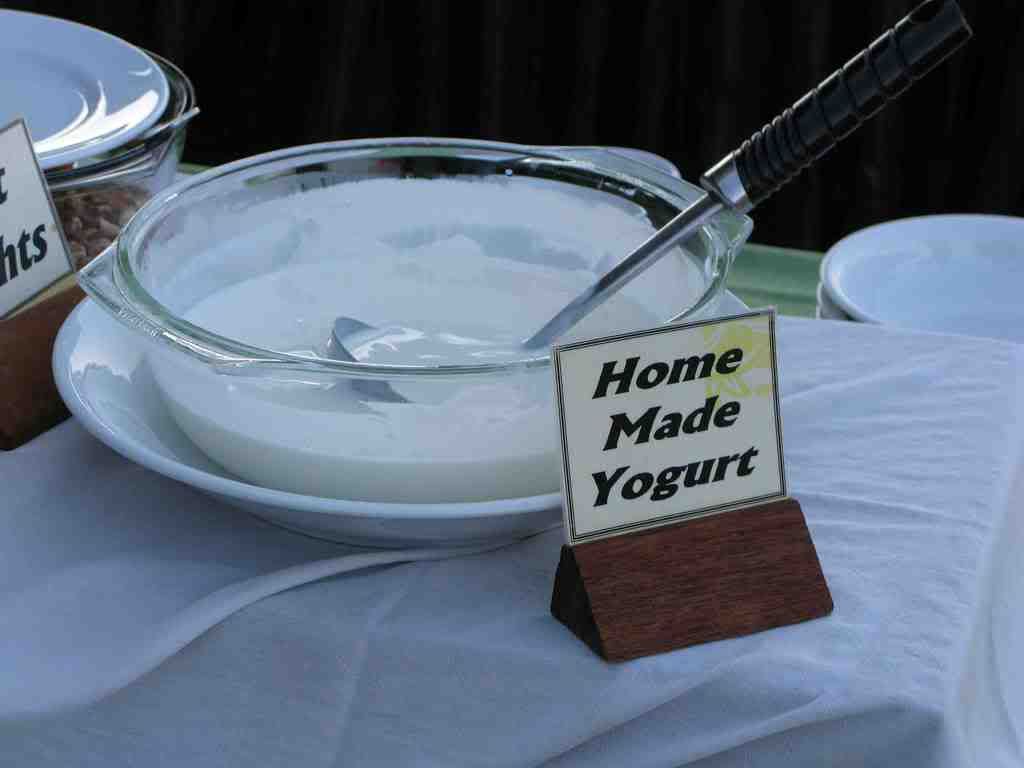
As much as I like yogurt, I wasn’t even tempted to sample this homemade batch, also sitting uncovered and unchilled

When we returned to Yangon for one last night before leaving Myanmar behind, we realized we had reached a measure of civilization.

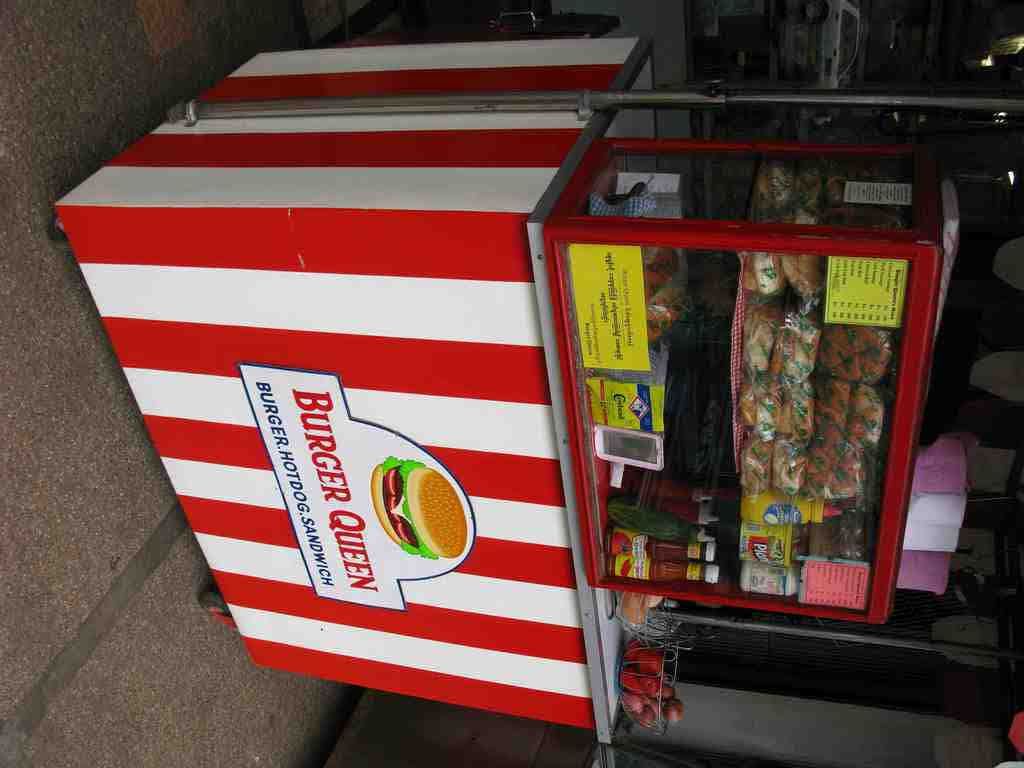
Was it because of the burger stand? Not likely!

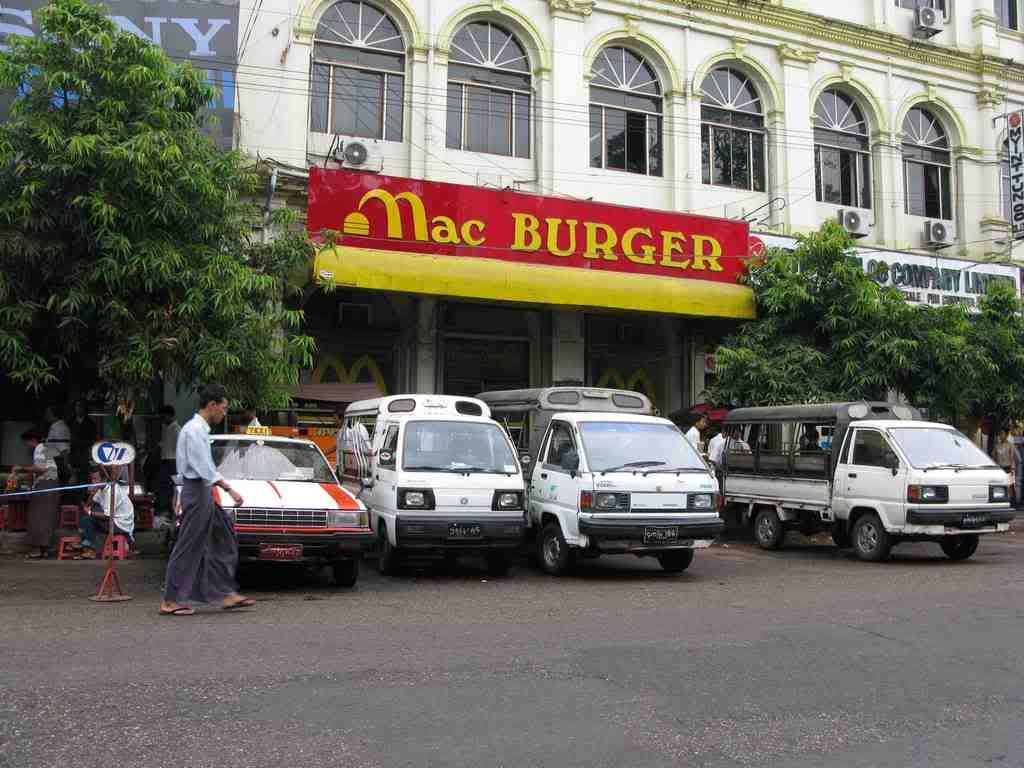
Perhaps the fast food restaurant? Not a chance!

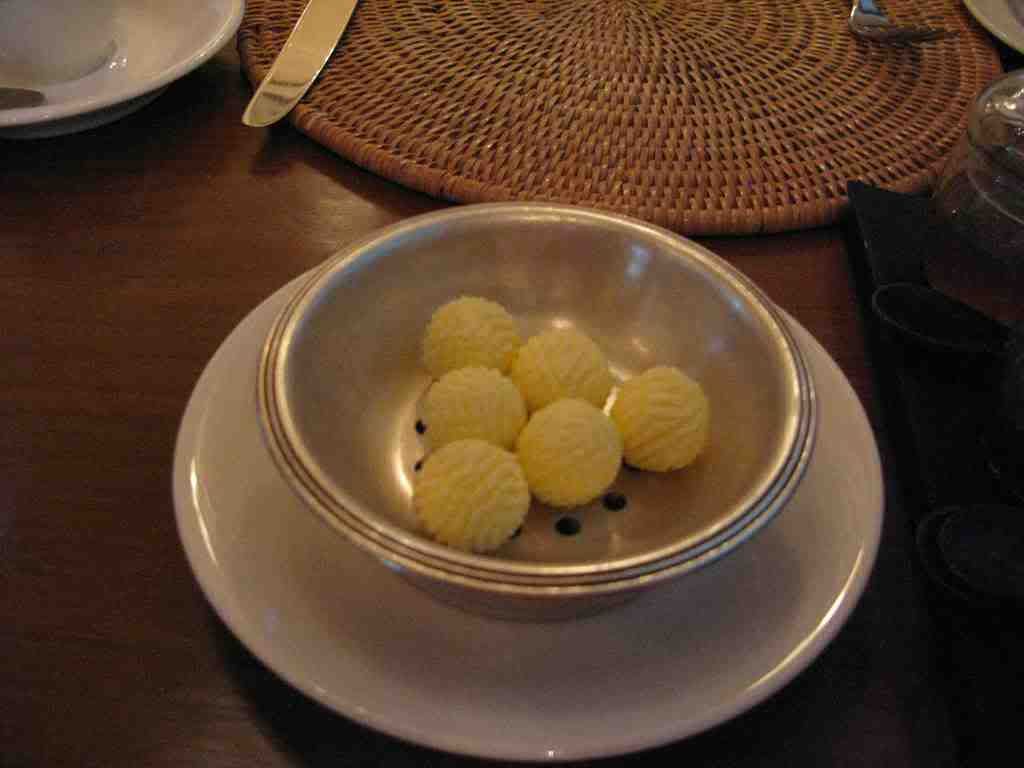
It was the butter dish on our breakfast table at the Strand Hotel

Our Myanmar adventure began and ended in Yangon. We spent a total of three nights at The Strand Hotel, a grand old British colonial lady. This establishment, which was recently refurbished, is a class act in every respect – the epitome of what a great hotel should be, but seldom is.