
Myanmar: Shrimpers of Inle Lake

For a period of 2-3 months just after the end of the rainy season, the rice paddies that border Inle Lake produce a different crop – freshwater shrimp.
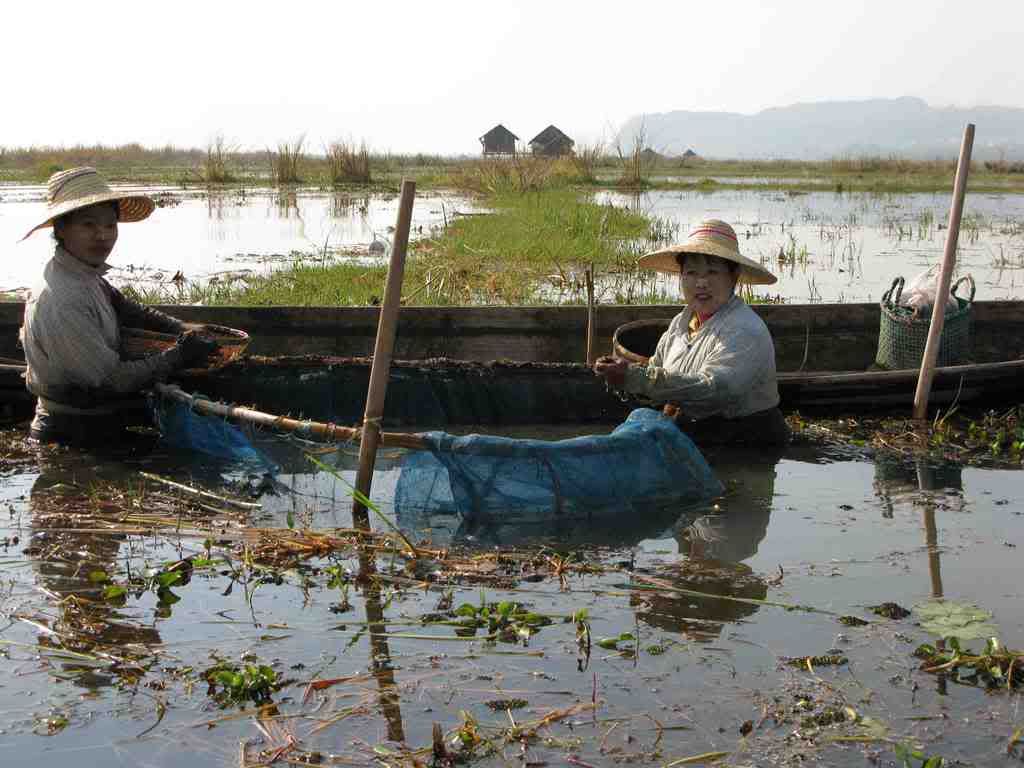
Shrimping is usually carried out by a two-woman team. The pair of young women we encountered in this flooded rice paddy were both in their 20’s, unmarried, and friends as well as colleagues.


Shrimping is not a very well-paying occupation, but neither is anything else in this country (except possibly acting as a guide for tourists). This pair of women will earn approximately 3,000 Kyats (1,200 Kyats = US$1.00) for a full day’s work, most of it performed while standing waist deep in weed-choked water.
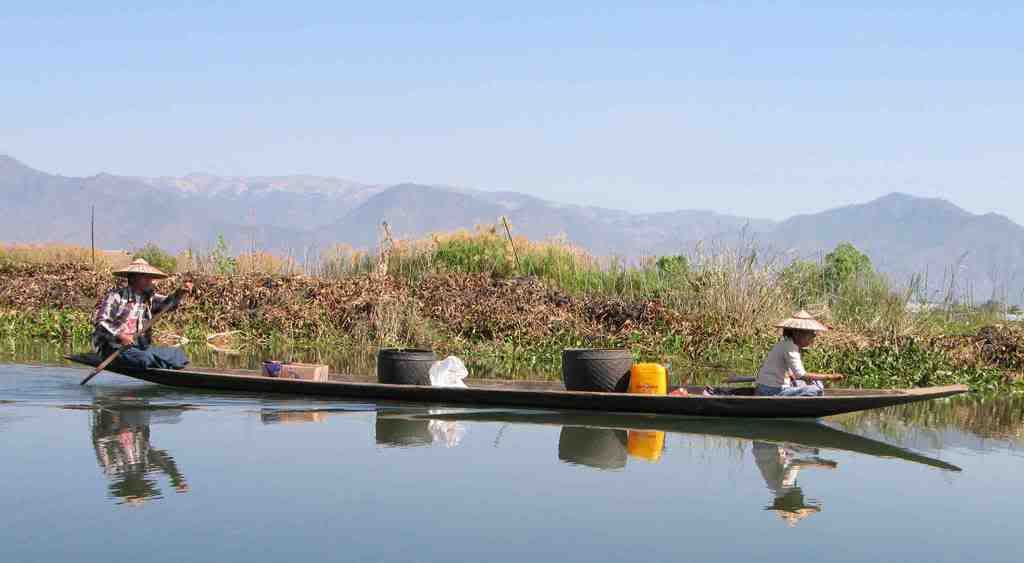
Their day starts with a 90-minute commute (by canoe) from their homes to the shrimp bed


The women were wearing a form of sunscreen that is unique to Myanmar (at least among the countries that we visited). It is made by grinding thanaka bark on a flat stone, and mixing the powder with a bit of water to form a paste that is smeared all over the face.
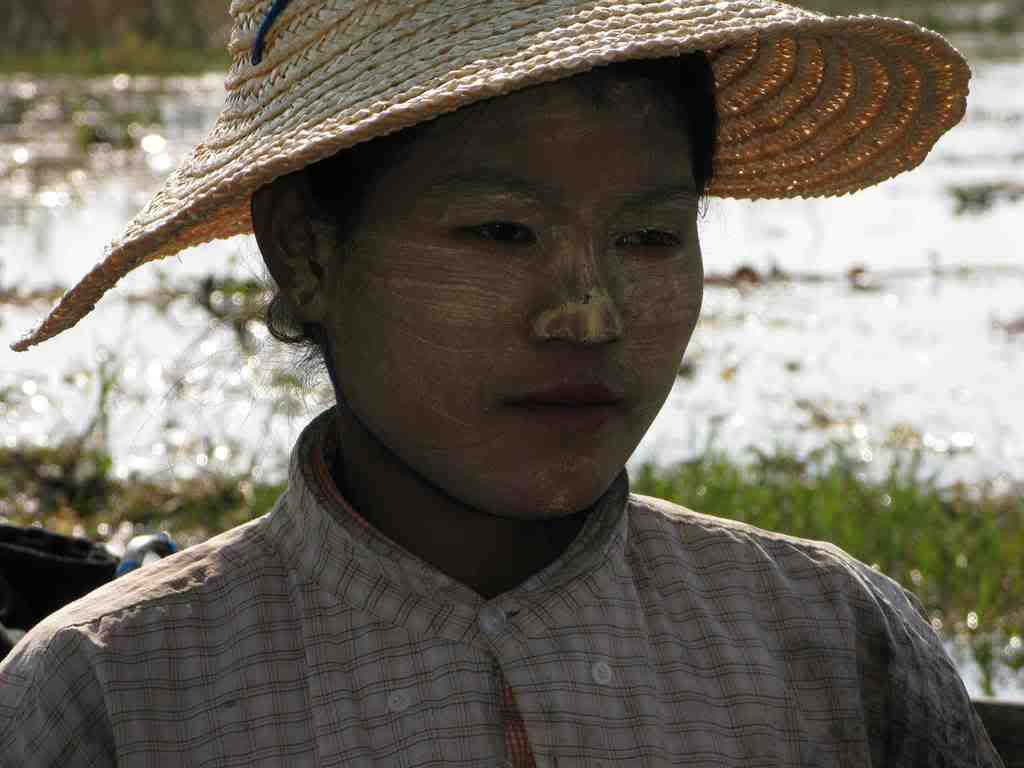
Some of the Myanmar people, including this shrimper, are quite creative in their application of this Myanmar make-up, and apply the paste in interesting patterns.

Once at the shrimp bed, they drag a fine-mesh net, which is mounted on a horseshoe-shaped frame, through the weedy water for about 30 minutes, until it is filled with floating weeds and debris. Then they hitch their net onto the side of their canoe and spend an hour or more carefully separating the inch-long shrimp from the weeds, debris, and leeches. If they are lucky, they’ll also find the occasional small fish trapped in the net.
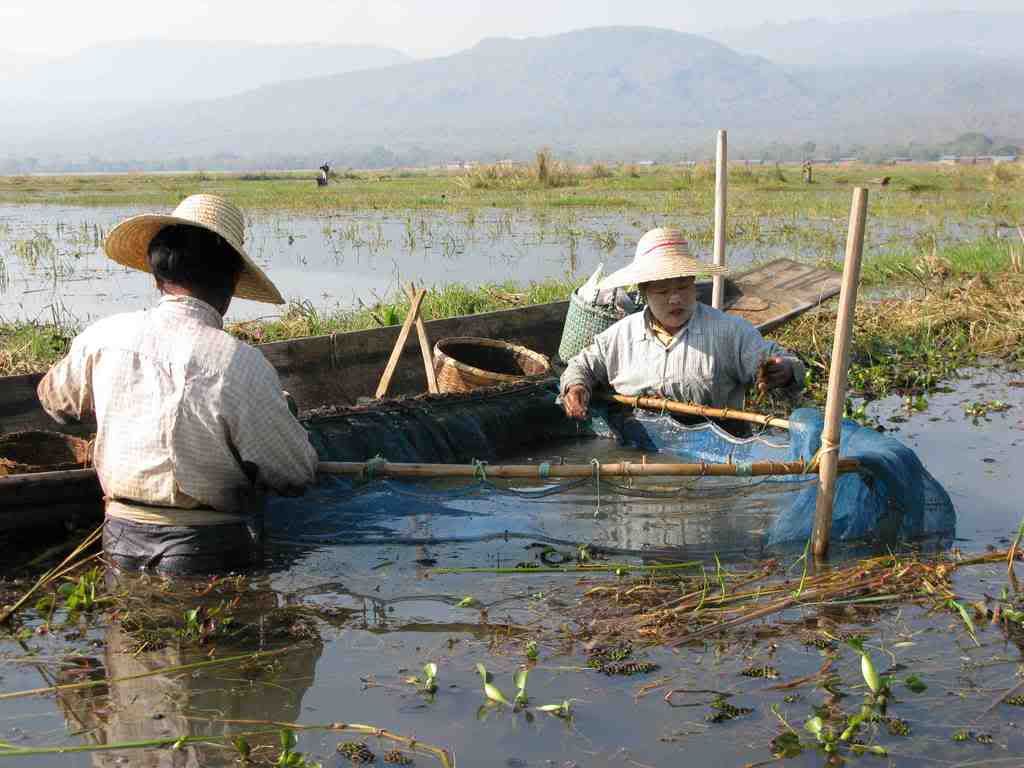
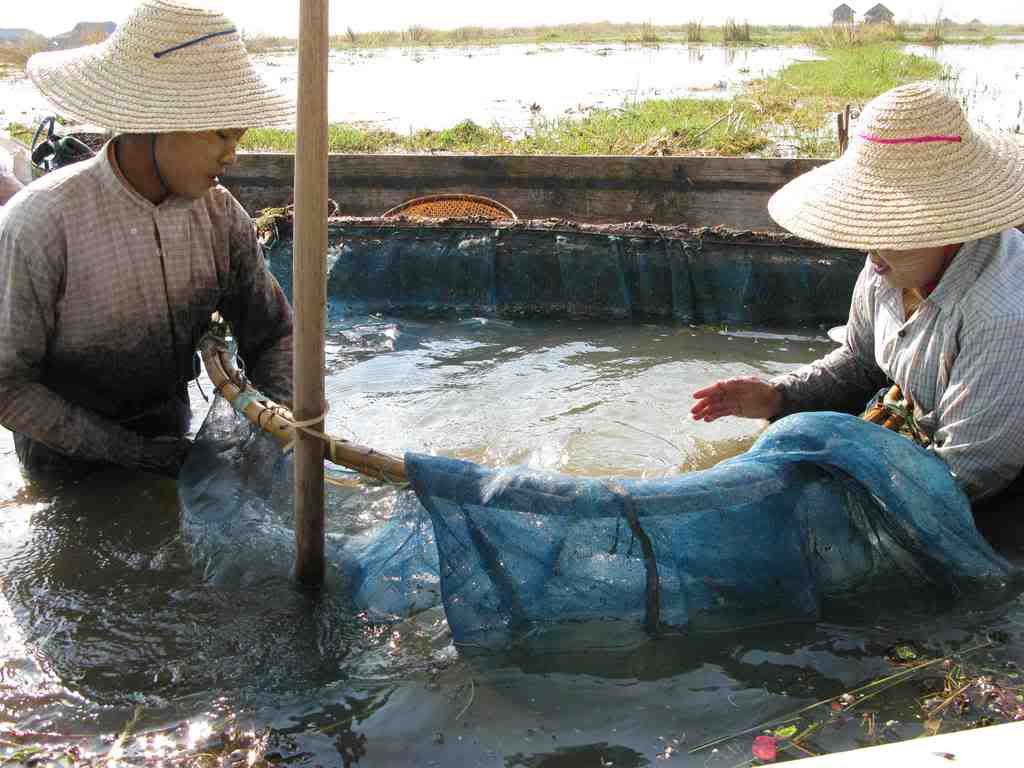
When we arrived, the women had already worked their way through most of the material that they had collected in the net

Although they never stopped working, they were quite gracious about answering our questions


Once the net has been emptied, the process starts all over again. This pair of shrimpers is able to fill and sort three nets-worth of shrimp per day. Their day doesn’t end with their 90-minute commute back home. Once home, the shrimp must be spread out in the sun to dry.

These shrimpers work seven days a week for the 2-3 month season. Except for an occasional festival day, they take no days off. Shrimping season ends when the water level in the paddy has dropped low enough for planting rice.

Myanmar: Fishing Inle Lake

Fish and rice are the mainstays of the Inle Lake diet, and of its economy. Fishermen spend three or four days at a time on the lake on their canoes. They work, eat and sleep on the boats. Every morning, wholesale fish merchants travel the lake on their larger boats to purchase the previous day’s (and night’s) catch.

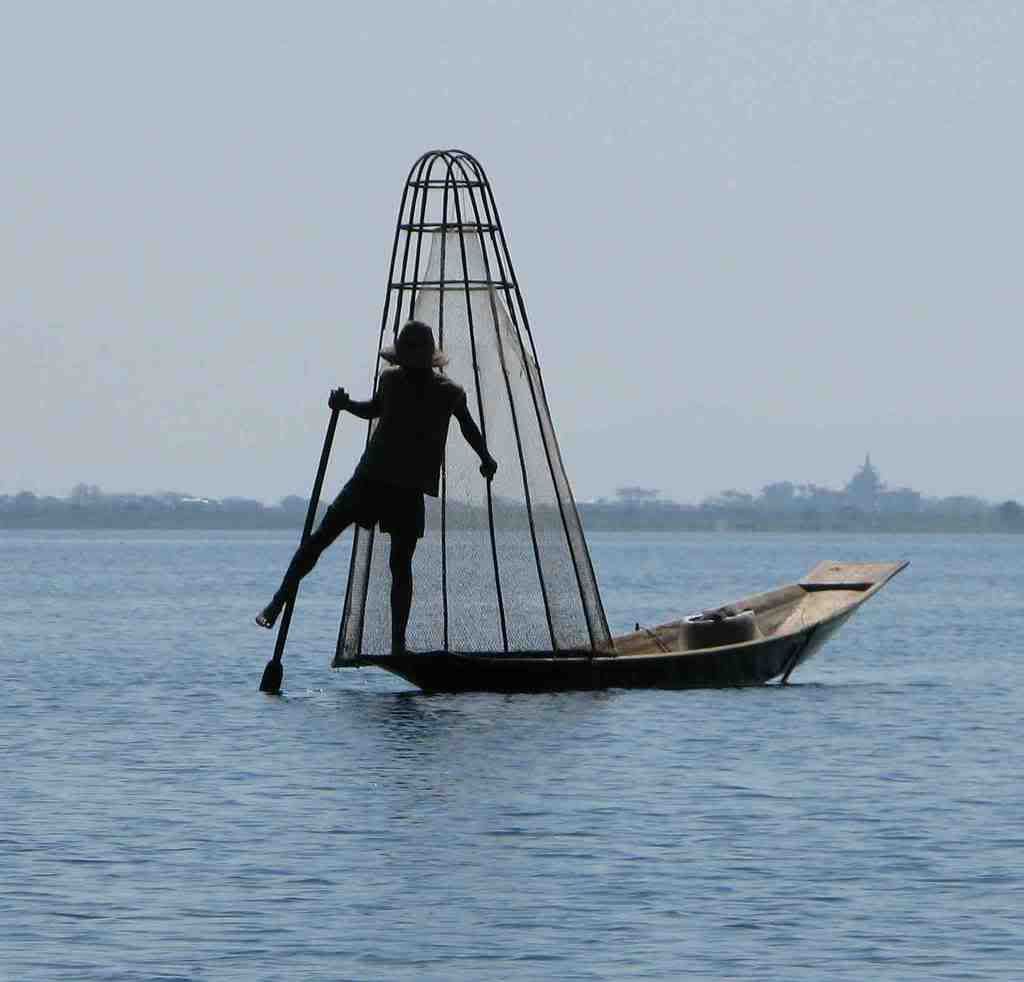
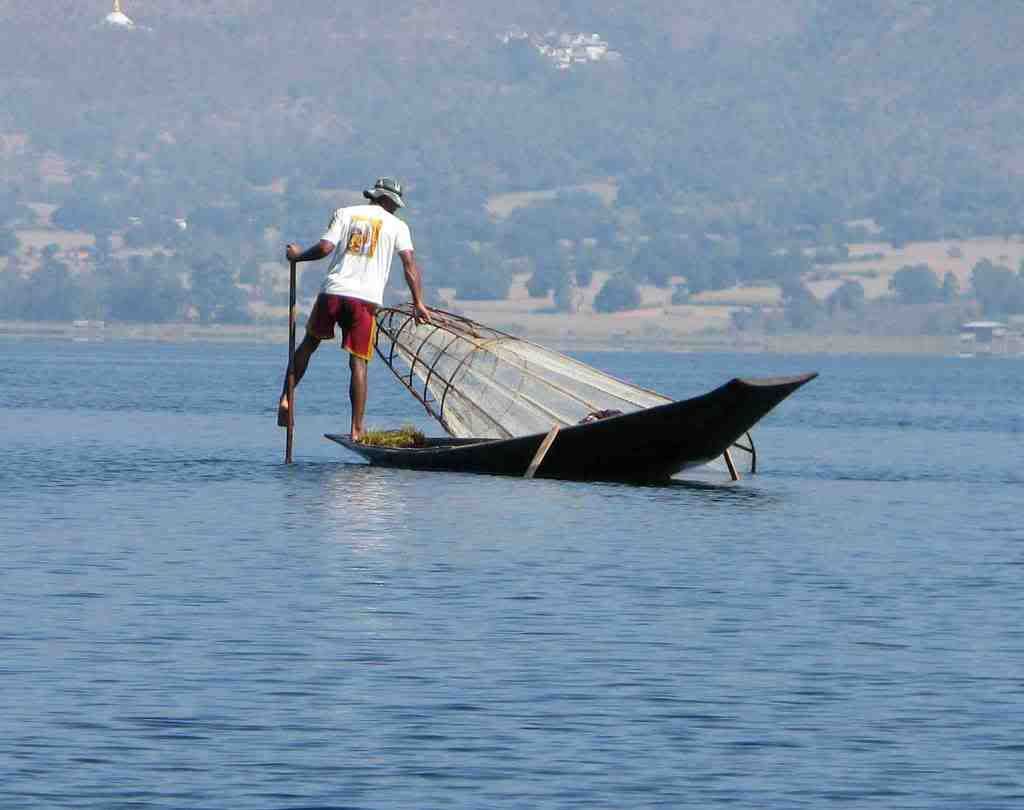
Inle Lake is shallow – no more than 4 meters (13 feet) at its deepest. The shallower parts of the lake lend themselves especially well to cage fishing, which combines elements of net fishing and spear fishing.

The typical cage is taller than the average Myanmar fisherman, and its use requires a good eye for fish, and a keen sense of balance. The usual target for the cage fisherman is carp.

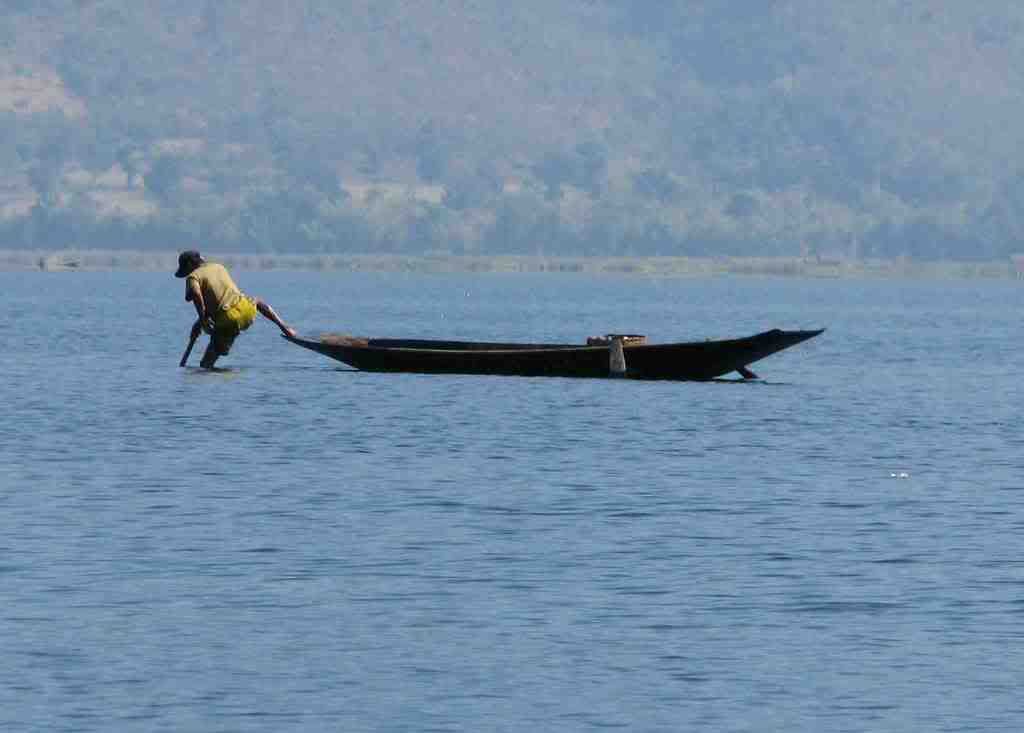
The carp hunter finds his prey by rowing slowly while looking for tell-tale trails of air bubbles rising from the lake bottom

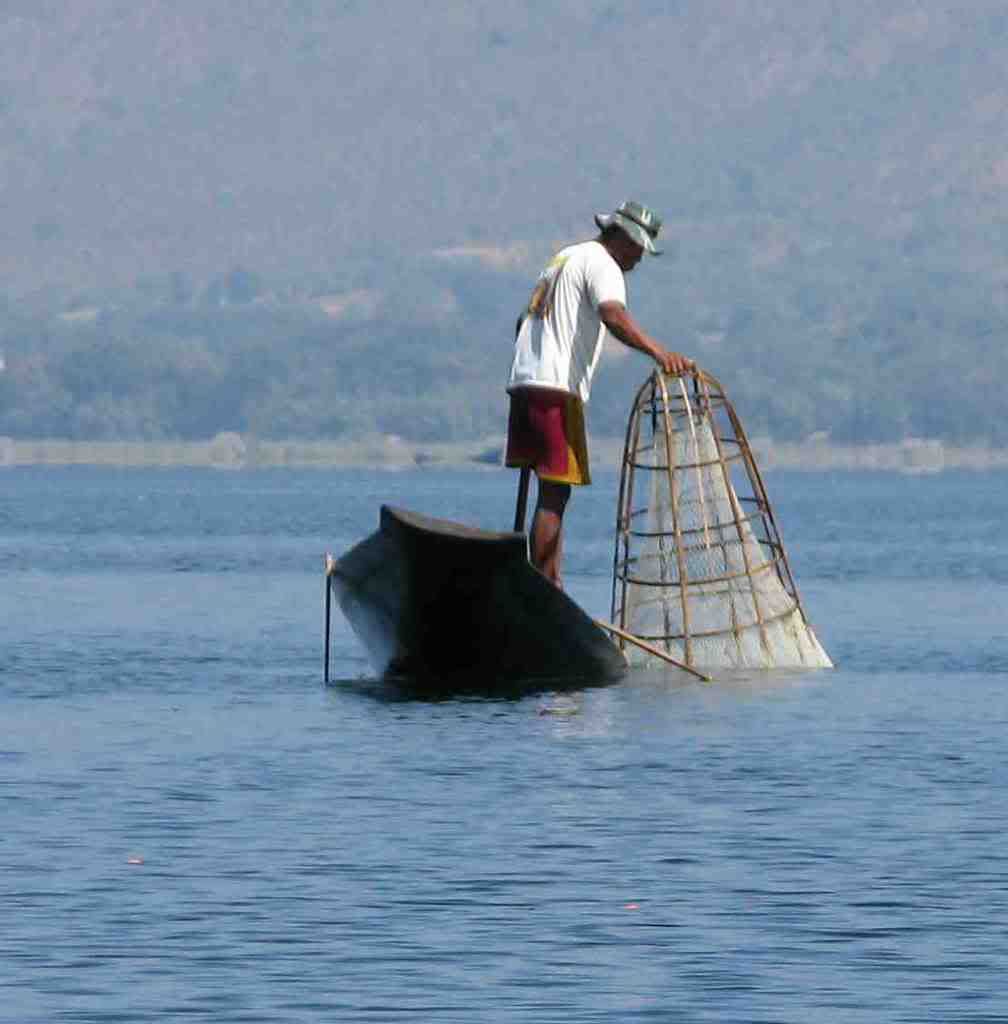
One he spots the bubbles, the carp hunter carefully maneuvers his cage into position

Then he lowers the cage directly over the trail of bubbles and traps his prey

Once he has trapped his prey inside the cage, the carp hunter plunges his spear through a hole in the top of the cage and kills his catch. He then lifts both the cage and the speared carp into his boat and starts his hunt again.

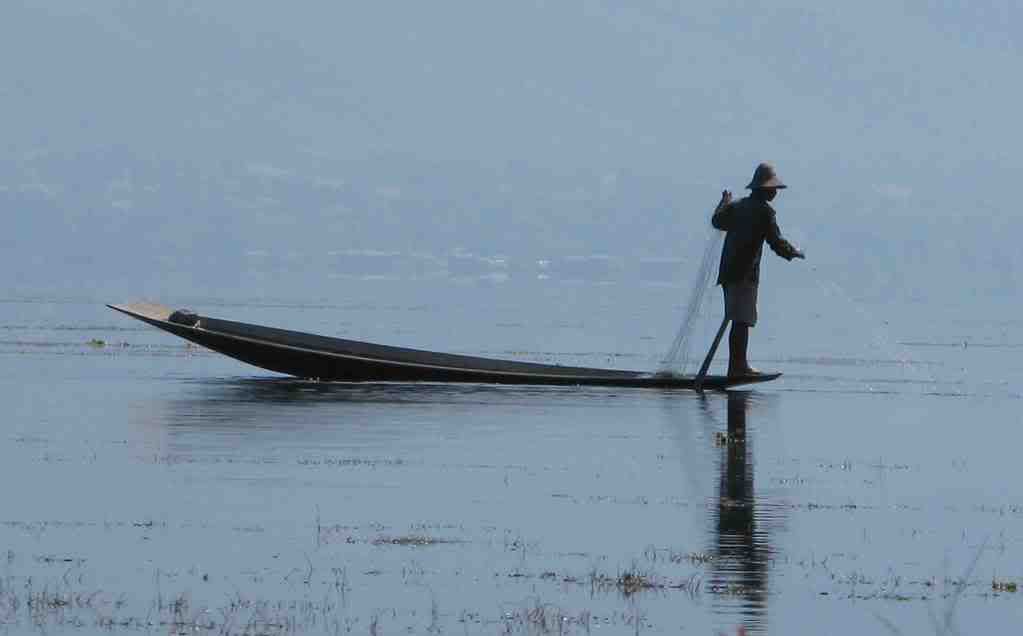
Other parts of Inle Lake lend themselves to fishing with drag nets. Often, several fishermen work together.

This man is casting his net

Herding a school of fish into their nets by hitting the water with their oars

Success! Hauling a net filled with fish into the canoe

Myanmar Food Processing: Inle Lake Saké Factory

Rice is ubiquitous in Southeast Asia, so it should come as no surprise that the people of Myanmar ferment some of their crop to produce rice wine, or saké. We had the opportunity to visit a typical saké factory on Inle Lake during our visit to the area.

In a country where transportation by road and rail is limited, manufacturers must rely on local resources as much as possible for their raw materials and their equipment. One of the villages we visited near the shore of Inle Lake specialized in producing clay pots, some of which are used in the production of saké.

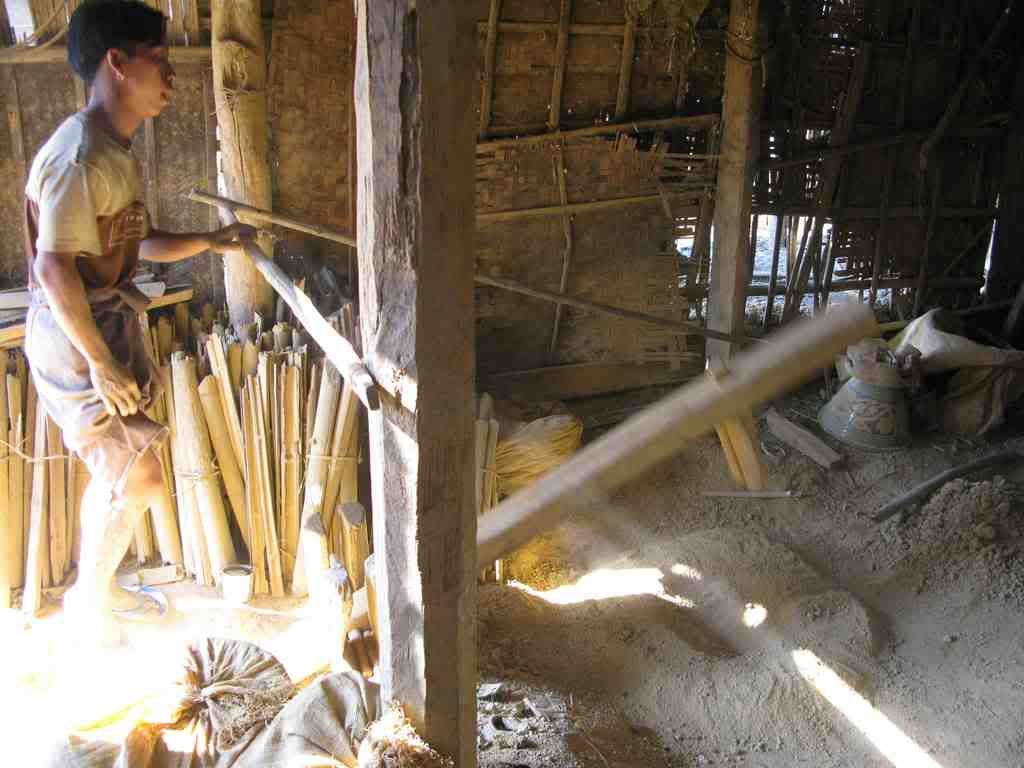
Here, a villager pounds clay into a fine powder.

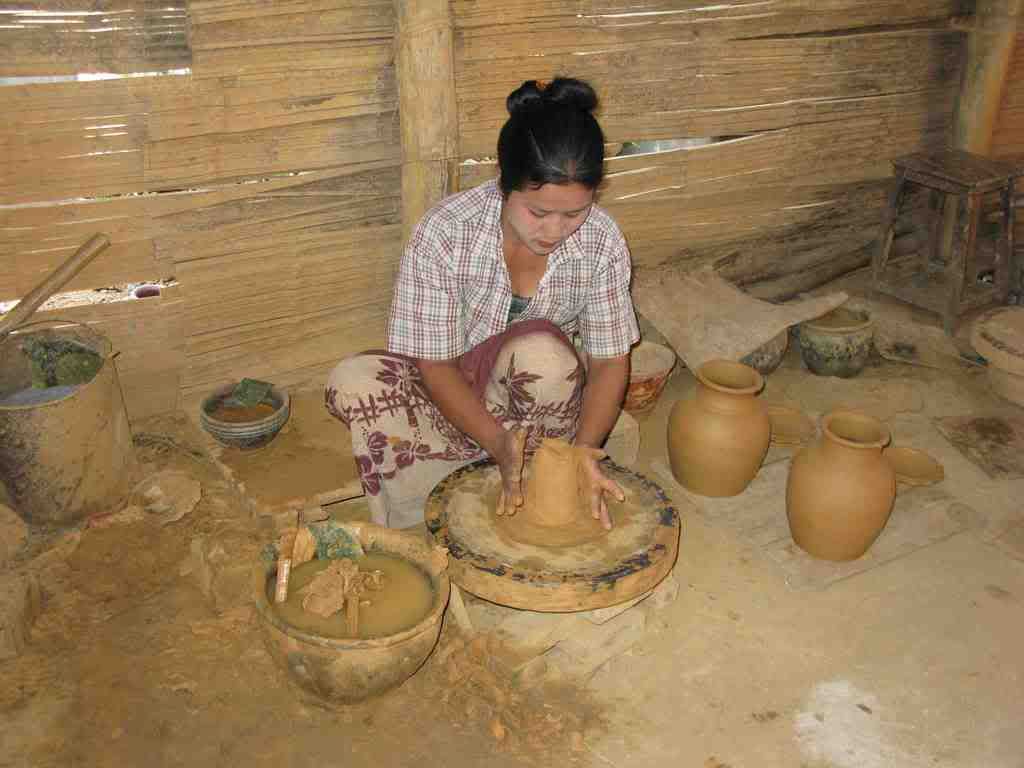
This villager showed us how she shapes her pots on a hand-driven wheel.

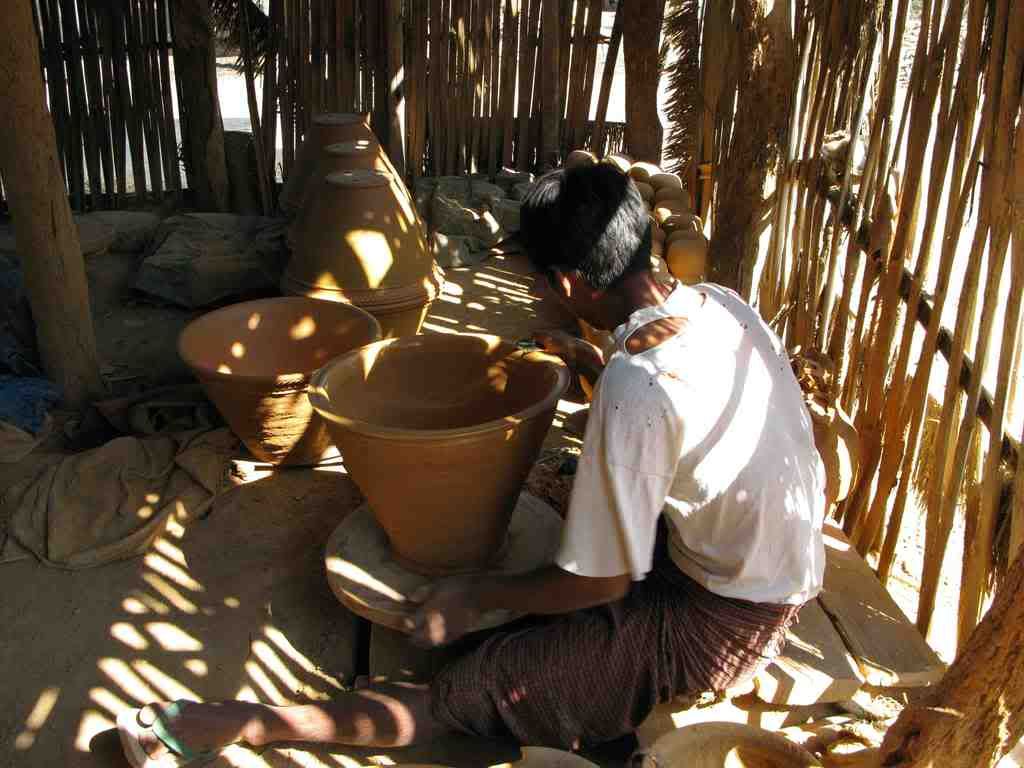
This potter is putting some finishing touches on the top rim of his pot.

Rice farming is a mainstay of Inle Lake agriculture. Villagers mill their rice in factories like this. Some of this grain will find its way to the saké factory.

http://i244.photobucket.com/player.swf?file=http://vid244.photobucket.com/albums/gg11/FoodBugLady/MVI_1077.flv

Saké production begins by cooking the rice in water. Other ingredients, including yeast, molasses, and sugar are added to the cooked rice, and the entire mixture is poured into clay pots. The pots are covered with cloths, and the mixture is left at room temperature to ferment for one week.

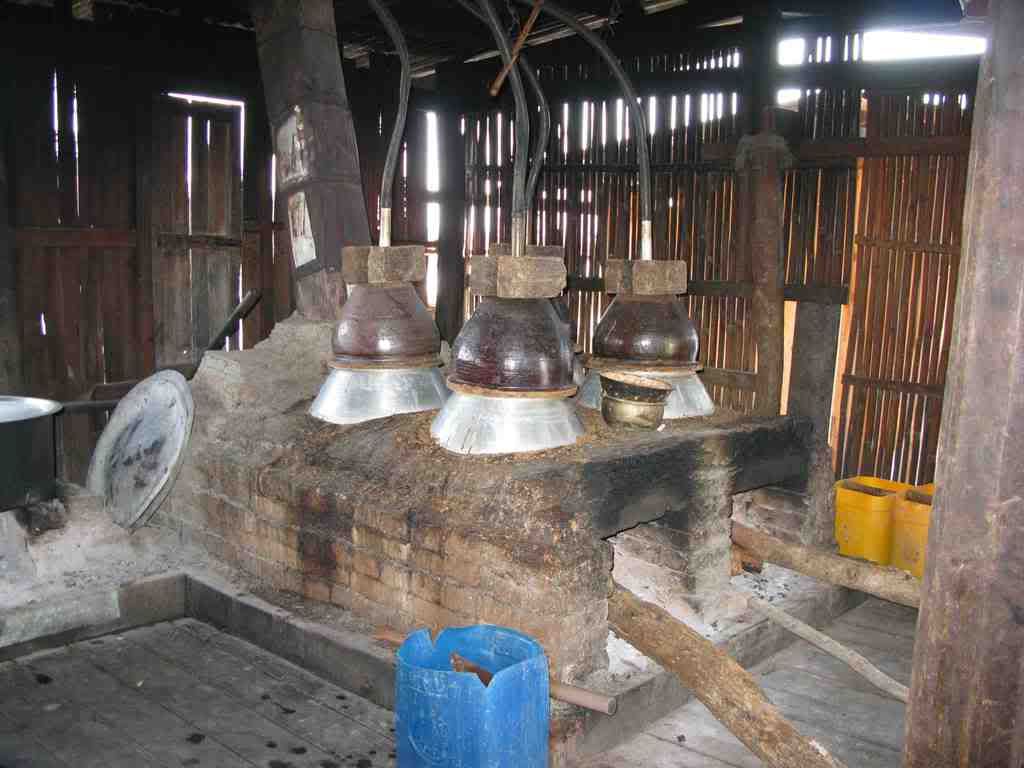
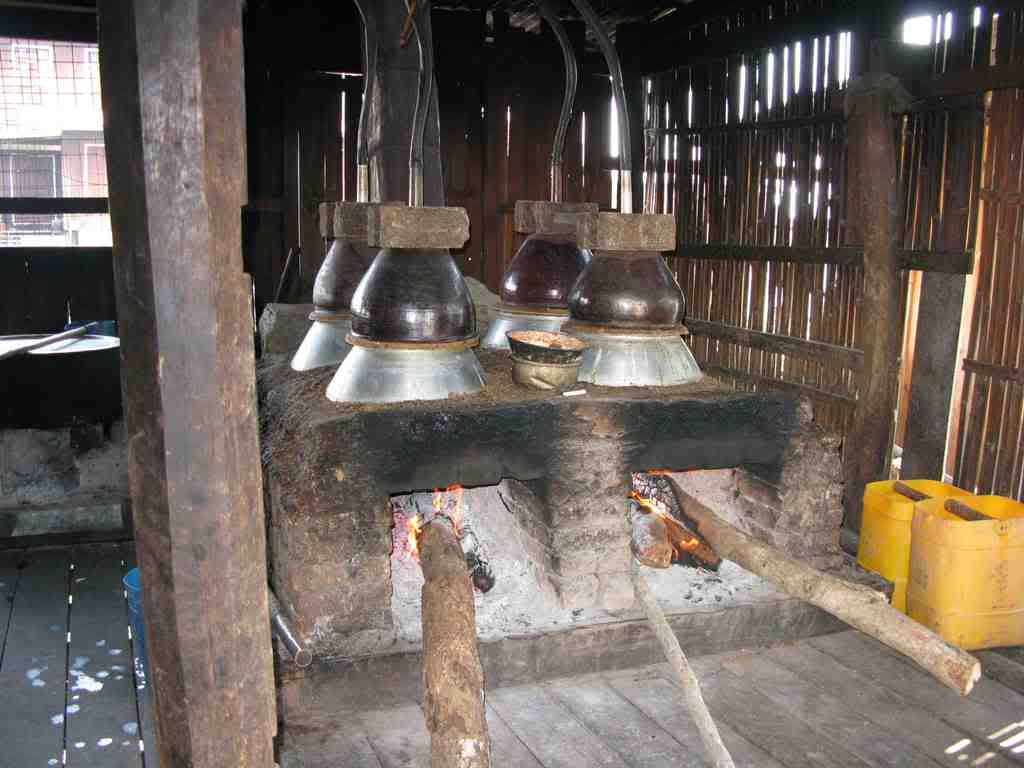
At the end of the week, the contents of the clay pots are poured into stills, and a glazed clay pot is inverted over the top of each still.

The stills are heated to boil off the alcohol from the fermented mixture. Steam is trapped by the inverted clay pots and flows through the black hoses to the condensers.

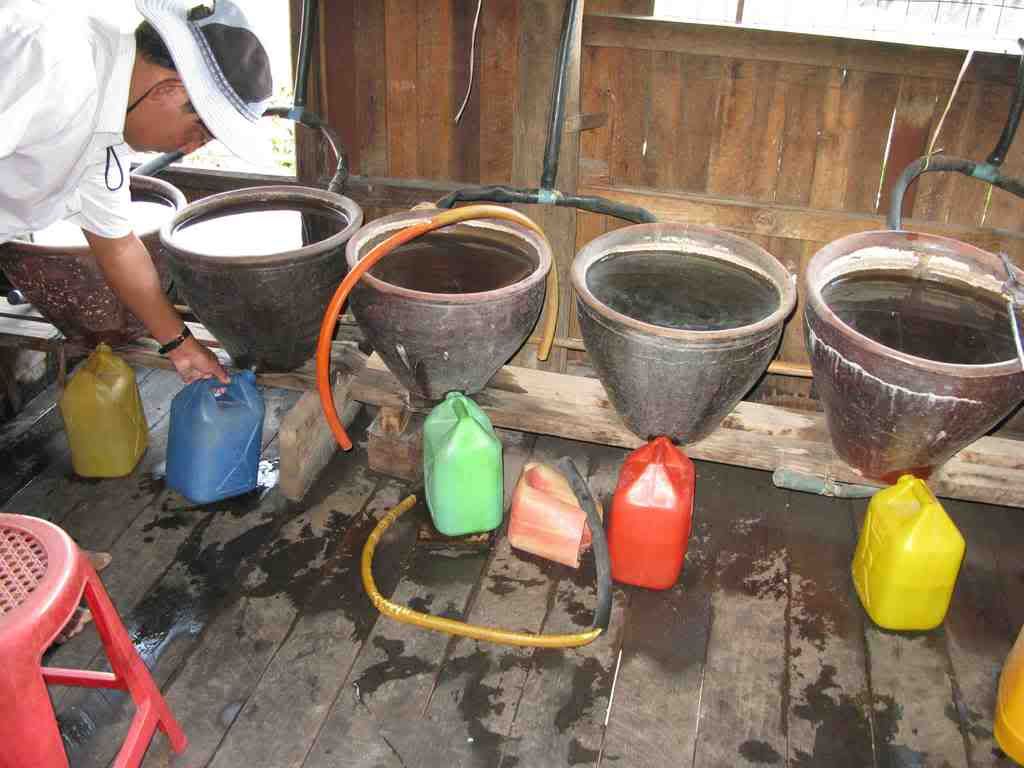
The condensers are double-walled clay pots. The outer wall of each pot has two openings – an inlet for the steam, and an outlet for the condensed saké. The body of each condensation pot contains water. The steam flows out of a tube, which is connected to an inlet hole in the outer wall of the pot, and the saké condenses between the outer and inner walls of the clay pots. The condensate is collected in plastic jugs.


The finished saké, which has an alcohol content of approximately 25%, is poured into bottles and sold to wholesalers for resale in markets and to local restaurants.