First posted on September 30, 2009
Probiotic: A microbe that protects its host and prevents disease. (www.medterms.com)
It doesn’t take much more than a stroll down the supermarket dairy case aisle to realize that probiotics are hot. A quick glance at the yogurt display reveals competing claims by two major international dairy brands, Dannon (Danone in France) and Yoplait.
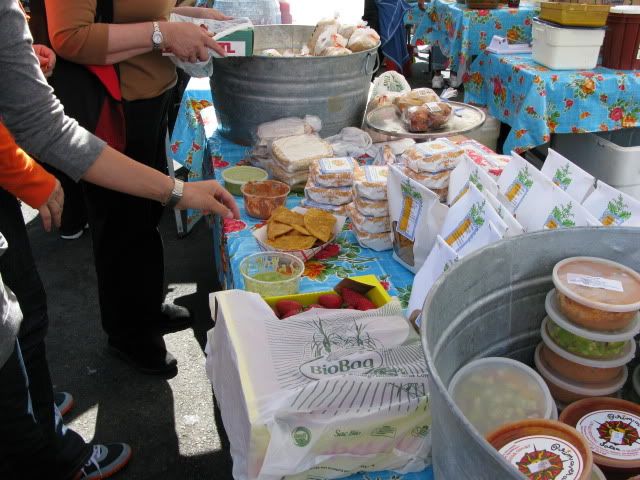
Nor is the marketing of probiotic foods limited to the dairy industry. Even sour pickles are getting into the act, as we discovered during our recent stroll through the San Francisco Farmer’s Market.
The Happy Girl Kitchen Co. is a Central California packing company that specializes in preserving and packing local organic produce. The company sells its wares over the Internet as well as at Farmer’s Markets in Santa Cruz and in the San Francisco Bay area.
While the Company’s web site makes no probiotic claims for its dill pickles – or any other of its fermented products – the Happy Girl who we met at the Farmer’s Market told us the following:
Happy Girl is not alone in claiming health benefits for fermented dill pickles and other fermented non-dairy foods, such as sauerkraut and various ethnic pickled vegetables. A quick Google search turns up numerous blogs, web sites and other articles on the subject.
While some of the claims may be exaggerated, the fundamental principles are sound. Yogurts, other fermented dairy products (e.g., cheeses, buttermilk and kefir), pickles and sauerkraut result from the growth of lactic acid-producing bacteria – notably Lactobacillus. The benefits of consuming foods that have been fermented by lactic acid bacteria are several:
- Lactic acid is a natural preservative
- While growing, Lactobacillus produces compounds (known as prebiotics) that encourage the development of helpful bacteria in the intestinal tract
- Many Lactobacillus bacteria produce natural anti-microbial compounds (known as bacteriocins) that act against pathogens such as Listeria monocytogenes
- The presence in the intestines of probiotic bacteria – including many Lactobacillusbacteria – aids digestion and helps lactose-intolerant individuals to digest dairy-based products
Unfortunately, not all Lactobacillus are created equal. Not all strains produce effective bacteriocins. And some strains are better able than others to survive the harsh acid environment of the stomach and take up residence in the intestines. In a completely natural fermentation, there is no way to predict which strains of lactic acid bacteria will take charge.
Despite these caveats, the health benefits of prebiotics and probiotics are well established, and the role of Lactobacillus strains and other lactic acid bacteria in aiding digestion has been recognized for many years. And whether or not a particular batch of pickles contains a strongly probiotic Lactobacillus strain, it still can be counted on for some prebiotic benefits.
Happy Girl‘s customers can keep on smiling.