
For a period of 2-3 months just after the end of the rainy season, the rice paddies that border Inle Lake produce a different crop – freshwater shrimp.
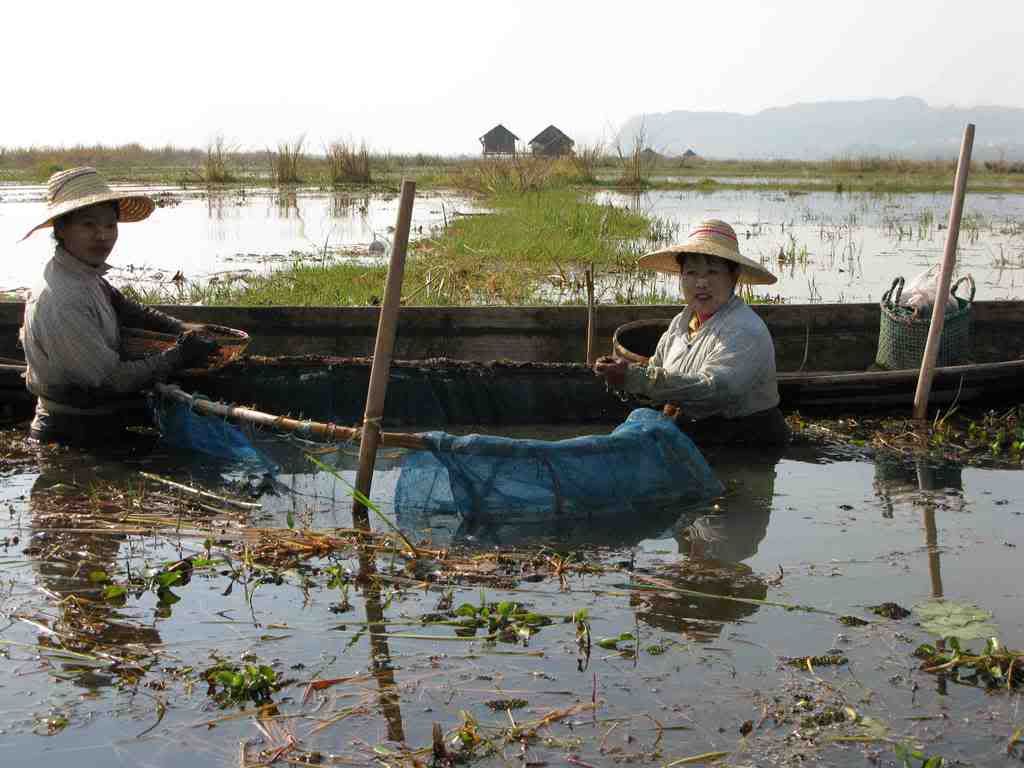
Shrimping is not a very well-paying occupation, but neither is anything else in this country (except possibly acting as a guide for tourists). This pair of women will earn approximately 3,000 Kyats (1,200 Kyats = US$1.00) for a full day’s work, most of it performed while standing waist deep in weed-choked water.
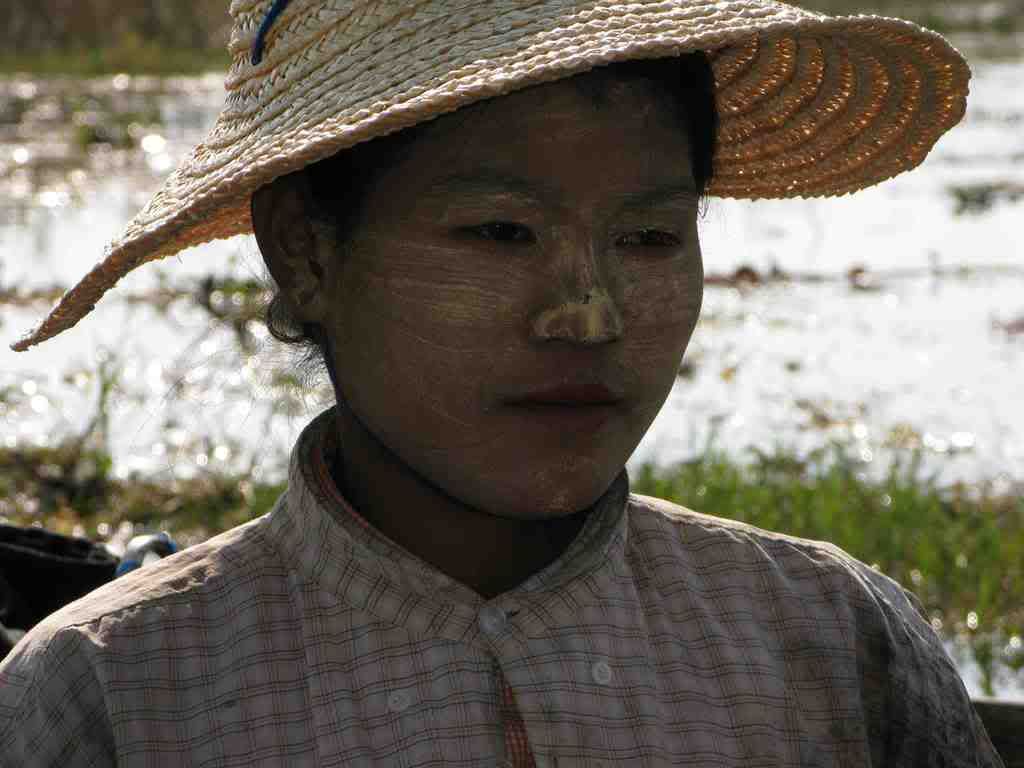
The women were wearing a form of sunscreen that is unique to Myanmar (at least among the countries that we visited). It is made by grinding thanaka bark on a flat stone, and mixing the powder with a bit of water to form a paste that is smeared all over the face.
Once at the shrimp bed, they drag a fine-mesh net, which is mounted on a horseshoe-shaped frame, through the weedy water for about 30 minutes, until it is filled with floating weeds and debris. Then they hitch their net onto the side of their canoe and spend an hour or more carefully separating the inch-long shrimp from the weeds, debris, and leeches. If they are lucky, they’ll also find the occasional small fish trapped in the net.
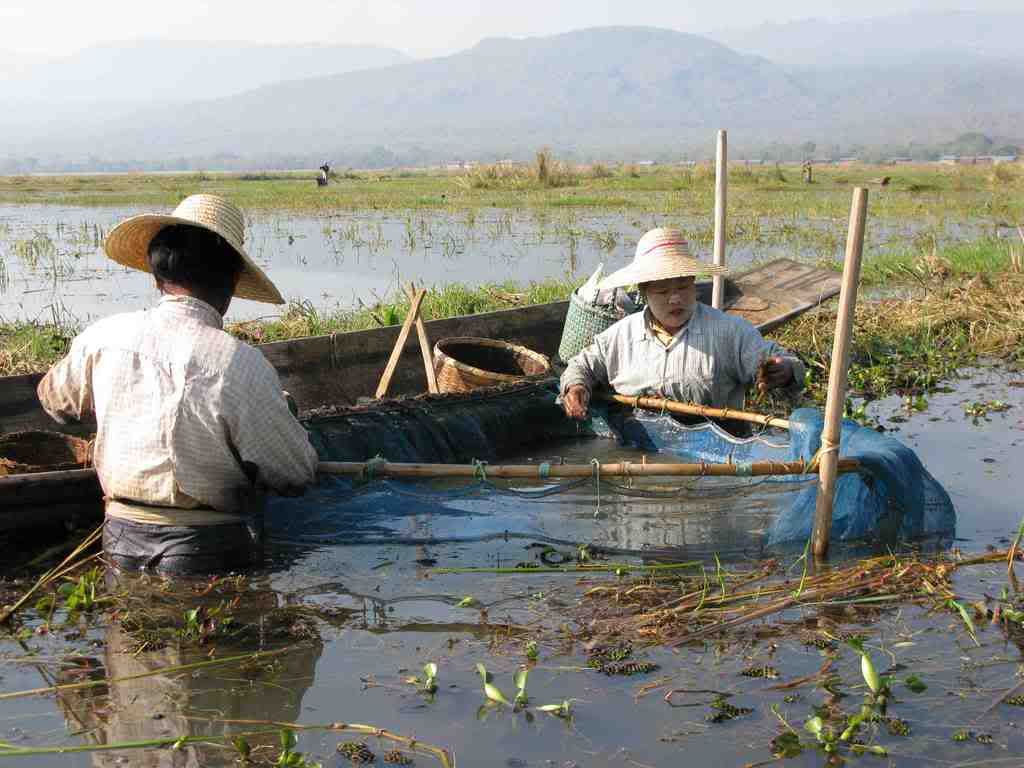
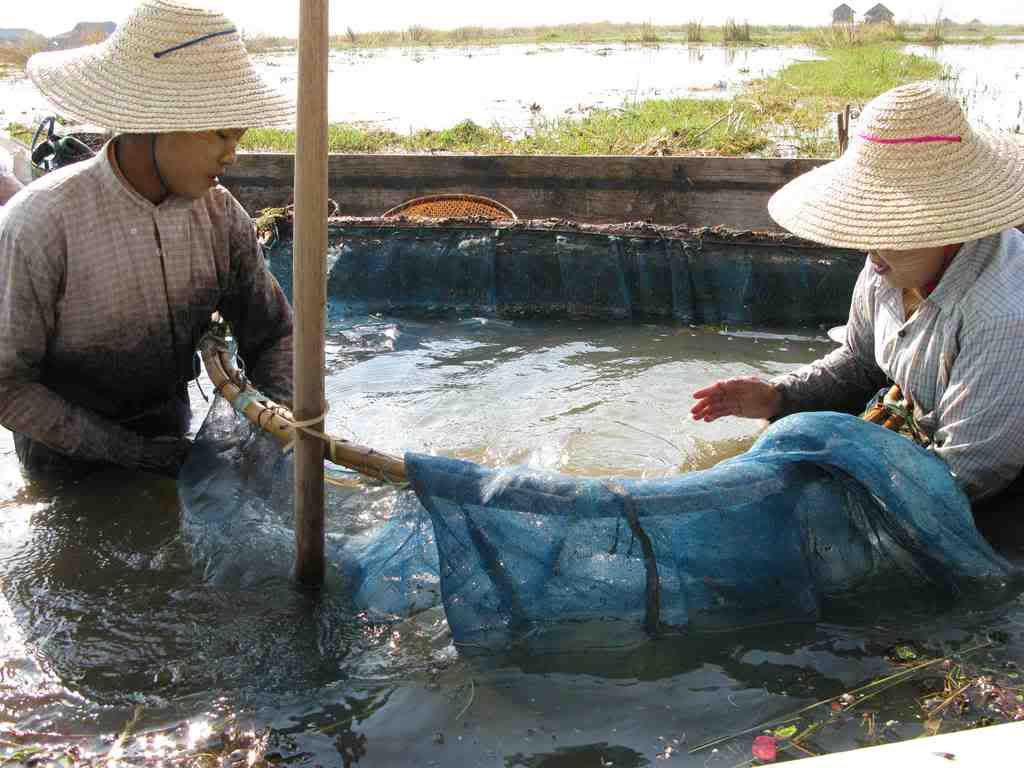
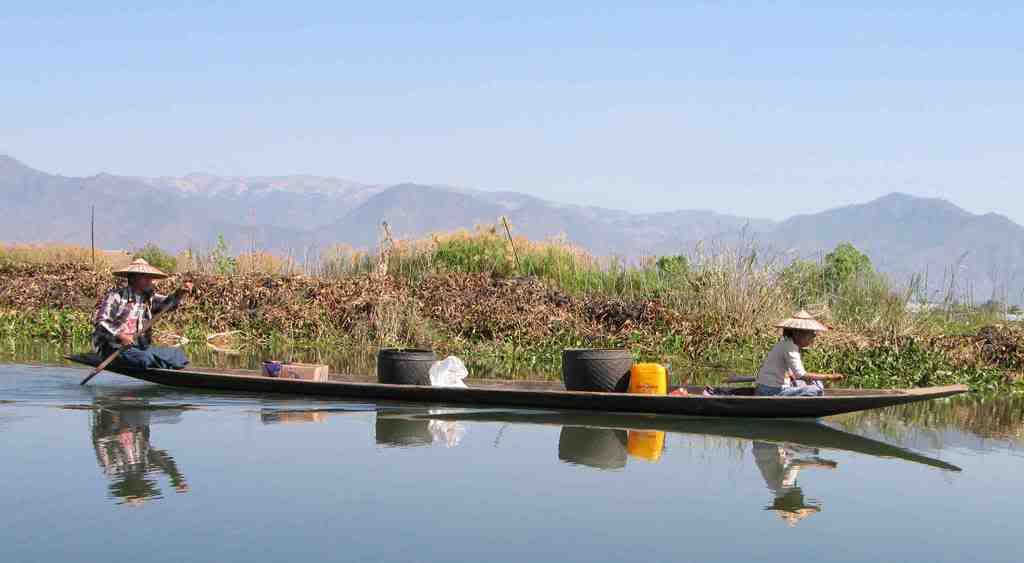
Once the net has been emptied, the process starts all over again. This pair of shrimpers is able to fill and sort three nets-worth of shrimp per day. Their day doesn’t end with their 90-minute commute back home. Once home, the shrimp must be spread out in the sun to dry.
These shrimpers work seven days a week for the 2-3 month season. Except for an occasional festival day, they take no days off. Shrimping season ends when the water level in the paddy has dropped low enough for planting rice.


 eFoodAlert